News
The latest from the AI agent ecosystem, updated multiple times daily.

A good AGENTS.md is a model upgrade. A bad one is worse than nothing
Augment Code ran a systematic study using their AuggieBench eval suite to measure how AGENTS.md files affect AI coding agent performance. Best-performing files provided quality gains equivalent to upgrading from Claude Haiku to Opus, while poorly structured ones degraded performance below baseline. Effective patterns include progressive disclosure, procedural workflows, decision tables, real code examples, and pairing prohibitions with alternatives. Common failures include overexploration from excessive architecture overviews or warnings, and outdated patterns that mislead agents on new approaches. AGENTS.md files showed 100% discovery rates compared to 80% for directory READMEs.

1978 Terminal Meets 2026 Coding Agent: It Gets Weird
Nikhil Jha spent weeks building a terminal-based coding agent, then tested it on a 1978 DEC VT-100 because why not? What followed was a messy, entertaining descent into flow control hell at 9600 baud, ASCII-only workarounds, and the discovery that an enterprise customer actually wanted those janky legacy fixes as a real feature.

Warp open-sources its terminal, lands OpenAI as founding sponsor
Warp open-sourced its client codebase with OpenAI as founding sponsor. The Rust-based terminal's agent platform runs on GPT models for coding help and cloud tasks. Users can run Warp's built-in agent or plug in Claude Code, Codex, and Gemini CLI.
Warp open-sources terminal, wants you bossing agents not writing code
Warp open-sourced its terminal client under AGPL v3. Instead of writing code, contributors supervise AI agents that handle implementation. OpenAI is founding sponsor, with GPT models powering workflows on Oz, Warp's cloud orchestration platform. Support for open-source models like Kimi, MiniMax, and Qwen is also included.
Anthropic Auth Failure Takes Down All Claude Products for 78 Minutes
Anthropic experienced a 78-minute outage on April 28 affecting Claude.ai, Claude API, Console, Code, Cowork, and Government products. An authentication system failure blocked both human users and programmatic access from 17:34 to 18:52 UTC. Enterprise users have voiced frustration about reliability, citing multiple recent outages despite premium pricing.

BookStack Ditches GitHub Over Microsoft's AI Push
BookStack, a self-hosted open source platform, has migrated from GitHub to Codeberg due to concerns about GitHub's direction under Microsoft. Key reasons include GitHub's shift to an 'AI-powered developer platform,' consumption of public code for AI services without opt-in, and UX changes prioritizing revenue over user experience. As of July 2024, secondary repos have been migrated to CodeBerg with GitHub originals archived.

Cybersec: more work, same pay, zero thanks
71% of cybersecurity professionals globally saw no salary increase in 2025. AI is expanding the threat surface and increasing the volume, speed, and complexity of attacks security teams must handle. Despite rising threats and high demand, security professionals rank in the bottom three for workplace satisfaction due to boardroom complacency and limited recognition.
Laguna XS.2 Goes Open Source, Challenges Models 10x Its Size
Poolside releases Laguna M.1 (225B/23B activated) and open-weights XS.2 (33B/3B activated), both competitive on SWE-bench Pro despite low activation counts.

AISLE Finds 38 CVEs in OpenEMR, Software Used by 100K Providers
AISLE, an AI analysis engine, found 38 CVE vulnerabilities in OpenEMR, an open-source electronic health record platform used by over 100,000 medical providers and 200 million patients. Several scored CVSS 10.0, the maximum severity. Vulnerabilities included SQL injection, cross-site scripting, path traversal, and authorization issues. AISLE generated fix proposals for each CVE and worked with OpenEMR maintainers to patch them. The partnership's now formalized with AISLE PRO integrated into OpenEMR's code review workflow.

Laguna XS.2 Goes Open Weight, Poolside Shares Where Qwen Beats It
Poolside has released two agentic coding models: Laguna M.1 (225B MoE with 23B active parameters) and Laguna XS.2 (33B MoE with 3B active parameters). XS.2 is their first open-weight release under Apache 2.0. Both models are designed for long-horizon coding work, achieving strong benchmarks on SWE-bench Pro (46.9% for M.1, 44.5% for XS.2) and Terminal-Bench 2.0 (40.7% for M.1, 30.1% for XS.2). The models are available via API and OpenRouter, with XS.2 weights downloadable for local deployment.

Anthropic Backs Blender's Python API in Play for 3D Market
Anthropic joined the Blender Development Fund as a Corporate Patron, funding core development including the Python API. The move gives Claude a potential inside track on 3D integration while OpenAI sits out the patron list.

Lenovo Now Controls Phoenix BIOS. Expect CFIUS Scrutiny.
Lenovo completed its acquisition of Phoenix Technologies' firmware business, putting BIOS development for millions of PCs under a Beijing-headquartered company. The deal covers Phoenix's intellectual property and expertise, raising immediate questions about CFIUS scrutiny and boot-level security at a time when Western governments are already restricting Chinese hardware on sensitive networks.

Utah greenlights 9GW AI campus using over twice state electricity
Kevin O'Leary's O'Leary Digital received approval from Utah's Military Installation Development Authority (MIDA) to build 'Stratos,' a 9 GW hyperscale data center campus in Box Elder County. The off-grid facility, powered by natural gas from the Ruby Pipeline, will consume more than double the state's average electricity use. Phase 1 targets 3 GW capacity. The project received significant tax incentives including energy use tax reduced from 6% to 0.5% and 80% property tax rebates. No hyperscale tenants have been announced yet, though Amazon, Microsoft, Google, Meta, and Apple are noted as potential operators. O'Leary Digital has never built a data center, and industry watchers question whether the project can deliver on its ambitious targets.

Anthropic Backs Blender, Bets on Python API for AI 3D Workflows
Anthropic joins the Blender Development Fund as a Corporate Patron, backing core development with a focus on the Python API that connects AI assistants to professional 3D software.
One Git Push to Hack GitHub: AI Found This RCE First
Wiz Research discovered a critical Remote Code Execution vulnerability (CVE-2026-3854) in GitHub's internal git infrastructure affecting both GitHub.com and GitHub Enterprise Server. The flaw lets any authenticated user execute arbitrary commands on GitHub's backend servers with a single git push. This is one of the first critical vulnerabilities discovered in closed-source binaries using AI-augmented tooling, specifically automated reverse engineering using IDA MCP. GitHub mitigated the issue on GitHub.com within 6 hours and released patches for GHES, though 88% of instances remained vulnerable at the time of writing.
GitHub Copilot Kills Flat Fees. The Subsidy Party Is Over.
Ed Zitron analyzes the fundamental unsustainability of AI subscription models, using GitHub Copilot's move to usage-based pricing as a case study. The article argues that AI companies have been heavily subsidizing compute costs—Microsoft reportedly lost $20-80 per Copilot user monthly while charging $10-19—and that companies deliberately obscured true costs to grow user bases before inevitably shifting to pricing that reflects actual inference expenses.

Poolside open-sources Laguna XS.2, takes on Qwen in small agent models
Poolside AI releases Laguna XS.2, its first open-weight model under Apache 2.0, alongside the larger Laguna M.1. Both are Mixture-of-Experts coding models built for agentic tasks. XS.2 (33B total, 3B active) hits 44.5% on SWE-bench Pro, trailing Qwen3.6's 49.5% despite similar size. The release includes their Agent Client Protocol server and details training on 30T tokens with the Muon optimizer.

Anthropic passes OpenAI at $1T and it's a feeding frenzy
Anthropic has reached a $1 trillion valuation on secondary markets, surpassing OpenAI's $880 billion. The surge is driven by revenue growth from Claude Code adoption and partnerships with Amazon and Palantir, with annualized run rate jumping from $9B to $39B. But scarce shares and prestige-chasing investors have turned ownership into a status symbol.
Anthropic quietly paywalls Opus for Claude Pro users
Anthropic's Claude Code documentation now states that Pro subscribers must enable and pay for extra usage to access Opus models, marking a shift away from flat-rate pricing for premium model tiers.

Copilot's Pricing Shift Exposes AI's Broken Economics
GitHub Copilot's switch to usage-based pricing reveals years of subsidized compute, with Microsoft losing $20+ per user monthly. The 'subprime AI crisis' framing explains why flat-rate AI subscriptions fail: wildly varying token usage per user, and reasoning models that cost more to run over time.

Anthropic Backs Blender Fund. AI 3D Control Just Got Easier.
Anthropic is now a Corporate Patron of the Blender Development Fund. The funding targets Blender's Python API, the toolset for building custom 3D workflows. That API is also how AI agents like Claude could programmatically control Blender.

Ed Zitron's AI Bubble Case Crumbles Under Evidence
Kelsey Piper takes aim at tech critic Ed Zitron's evolving case against AI, arguing his shift from reasonable economic skepticism in 2024 to fraud allegations in 2026 reveals a thesis that can't survive contact with reality. The piece is direct and opinionated, pointing to plunging costs and rising adoption as evidence the bubble narrative needs rethinking.
Google Drops AI Veto Power in Pentagon Deal
Google signed a classified deal with the Pentagon letting the government use its AI for 'any lawful government purpose' with no veto power. The contract mentions no domestic mass surveillance or autonomous weapons without human oversight, but Google can't enforce those limits. Google now joins OpenAI and xAI with classified Pentagon deals, while Anthropic was blacklisted for keeping its guardrails.

$200K/Month for 90% Uptime: Anthropic's Reliability Crisis
Anthropic suffered a 78-minute outage affecting Claude.ai, Claude API, Claude Code, Claude Cowork, Claude Console, and Claude for Government services on April 28, 2026 (17:34–18:52 UTC). Authentication errors blocked logins and API requests. HN comments reveal a pattern of reliability issues, with one enterprise user reporting only 'one 9 of uptime' over the past 90 days despite spending $200,000/month.

Waiting for LLMs Sucks: Give Your Users Arcade Games
react-waiting-game is a React component library that drops 5 mini-arcade games into loading states for LLM calls, builds, and uploads. Features zero runtime dependencies, SSR-safe implementation, 1-bit pixel art, localStorage high scores, achievements, combo multipliers, and customizable skins.

OpenAI misses revenue targets, AI stocks sell off
The Wall Street Journal reported that OpenAI missed internal projections for user growth and revenue, triggering declines for Oracle, Nvidia, Broadcom, AMD, and CoreWeave. The shortfall raises questions about OpenAI's ability to fund its massive compute commitments, which use take-or-pay contracts. OpenAI disputed the report. Analysts split on whether this signals a sector problem or just OpenAI losing ground to Anthropic and Google's Gemini.

Lenovo-Phoenix Deal Leaves BIOS Market with Just Two Vendors
Lenovo completed its acquisition of Phoenix Technologies' firmware (BIOS) business, including intellectual property and the Dublin-based team. Financial terms weren't disclosed. The deal turns a 20-year vendor relationship into an internal capability, giving Lenovo direct control over firmware development for its PCs and AI-enabled devices.

OpenAI Revenue Miss Triggers AI Infrastructure Selloff
OpenAI reportedly missed internal revenue and user growth projections, sending AI infrastructure stocks down 3-5%. The bigger story is the take-or-pay GPU contracts underneath. OpenAI locked in massive compute deals with providers like Oracle and CoreWeave, who then used those contracts as collateral to borrow billions. Growth slows, and that debt exposure ripples downstream.

GitHub Copilot Code Reviews Now Bill You Twice
Starting June 1, 2026, GitHub Copilot's agent-powered code review feature will begin consuming GitHub Actions minutes in addition to AI Credits for private repositories. The code review runs on GitHub Actions using GitHub-hosted runners as part of its agentic tool-calling architecture, allowing it to pull in broader repository context for more relevant feedback.

PyWry Bakes MCP Server Into Python UIs That Run Everywhere
PyWry is a Python cross-platform UI framework targeting desktop, notebooks, and web from one codebase. Built on PyTauri's vendored 30.8MB Tauri runtime, it ships with MCP server integration for AI agent interaction, two-way Python-JS bridging, OAuth2, and support for AgGrid, Plotly, and TradingView. Hacker News commenters dispute the 'rendering engine' label, but the agent-ready approach fills a real gap.

Anthropic's Mythos SWE-bench Proof Has a Fatal Flaw
Matt Dupree found a fatal flaw in Anthropic's argument that Mythos's SWE-bench gains are genuine. A Python simulation shows how a cheating model could produce the same results under an imperfect memorization detector. Without quantifying the detector's error rate, Anthropic's evidence doesn't hold up.

$1.1B superlearner startup bets AI can learn without humans
Ineffable Intelligence, founded by former DeepMind researcher David Silver, raised $1.1 billion at a $5.1 billion valuation. The company aims to build a 'superlearner' that discovers knowledge through self-play, without human training data. Silver previously led reinforcement learning at DeepMind and built AlphaZero. Sequoia Capital and Lightspeed Venture Partners led the round, with participation from Index Ventures, Google, Nvidia, British Business Bank, and Sovereign AI.

Utah greenlights 9GW AI campus using over twice state electricity
Utah's Military Installation Development Authority approved O'Leary Digital's 'Stratos' project, a 9 GW off-grid data center campus powered by natural gas that would consume more than double Utah's current electricity usage. The project aims to attract hyperscale cloud operators with significant tax incentives, though no tenants have been publicly named yet. O'Leary Digital has no track record building data centers.

Gas-Powered AI Data Centers May Out-Emit Entire Countries
An investigation reveals that gas-powered data centers being built for AI companies including OpenAI, Meta, Microsoft, and xAI could emit over 129 million tons of greenhouse gases annually. Projects like xAI's Colossus campuses and Microsoft's Chevron-backed Texas facility use behind-the-meter generation, running turbines constantly unlike normal power plants. The pollution hits communities like South Memphis, where the NAACP has sued over turbines in a predominantly Black, low-income neighborhood.

The Social Edge of AI: Better Individually, Worse Together
Research shows AI makes writers more creative individually but their stories become more similar collectively. This tragedy of the commons extends to AI itself. LLM intelligence comes from human social complexity, and as companies automate away human discourse, they're undermining the foundation future models need. The evidence is already visible in declining human conversation online.
Zitron lost his AI bubble argument, so he's calling everyone frauds
Ed Zitron went from calling AI a bubble to accusing OpenAI and Anthropic of fraud. Kelsey Piper explains why that shift reveals more about his argument than his targets.

Gas-Powered AI Data Centers Could Out-Emit Entire Nations
A WIRED review of air permits for 11 natural gas-powered data center projects tied to OpenAI, Meta, Microsoft, and xAI reveals potential emissions topping 129 million tons of greenhouse gases per year. The permits expose a rush toward behind-the-meter power generation, where data centers skip the grid and build their own gas plants to fuel AI infrastructure directly.

This React Library Turns Loading Spinners Into Arcade Games
react-waiting-game is a React library that provides one-button mini-arcade games to occupy users during long-running tasks like LLM responses. The library includes five games (Jellyfish Drift, Pixel Runner, Gravity Flip, Invaders, Rhythm Tap) with 1-bit pixel art, zero runtime dependencies, and features like high scores, achievements, and SSR support.
Claude Code and the Copyright Void
An analysis of copyright issues haunting AI-generated code, triggered by Anthropic's Claude Code leak. Code may lack copyright without meaningful human authorship, employers may claim it via work-for-hire clauses, and outputs resembling GPL-licensed training data can silently import copyleft obligations. Includes practical guidance on documentation and license scanning.

Open CoDesign builds UI prototypes on your machine, not in the cloud
OpenCoworkAI released Open CoDesign, a free desktop app that generates UI designs, prototypes, and slides without sending your work to the cloud. The open-source tool supports OpenAI, Anthropic, Google, DeepSeek, or local models through Ollama. Users can click to edit specific parts of a design rather than regenerating everything from scratch.

AI Bubble? HN Users See Runaway Costs, Spread False Sora Rumor
A Hacker News discussion examining whether the AI market is in a bubble. Comments highlight concerns about high compute costs, investor enthusiasm versus actual revenue, and skepticism about AI capabilities. One commenter mentions OpenAI closing Sora AI and canceling a Disney contract due to financial losses.

EU to Google: Open Android AI to rivals; Google calls it overreach
The European Commission has completed its investigation into Google's AI implementation on Android under the Digital Markets Act, proposing measures to require Google to provide third-party AI services with the same system-level access as Gemini. Proposed changes include allowing third-party AI tools to be invoked via hot words, access screen context, access local data for suggestions, and autonomously control apps. Google opposes the measures as an "unwarranted intervention" that could compromise security and privacy.

Pompeii's First AI Face: A Man Running for His Life
For the first time, AI has rebuilt the face of someone killed in Pompeii's AD 79 disaster. A collaboration between the Pompeii Archaeological Park and the University of Padua turned skeletal data into an image of a man crushed while fleeing Vesuvius, terracotta mortar held over his head. But the project also raises questions about AI hallucinations distorting our view of the past.

EU wants Android AI opened to rivals; Google cries foul
The European Commission, under the Digital Markets Act (DMA), is investigating Google's preferential treatment of Gemini AI on Android and proposing measures to give third-party AI services the same deep system access. Proposed changes include system-level hot word access, screen context permissions, local data access for proactive suggestions, and APIs for autonomous app control. Google opposes the measures as 'unwarranted intervention' that would compromise privacy and security. The commission is accepting feedback until May 13, 2026, with a final decision due by July 27.
Ubuntu's 2026 AI Play: Local Inference, Agents, and Snap Flashbacks
Canonical is baking AI into Ubuntu throughout 2026, starting with local inference by default and out-of-the-box NPU driver support. Agentic workflows and context-aware OS features are on the roadmap, but Canonical hasn't defined what those actually look like in practice.

AI Reconstructs a Pompeii Victim's Face. Can We Trust It?
Archaeologists at Pompeii have used artificial intelligence for the first time to digitally reconstruct the face of a man killed in the AD 79 eruption of Mount Vesuvius. The project, a collaboration between the Pompeii Archaeological Park and the University of Padua, combines AI and photo-editing techniques to translate skeletal and archaeological data into a realistic human likeness. The reconstruction shows a man holding a terracotta mortar over his head as protection from falling volcanic debris.
Hobbyist finds 575 bugs in Python C-extensions using Claude Code
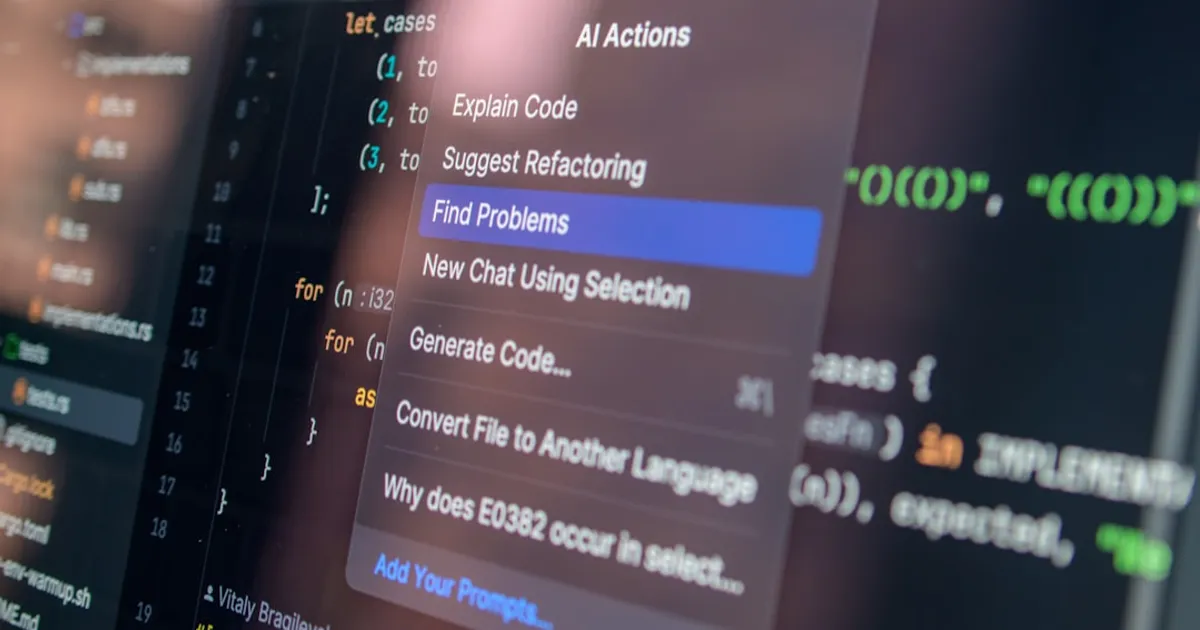
Hobbyist Daniel Diniz used Claude Code to find 575+ confirmed bugs across nearly a million lines of code in 44 Python C-extensions, with a ~10-15% false positive rate. He created the cext-review-toolkit plugin that deploys 13 specialized analysis agents in parallel, each targeting different bug classes including reference counting issues, GIL handling, and exception state problems. The process keeps maintainers in control, with Diniz adapting his approach based on each project's preferences and using their feedback to sharpen the tool's accuracy over time.
Ubuntu's 'AI Kill Switch' Is Achieved by Removing Snaps, Initially Opt-In
Canonical's VP of Engineering Jon Seager clarified plans to integrate AI features into Ubuntu Linux starting with version 26.10. AI features will be delivered via Snap packages, making them removable by uninstalling Snaps. Features will initially be opt-in, use local inference with local models, and won't be cloud-based. Potential features include text-to-speech and camera focus. Canonical also confirmed they will ship code co-authored by AI.

AI's $20 Pricing Era Has an Expiration Date
Frontier AI is sold at a 4-7x loss per user because humans provide training data, not just consume a service. This 'apprenticeship window' has maybe 3-5 years left as synthetic data approaches human quality and models learn to self-verify. Consumer pricing could jump to $80-150/month, top capabilities may get gated behind enterprise contracts, and labs might become direct operators instead of tool vendors.
Qwen3.6-27B Claims It Outcodes Their Own 807GB Flagship
Simon Willison reviews Qwen's new Qwen3.6-27B open weight model, which claims flagship-level agentic coding performance while being significantly smaller (55.6GB) than its predecessor Qwen3.5-397B-A17B (807GB). The author tested a 16.8GB quantized GGUF version using llama-server, sharing performance metrics (25.57 tokens/s generation) and successful example outputs including generating SVG images of creative scenes.