News
The latest from the AI agent ecosystem, updated multiple times daily.

OpenAI Revenue Miss Triggers AI Infrastructure Selloff
OpenAI reportedly missed internal revenue and user growth projections, sending AI infrastructure stocks down 3-5%. The bigger story is the take-or-pay GPU contracts underneath. OpenAI locked in massive compute deals with providers like Oracle and CoreWeave, who then used those contracts as collateral to borrow billions. Growth slows, and that debt exposure ripples downstream.

78-minute Claude outage blows past monthly enterprise SLA limit
An incident report from Anthropic's status page describing a service outage that lasted approximately 1 hour and 18 minutes (17:34-18:52 UTC) on April 28, 2026. The outage affected multiple services including Claude.ai, Claude API, Claude Code, Claude Console, Claude Cowork, and Claude for Government, causing elevated authentication errors and preventing users from accessing Claude.ai services. HN comments indicate ongoing reliability concerns, with one user reporting just 'one 9 of uptime' over the last 90 days and enterprise customers expressing frustration with frequent outages and poor support.

Ed Zitron has lost the plot
Kelsey Piper argues that Ed Zitron's AI bubble claims have shifted from reasonable economic skepticism to unfounded fraud allegations against OpenAI and Anthropic, despite growing enterprise adoption, falling costs, and rising revenue.

GitHub Copilot Code Reviews Now Bill You Twice
Starting June 1, 2026, GitHub Copilot's agent-powered code review feature will begin consuming GitHub Actions minutes in addition to AI Credits for private repositories. The code review runs on GitHub Actions using GitHub-hosted runners as part of its agentic tool-calling architecture, allowing it to pull in broader repository context for more relevant feedback.

A good AGENTS.md beats a model upgrade. A bad one tanks you 30%.
Augment Code conducted a systematic study measuring how AGENTS.md files affect AI coding agent performance. Well-written AGENTS.md files can improve code generation quality by up to 25% (equivalent to upgrading from Haiku to Opus), while poorly written ones can degrade performance by up to 30%. Key patterns that work include progressive disclosure, procedural workflows, decision tables, real code examples, and pairing every 'don't' with a concrete 'do'. The biggest failure mode is overexploration (context rot) from excessive architecture descriptions and warnings without actionable alternatives.

Anthropic's Mythos SWE-bench Proof Has a Fatal Flaw
Matt Dupree found a fatal flaw in Anthropic's argument that Mythos's SWE-bench gains are genuine. A Python simulation shows how a cheating model could produce the same results under an imperfect memorization detector. Without quantifying the detector's error rate, Anthropic's evidence doesn't hold up.

Lenovo-Phoenix Deal Leaves BIOS Market with Just Two Vendors
Lenovo completed its acquisition of Phoenix Technologies' firmware (BIOS) business, including intellectual property and the Dublin-based team. Financial terms weren't disclosed. The deal turns a 20-year vendor relationship into an internal capability, giving Lenovo direct control over firmware development for its PCs and AI-enabled devices.

AMD's Lemonade SDK 10.3 Dumps Electron, Shrinks 10x
AMD released Lemonade SDK 10.3, switching from Electron to Tauri and cutting binary size from ~100MB to ~10MB. The update adds OmniRouter for routing multi-modal AI requests through a single API endpoint, supports switching between ROCm versions (7.2 stable, 7.12 preview, TheRock nightly), and defaults to ROCm 7.12 preview. Lemonade provides local chat, vision, image generation, transcription, and speech through standard APIs.

PyWry Bakes MCP Server Into Python UIs That Run Everywhere
PyWry is a Python cross-platform UI framework targeting desktop, notebooks, and web from one codebase. Built on PyTauri's vendored 30.8MB Tauri runtime, it ships with MCP server integration for AI agent interaction, two-way Python-JS bridging, OAuth2, and support for AgGrid, Plotly, and TradingView. Hacker News commenters dispute the 'rendering engine' label, but the agent-ready approach fills a real gap.

$1.1B superlearner startup bets AI can learn without humans
Ineffable Intelligence, founded by former DeepMind researcher David Silver, raised $1.1 billion at a $5.1 billion valuation. The company aims to build a 'superlearner' that discovers knowledge through self-play, without human training data. Silver previously led reinforcement learning at DeepMind and built AlphaZero. Sequoia Capital and Lightspeed Venture Partners led the round, with participation from Index Ventures, Google, Nvidia, British Business Bank, and Sovereign AI.

Ed Zitron's AI Bubble Case Crumbles Under Evidence
Kelsey Piper takes aim at tech critic Ed Zitron's evolving case against AI, arguing his shift from reasonable economic skepticism in 2024 to fraud allegations in 2026 reveals a thesis that can't survive contact with reality. The piece is direct and opinionated, pointing to plunging costs and rising adoption as evidence the bubble narrative needs rethinking.

Spotify's AI Music Strategy: See No Evil
Spotify has no feature to filter AI-generated music and isn't building one. A frustrated developer created a third-party blocker. Competitor Deezer already tags and excludes AI tracks. The detection challenge grows as AI tools improve, while the industry argues over where to draw the line.

OpenAI Cracks Azure Grip as GPT Hits Amazon Bedrock
OpenAI's GPT-5.5 and GPT-5.4 are coming to Amazon Bedrock in preview, breaking Azure's exclusive hold on OpenAI's frontier models. Developers can now build agents with persistent memory through Bedrock's existing APIs, as OpenAI follows Anthropic's multi-cloud playbook.
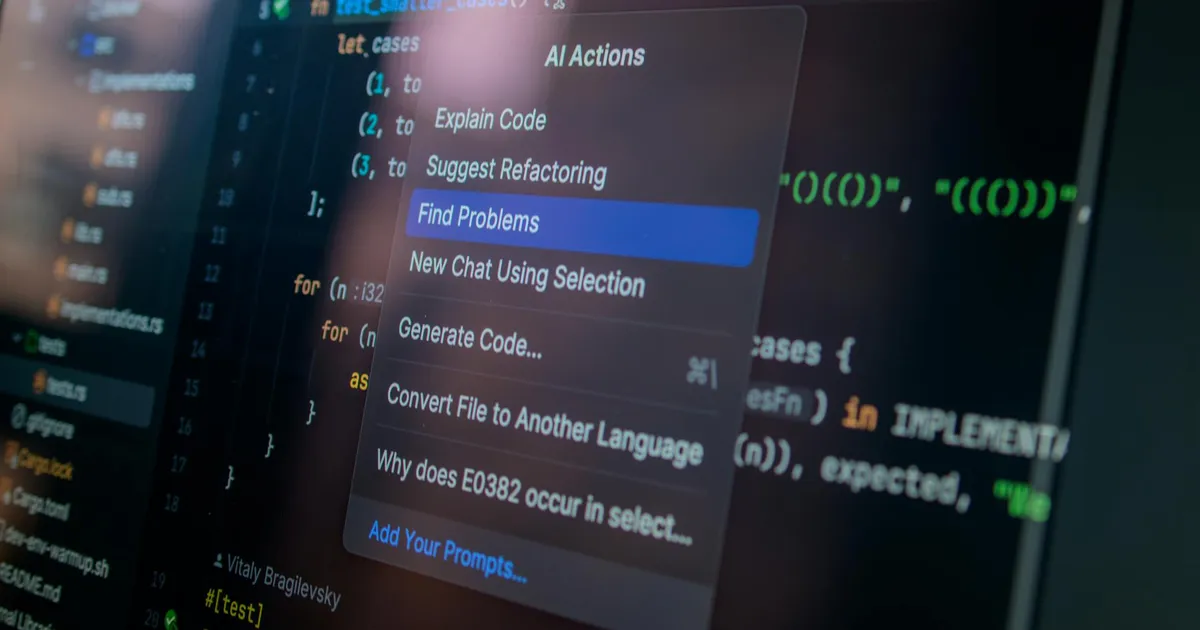
49Agents puts all your AI terminals on one zoomable canvas
49Agents is an open-source 2D agentic IDE that puts AI agents, terminals, and projects on a single zoomable canvas. It eliminates terminal clutter, supports real tmux sessions, offers zero-SSH multi-machine connectivity, and includes broadcast input, Monaco editor, Git graphs, and interactive issue tables.

This React Library Turns Loading Spinners Into Arcade Games
react-waiting-game is a React library that provides one-button mini-arcade games to occupy users during long-running tasks like LLM responses. The library includes five games (Jellyfish Drift, Pixel Runner, Gravity Flip, Invaders, Rhythm Tap) with 1-bit pixel art, zero runtime dependencies, and features like high scores, achievements, and SSR support.

Gas-Powered AI Data Centers May Out-Emit Entire Countries
An investigation reveals that gas-powered data centers being built for AI companies including OpenAI, Meta, Microsoft, and xAI could emit over 129 million tons of greenhouse gases annually. Projects like xAI's Colossus campuses and Microsoft's Chevron-backed Texas facility use behind-the-meter generation, running turbines constantly unlike normal power plants. The pollution hits communities like South Memphis, where the NAACP has sued over turbines in a predominantly Black, low-income neighborhood.

The Social Edge of AI: Better Individually, Worse Together
Research shows AI makes writers more creative individually but their stories become more similar collectively. This tragedy of the commons extends to AI itself. LLM intelligence comes from human social complexity, and as companies automate away human discourse, they're undermining the foundation future models need. The evidence is already visible in declining human conversation online.
Waiting for LLMs Sucks: Give Your Users Arcade Games
react-waiting-game is a React component library that drops 5 mini-arcade games into loading states for LLM calls, builds, and uploads. Features zero runtime dependencies, SSR-safe implementation, 1-bit pixel art, localStorage high scores, achievements, combo multipliers, and customizable skins.
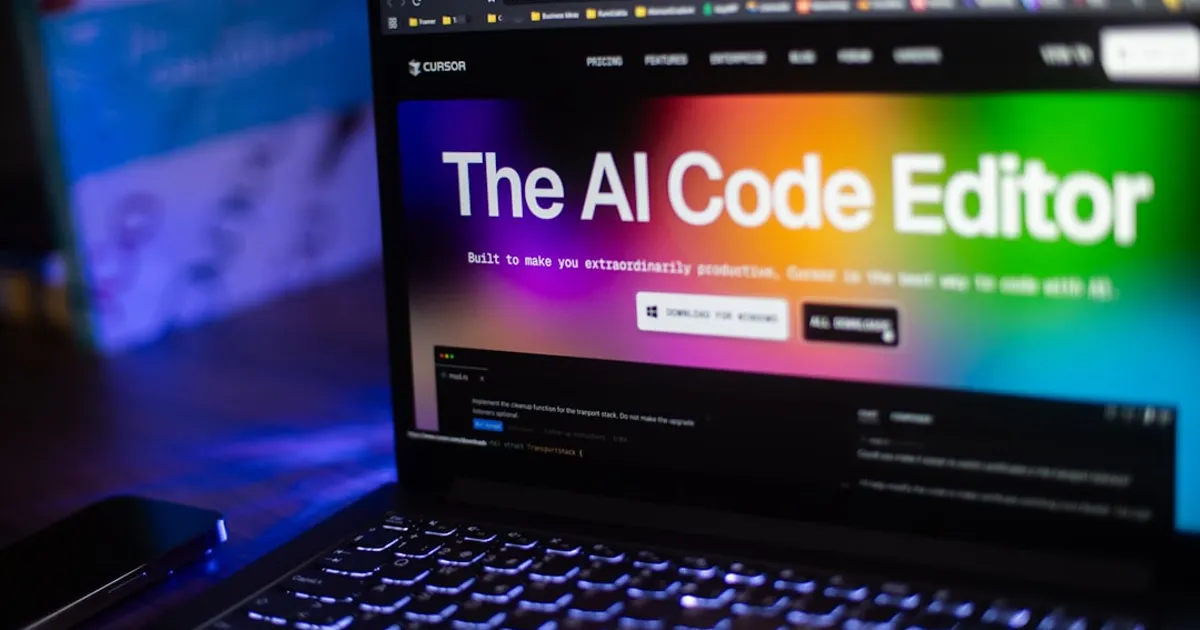
Claude Code and the Copyright Void
An analysis of copyright issues haunting AI-generated code, triggered by Anthropic's Claude Code leak. Code may lack copyright without meaningful human authorship, employers may claim it via work-for-hire clauses, and outputs resembling GPL-licensed training data can silently import copyleft obligations. Includes practical guidance on documentation and license scanning.

Gas-Powered AI Data Centers Could Out-Emit Entire Nations
A WIRED review of air permits for 11 natural gas-powered data center projects tied to OpenAI, Meta, Microsoft, and xAI reveals potential emissions topping 129 million tons of greenhouse gases per year. The permits expose a rush toward behind-the-meter power generation, where data centers skip the grid and build their own gas plants to fuel AI infrastructure directly.
Google Drops AI Veto Power in Pentagon Deal
Google signed a classified deal with the Pentagon letting the government use its AI for 'any lawful government purpose' with no veto power. The contract mentions no domestic mass surveillance or autonomous weapons without human oversight, but Google can't enforce those limits. Google now joins OpenAI and xAI with classified Pentagon deals, while Anthropic was blacklisted for keeping its guardrails.

Warp open-sources its terminal, lands OpenAI as founding sponsor
Warp open-sourced its client codebase with OpenAI as founding sponsor. The Rust-based terminal's agent platform runs on GPT models for coding help and cloud tasks. Users can run Warp's built-in agent or plug in Claude Code, Codex, and Gemini CLI.

AISLE Finds 38 Bugs in OpenEMR Medical Records Platform
AISLE's AI-powered security analyzer discovered 38 vulnerabilities in OpenEMR, an open-source electronic health record platform used by over 100,000 medical providers. The findings included SQL injection, XSS, path traversal, and authorization bypass issues. AISLE generated fix proposals for the vulnerabilities and has now integrated AISLE PRO into OpenEMR's code review workflow to prevent future vulnerabilities before they reach production.

Open CoDesign builds UI prototypes on your machine, not in the cloud
OpenCoworkAI released Open CoDesign, a free desktop app that generates UI designs, prototypes, and slides without sending your work to the cloud. The open-source tool supports OpenAI, Anthropic, Google, DeepSeek, or local models through Ollama. Users can click to edit specific parts of a design rather than regenerating everything from scratch.
AI's $20 Pricing Era Has an Expiration Date
Frontier AI is sold at a 4-7x loss per user because humans provide training data, not just consume a service. This 'apprenticeship window' has maybe 3-5 years left as synthetic data approaches human quality and models learn to self-verify. Consumer pricing could jump to $80-150/month, top capabilities may get gated behind enterprise contracts, and labs might become direct operators instead of tool vendors.
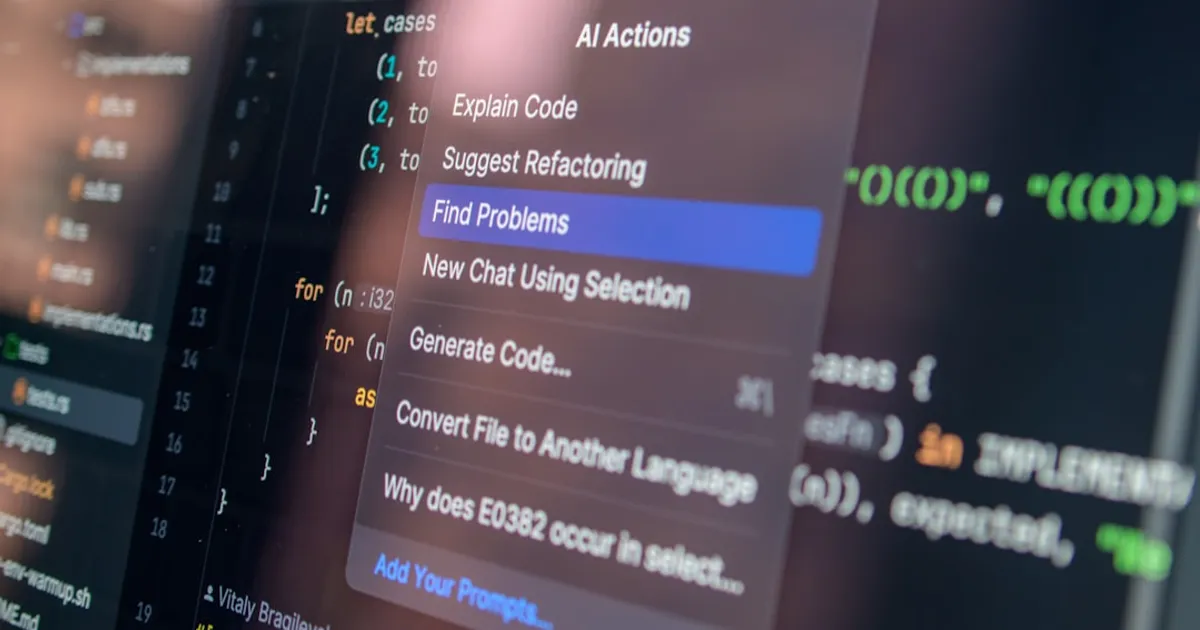
Hobbyist finds 575 bugs in Python C-extensions using Claude Code
Hobbyist Daniel Diniz used Claude Code to find 575+ confirmed bugs across nearly a million lines of code in 44 Python C-extensions, with a ~10-15% false positive rate. He created the cext-review-toolkit plugin that deploys 13 specialized analysis agents in parallel, each targeting different bug classes including reference counting issues, GIL handling, and exception state problems. The process keeps maintainers in control, with Diniz adapting his approach based on each project's preferences and using their feedback to sharpen the tool's accuracy over time.

Pompeii's First AI Face: A Man Running for His Life
For the first time, AI has rebuilt the face of someone killed in Pompeii's AD 79 disaster. A collaboration between the Pompeii Archaeological Park and the University of Padua turned skeletal data into an image of a man crushed while fleeing Vesuvius, terracotta mortar held over his head. But the project also raises questions about AI hallucinations distorting our view of the past.

EU wants Android AI opened to rivals; Google cries foul
The European Commission, under the Digital Markets Act (DMA), is investigating Google's preferential treatment of Gemini AI on Android and proposing measures to give third-party AI services the same deep system access. Proposed changes include system-level hot word access, screen context permissions, local data access for proactive suggestions, and APIs for autonomous app control. Google opposes the measures as 'unwarranted intervention' that would compromise privacy and security. The commission is accepting feedback until May 13, 2026, with a final decision due by July 27.

AI Reconstructs a Pompeii Victim's Face. Can We Trust It?
Archaeologists at Pompeii have used artificial intelligence for the first time to digitally reconstruct the face of a man killed in the AD 79 eruption of Mount Vesuvius. The project, a collaboration between the Pompeii Archaeological Park and the University of Padua, combines AI and photo-editing techniques to translate skeletal and archaeological data into a realistic human likeness. The reconstruction shows a man holding a terracotta mortar over his head as protection from falling volcanic debris.

AI Bubble? HN Users See Runaway Costs, Spread False Sora Rumor
A Hacker News discussion examining whether the AI market is in a bubble. Comments highlight concerns about high compute costs, investor enthusiasm versus actual revenue, and skepticism about AI capabilities. One commenter mentions OpenAI closing Sora AI and canceling a Disney contract due to financial losses.

EU to Google: Open Android AI to rivals; Google calls it overreach
The European Commission has completed its investigation into Google's AI implementation on Android under the Digital Markets Act, proposing measures to require Google to provide third-party AI services with the same system-level access as Gemini. Proposed changes include allowing third-party AI tools to be invoked via hot words, access screen context, access local data for suggestions, and autonomously control apps. Google opposes the measures as an "unwarranted intervention" that could compromise security and privacy.

India Sells H100 Hours at 78 Cents
India's IndiaAI Mission subsidizes H100 GPU hours to $0.78, or free for foundational model builders. The $500 million compute subsidy distorts how we read Indian AI startup economics, creates perverse incentives around GPU utilization, and backstops data center expansion for the country's largest conglomerates. AWS walked away from the tender rather than establish a sub-$2 reference price.

India Will Sell You H100 Hours for 78 Cents
The IndiaAI Mission offers H100 GPU hours at 78 cents to researchers and free to startups building indigenous foundational models. Commercial clouds charge $3-4 for the same hour. This four-fold price spread distorts incentives and opens arbitrage risks that could redirect Indian subsidies to foreign competitors.

HN Debates AI Bubble as Compute Costs Burn Startups
A Hacker News thread asking whether AI is a speculative bubble has struck a chord, with commenters drawing direct parallels to the Dot Com era. Startups are burning through capital on compute costs while slapping 'AI' on pitch decks without clear implementation plans. A false rumor about OpenAI shutting down Sora spread quickly in the thread, exposing how skepticism around AI's trajectory travels faster than the actual technology.

Spotify Won't Add an AI Filter. Follow the Money.
Spotify has no plans to filter AI-generated music despite user frustration. A Leipzig developer built his own blocker covering 4,700+ suspected AI artists. Competitor Deezer already detects and tags AI tracks. Spotify cites the complexity of labeling music on a spectrum, but the royalty-diluting economics of AI content farms may explain the real hesitation.

The AI Boom Is Real in San Francisco. The Wealth Isn't.
The Economist calls San Francisco both the AI capital of the world and an economic laggard. Both might be true. AI companies pour billions into cloud infrastructure, not local hiring. Specialized salaries spike while middle-class jobs keep disappearing.
DOOM runs inside ChatGPT and Claude via MCP
Chris Nager built a playable DOOM game that runs inside ChatGPT and Claude using the Model Context Protocol (MCP). The app launches inline in compatible AI clients or falls back to a browser URL. It uses cloudflare/doom-wasm with Freedoom Phase 1 content.

AI Reconstructs a Pompeii Victim's Face. The Certainty Is the Problem
Pompeii archaeologists used AI to reconstruct the face of a man killed in the AD 79 Vesuvius eruption. The photorealistic image looks like a photograph but is a statistical best guess. Features his skull couldn't preserve, like his nose and eyes, were estimated by algorithms trained on craniofacial databases.

India Sells H100 Hours for 78 Cents
India's IndiaAI Mission offers H100 GPUs at roughly 78 cents per hour, or free for indigenous model startups, versus AWS Mumbai's $4+ rate. This four-fold price spread raises questions about how government subsidies distort efficiency signals, the role of MFU measurements in revealing actual compute productivity, tropical cooling costs affecting Indian data centers, and the geopolitics behind who gets access to Nvidia's chips.

HN Debates AI Bubble as Disney Walks from OpenAI Deal
A Hacker News thread on whether AI is a bubble drew hundreds of comments comparing the hype to the Dot Com era. The top arguments: startups lean on AI branding without revenue, compute costs are unsustainable, and Disney just walked from an OpenAI partnership because the tech wasn't good enough.
Ubuntu's 2026 AI Play: Local Inference, Agents, and Snap Flashbacks
Canonical is baking AI into Ubuntu throughout 2026, starting with local inference by default and out-of-the-box NPU driver support. Agentic workflows and context-aware OS features are on the roadmap, but Canonical hasn't defined what those actually look like in practice.

DOOM in ChatGPT: What MCP Wasn't Built For
A playable DOOM game running directly in ChatGPT and Claude via MCP, using Cloudflare's doom-wasm engine, Freedoom Phase 1, signed-token session management, and Netlify hosting.

Xiaomi's 1T Open-Source Model Runs Cheaper Than Kimi K2.6
Xiaomi open-sourced MiMo-V2.5-Pro, a 1 trillion parameter language model with a 1M-token context window and MIT license. Benchmarks put it competitive with proprietary options: 66.7 on GPQA reasoning, 99.6 on GSM8K math, 78.9 on SWE-bench Verified coding. A Gert Labs tester found it comparable to Kimi K2.6 with slightly better tool use and lower inference cost. Supports English and Chinese, tagged for agent and long-context work.

DeepSeek's $5.6M Model Threatens $1T U.S. AI Bet
Shaun Warman argues that open-weight models from Chinese labs (DeepSeek, Qwen, Kimi, GLM) are commoditizing AI capabilities and undermining the monopoly returns U.S. frontier lab investors expected. He anticipates regulatory enclosure of Chinese open weights, vertical integration by labs becoming operators, and a market split between protected U.S. users and the rest of the world.
MI300X vs H100 vs H200 Training Benchmarks: CUDA Moat Persists
SemiAnalysis presents a five-month independent benchmarking analysis comparing AMD's MI300X against Nvidia's H100 and H200 GPUs. Despite MI300X having superior specifications on paper, real-world training performance falls well behind due to AMD's software bugs, poor quality assurance, and the CUDA moat. The study found AMD's out-of-box experience requires extensive engineer support, while Nvidia's hardware worked immediately. Even with lower total cost of ownership, MI300X fails to deliver competitive training performance per dollar on stable public software releases.
OpenAI 5x'd Landed PRs by Turning Linear Into an Agent Control Plane
OpenAI introduces Symphony, an open-source specification for orchestrating coding agents that uses project management tools like Linear as a control plane for AI agents. The system achieved a 500% increase in landed PRs on some teams by decoupling work from interactive sessions and allowing agents to continuously pull tasks from issue trackers. Symphony is defined as a SPEC.md file that outlines a scheduler/runner system with components like Workflow Loader, Orchestrator, Workspace Manager, and Agent Runner.

Anthropic's Safety Definition Skips the Trust Question
This opinion piece argues that Anthropic's definition of safety is too narrow, focusing only on model behavior while neglecting product reliability, pricing, and communication issues. The author discusses recent incidents including Claude Code quality degradation, a controversial pricing experiment that removed Claude Code from Pro plans, and poor communication around changes. The article contends that for a company whose market position depends on trustworthiness, operational decisions like pricing, rollouts, and communication are also part of the safety conversation because they impact user trust.
Anthropic quietly paywalls Opus for Claude Pro users
Anthropic's Claude Code documentation now states that Pro subscribers must enable and pay for extra usage to access Opus models, marking a shift away from flat-rate pricing for premium model tiers.

LingBot-Map hits 20 FPS for 3D reconstruction, but on what hardware?
LingBot-Map processes visual data into 3D environments at approximately 20 FPS and 518x378 resolution using a geometric context transformer. The Hacker News community quickly flagged the missing hardware specs, making these benchmark numbers impossible to evaluate.
Qwen3.6-27B Claims It Outcodes Their Own 807GB Flagship
Simon Willison reviews Qwen's new Qwen3.6-27B open weight model, which claims flagship-level agentic coding performance while being significantly smaller (55.6GB) than its predecessor Qwen3.5-397B-A17B (807GB). The author tested a 16.8GB quantized GGUF version using llama-server, sharing performance metrics (25.57 tokens/s generation) and successful example outputs including generating SVG images of creative scenes.