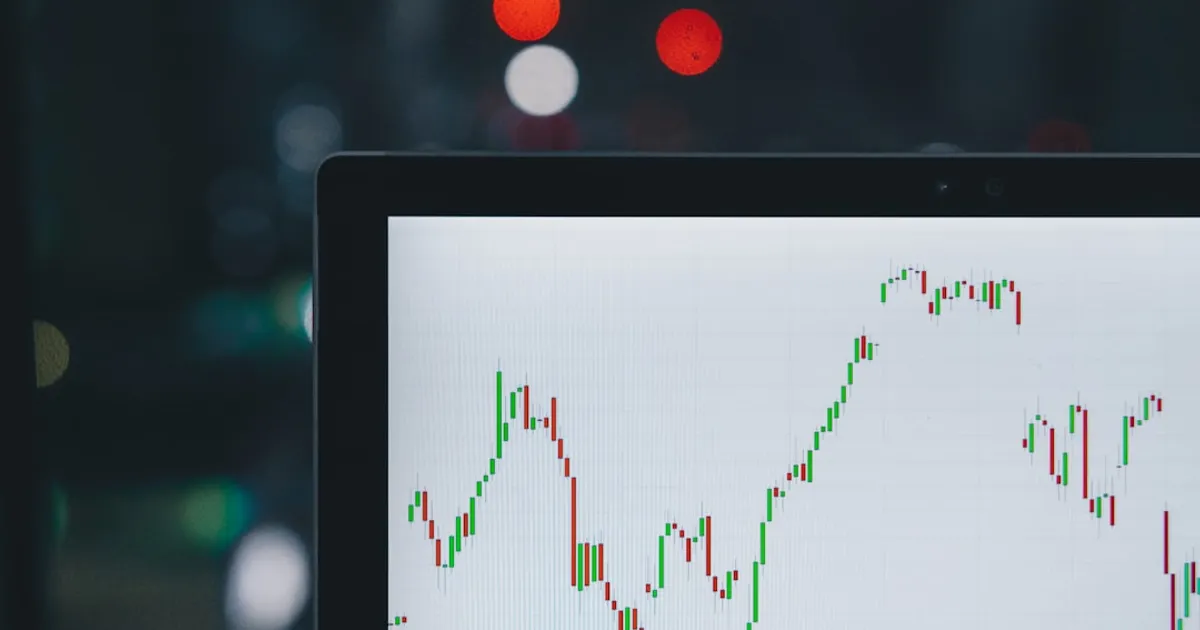
Ginlix, a small development studio, just released LangAlpha, an open-source tool that rethinks how AI agents handle financial research. Most AI finance tools treat each query as a one-shot interaction. You ask about a stock, get an answer, and start fresh next time. LangAlpha takes a different approach. It gives agents persistent workspaces where research context carries across sessions. Create a workspace for "Q2 rebalance" or "energy sector rotation," and the agent builds on accumulated files, threads, and analysis each time you return. The project runs on LangChain and LangGraph with an Apache 2.0 license.
The technical detail that matters here is Programmatic Tool Calling. Instead of dumping raw financial data into an LLM's context window, the agent writes and executes Python code in cloud sandboxes to process that data first. A Hacker News commenter pointed out that naive financial MCP tools can dump tens of thousands of tokens into context when retrieving historical prices. LangAlpha's sandbox approach sidesteps that problem.
That alone makes it worth watching.
The system integrates with Financial Modeling Prep, Yahoo Finance, and Polygon.io for data. It supports GPT-4, Claude Opus, and Gemini Pro as model backends. LangAlpha ships with a full web UI called the Finance Research Workbench, complete with TradingView charts, real-time market data via WebSockets, and subagent monitoring. Users can dispatch parallel agent swarms with isolated context windows for simultaneous data gathering tasks. There's also a Secretary agent for managing workspaces in the background and automation features that trigger tasks based on price conditions. The stack runs on React 19, FastAPI, Postgres, and Redis.
This is an ambitious project for a relatively unknown team. Ginlix has limited public presence, and one Hacker News commenter noted they'd want to see more specific test cases demonstrating accuracy before trusting it with real investment decisions. Still, the architecture solves real problems in how agents handle financial data workflows. If the accuracy holds up, LangAlpha's approach could change how finance teams use AI, moving from one-off queries to accumulated research.