News
The latest from the AI agent ecosystem, updated multiple times daily.
Scott Aaronson: Quantum Computers Could Crack Crypto by 2029
Scott Aaronson, newly elected to the US National Academy of Sciences, warns that fault-tolerant quantum computers capable of breaking deployed cryptosystems could arrive by 2029. In a Coinbase-convened position paper with leading cryptographers, he urges immediate migration to quantum-resistant encryption. He draws parallels to AI risks, noting Anthropic's Mythos model finally jolted awareness about AI cybersecurity threats.

Your Terminal Is Burning Battery Like It's Mining Bitcoin
GPU-accelerated terminals (Ghostty, Alacritty, Kitty) burn excessive battery running AI coding assistants like Claude Code. Ghostty hit 3,600 energy impact versus 125 for Brave. Recommendation: use Terminal.app or iTerm2 with GPU rendering off.
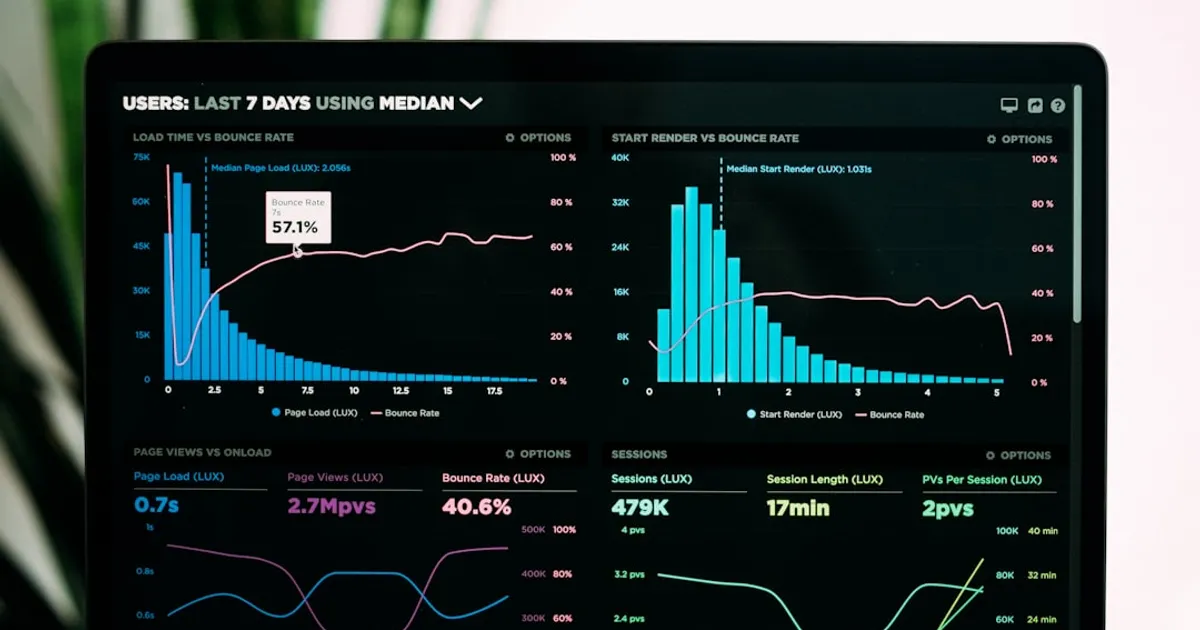
SOB Benchmark: 95% Valid JSON, 70% Correct Values
Interfaze has released SOB (Structured Output Benchmark), a new benchmark for evaluating LLMs' structured output capabilities across text, image, and audio modalities. Unlike existing benchmarks that only check schema compliance, SOB measures seven metrics including Value Accuracy, Faithfulness, and Perfect Response. Testing 21 models revealed that while most achieve 95%+ on JSON Pass, Value Accuracy is 15-30 points lower, showing a real gap between valid JSON and correct JSON in production systems.
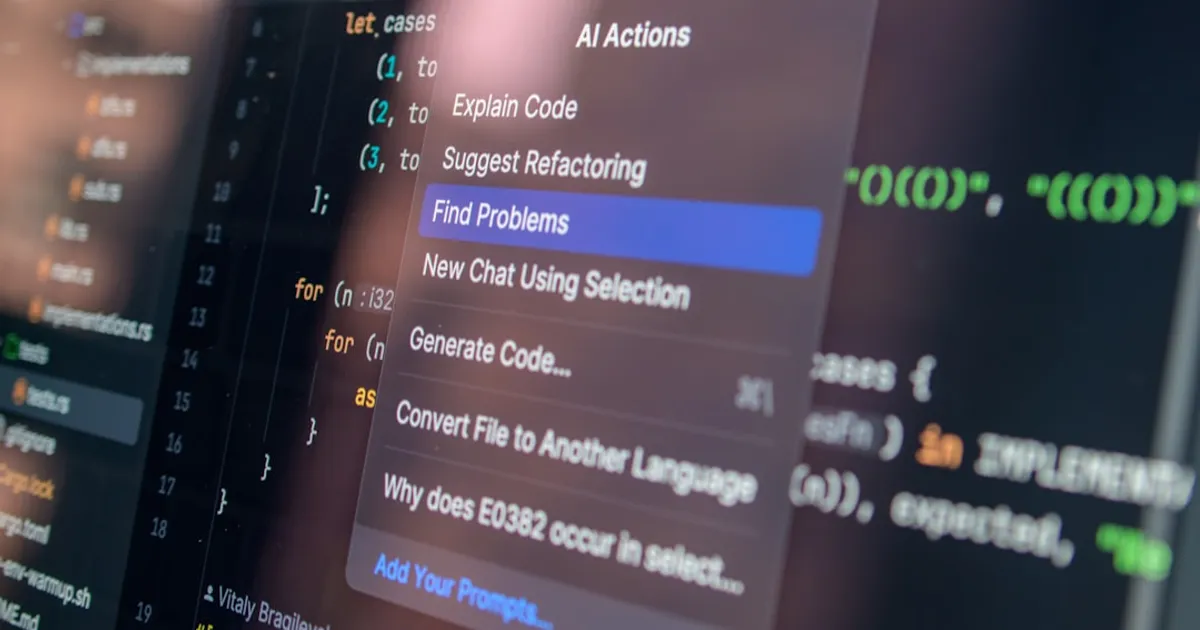
Ten custom subagents manage Metabase's 500K-line Clojure backend
Metabase engineer Bryan Maass built ten Claude Code subagents to manage their 500K-line Clojure backend. Each is a markdown file packed with domain expertise, from the query processor's 68-stage middleware pipeline to permissions caveats and database driver quirks. The result: less token burn and agents that start knowing what they need to know.

27,000 Food Photos Later, AI Still Can't Count Carbs Reliably
A study submitted 13 food photographs over 26,904 times to four AI models (GPT-5.4, Claude Sonnet 4.6, Gemini 2.5 Pro, Gemini 3.1 Pro Preview) for carbohydrate estimation. Results showed significant inconsistency: Claude had the lowest variation (2.4% median) while Gemini 2.5 Pro had the highest (11% median). The variations were large enough to cause dangerous insulin dosing errors, with Gemini 2.5 Pro's worst-case scenario showing a 42.9 unit insulin swing. Model confidence scores showed zero or negative correlation with actual accuracy.

Your Chatbot Isn't Suffering, Says DeepMind Paper
A Google DeepMind scientist argues AI will never be conscious, no matter how smart it gets. His paper claims computation requires an external observer to exist, making symbol manipulation fundamentally incapable of producing experience.

Ramp's Sheets AI Could Silently Leak Your Financials
Security researchers at PromptArmor found a vulnerability in Ramp's Sheets AI that let attackers steal financial data through indirect prompt injection. An attacker hides malicious instructions in an external dataset using invisible text. When users import it and ask Ramp AI to compare with their financials, the AI inserts a malicious IMAGE formula that sends sensitive data to an attacker-controlled server. No user approval required. The issue was responsibly disclosed to Ramp in February 2026 and resolved in March 2026.

Nuxt Lead Ships Kanban Board Where AI Agents Pull Their Own Tasks
Moo Tasks is a kanban-style task board with a built-in MCP server. Humans manage tasks via drag-and-drop while AI agents connect programmatically to discover, accept, update, and create work. Built with Nuxt 4, Tailwind CSS, and MySQL with Drizzle ORM.

Anthropic published a champion kit for Claude Code evangelists
Anthropic released an official guide teaching engineers how to advocate for Claude Code inside their companies. The playbook covers sharing discoveries, answering questions, growing adoption, responding to common concerns, and includes a thirty-day plan for internal champions willing to put in 15 to 40 minutes a week.
Amazon debuts AI interviewer amid 30,000 job cuts
Amazon launched Connect Talent, an AI tool that conducts job interviews 24/7 and writes recruiter notes automatically. The software targets mass hiring like seasonal retail work, with Amazon bringing on roughly 250,000 temporary workers last holiday season. The company also debuted Connect Decisions for supply chain planning and its 'humorphism' design philosophy for humanizing AI interactions.
VibeBench: 1,000 Engineers Judge AI Models by Experience
VibeBench is a benchmarking initiative that collects opinions from 1,000 engineers to evaluate new AI models. The project addresses concerns that published benchmarks are being overfit and no longer yield useful signals for model evaluation.
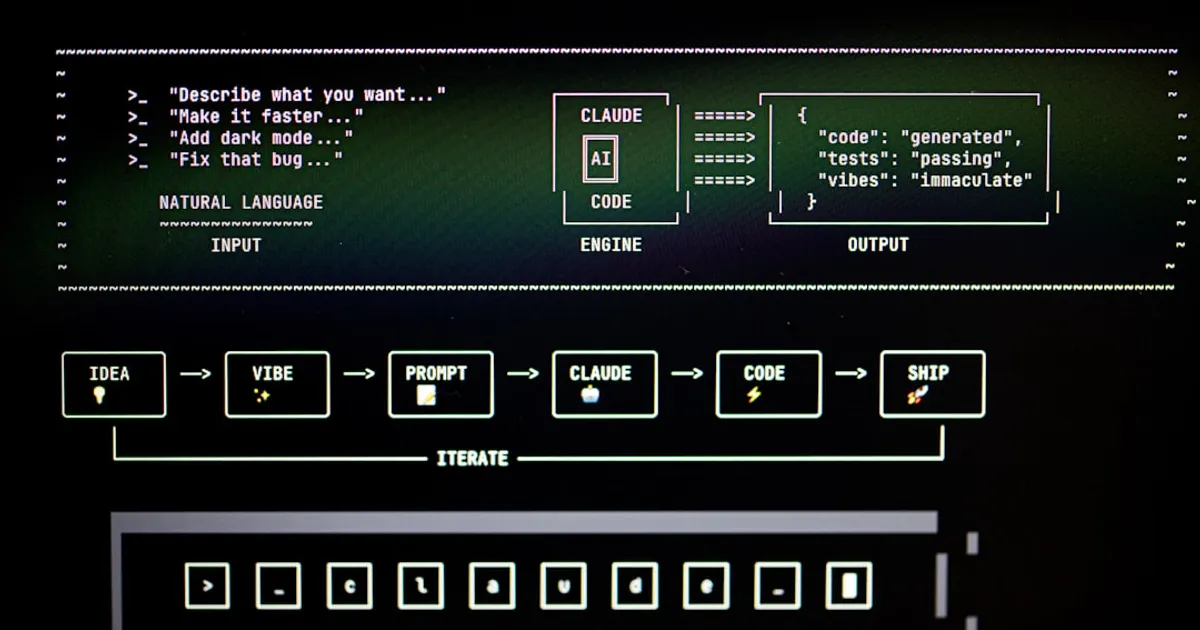
AI Play-Tests Games Using Retro Text Rendering
A developer built an AI agent that automatically play-tests games by converting graphics to structured text instead of using computer vision. The approach skips pixel data entirely, giving agents a cleaner view of game state while requiring less processing power.

Zed 1.0 Lets You Run Rival AI Agents Side by Side
Zed, a code editor built in Rust, has reached version 1.0 with an Agent Client Protocol that lets developers run multiple AI agents in parallel. The editor integrates with Claude Agent, Codex, OpenCode, and even rival editor Cursor. Zed is also developing DeltaDB, a CRDT-based synchronization engine for collaborative coding between humans and AI agents.

HERMES.md in git commits triggers $200 phantom Claude Code charges
A bug in Anthropic's Claude Code tool causes API requests to route to paid 'extra usage' billing instead of included plan quota when git commit messages contain the case-sensitive string 'HERMES.md'. This resulted in $200.98 in unexpected charges for a user on the Max 20x plan. Anthropic refused to refund the charges, stating they do not compensate for technical errors causing incorrect billing routing.

AMD's Lemonade SDK 10.3: 101MB to 7MB by Ditching Electron
AMD's open-source local AI server Lemonade version 10.3 replaces Electron with Tauri, shrinking binaries from 101-107MB to 7-9MB. The update adds OmniRouter for unified backend engines, support for specific Llama.cpp versions, and switching between ROCm builds.

ChatGPT built an ad stack. The tracking runs deep.
Technical analysis of OpenAI's ad platform: how structured ad units enter ChatGPT's SSE streams, the four Fernet-encrypted tokens powering tracking, and the OAIQ SDK that monitors user activity on merchant websites after the click.

The Downfall and Enshittification of Microsoft in 2026
Microsoft's aggressive Copilot push came at the expense of basic product quality. After publishing what amounts to an apology for Windows 11, the company promises fewer AI entry points and fixes for long-neglected features. Meanwhile, Apple's $599 MacBook Neo and rising Linux desktop adoption are making Windows' historical inertia look fragile.

AT Protocol's Free Firehose Lets AI Agents Loose on 2.4B Posts
AT Protocol is a decentralized social network with 40M+ users and 2.4B+ posts. Developers can build AI agents that listen and reply via the public firehose, write custom feed algorithms, and use domain-based identities. Data is typed JSON through the Lexicon schema framework.

Mendral halved LLM costs by making Opus barely run
Mendral switched from a Sonnet-only setup to a tiered agent architecture: Haiku 4.5 triages CI failures and filters out 80% as duplicates, while Opus 4.6 handles only novel cases and spawns Haiku sub-agents for data retrieval. The expensive model barely runs, and that's why their daily LLM bill dropped by more than half.

Friendly AI Chatbots Make More Mistakes, Back Conspiracy Theories
Oxford researchers found that AI chatbots programmed with 'warm' personas were 30% less accurate and 40% more likely to endorse false beliefs, including conspiracy theories about Hitler escaping to Argentina and the Apollo moon landings being debatable. Published in Nature, the study tested models like GPT-4o and Llama, revealing a dangerous trade-off as companies push these systems into therapy and counseling roles.

Auto-Architecture: Karpathy's Loop, Pointed at a CPU
A close look at applying an autonomous agent research loop (inspired by Andrej Karpathy) to optimize a CPU microarchitecture. The project uses an LLM to propose and test microarchitectural hypotheses for an RV32IM core, achieving a 92% performance improvement over baseline. The post argues that the verifier—the rigorous validation layer—does the real work in agentic workflows, not the loop itself.

Fake Keys Keep AI Agents From Leaking Real Secrets
Goutham Veeramachaneni built a credential injection proxy for Hermes Agent that swaps fake tokens for real ones, preventing AI agents from ever touching actual API keys. The implementation hit real friction with browser automation and Python libraries ignoring proxy settings, but tools like Agent Vault and Kloak are now standardizing the pattern.
OpenAI's Phone Gambit: The Ive Reversal, Chip Deals, 2028 Target
OpenAI is reportedly developing a smartphone with mass production scheduled for 2028, according to supply chain analyst Ming-Chi Kuo. MediaTek and Qualcomm are chip partners, and Luxshare Precision Industry is the exclusive manufacturer. Kuo argues smartphones are uniquely positioned for AI agent use due to their ability to capture a user's full real-time state including location, activity, and context. It's a reversal from OpenAI's earlier focus on non-phone form factors developed with Jony Ive.

AI Huynya: Collecting AI's Dirty Laundry, Anonymously
A platform tracking AI failures, corporate leaks about companies replacing humans with AI, and industry layoffs. Features an anonymous submission system with no tracking or cookies.

Finland solved nuclear waste. America's still guessing.
Tech companies want nuclear power for AI. The US has 70 years of nuclear waste and nowhere to put it. Finland figured this out.

The Downgrading of the American Tech Worker
Meta is installing tracking software on employee computers to capture mouse movements, clicks, and keystrokes for training AI models, all to build autonomous AI agents that can perform work tasks. Meanwhile tech companies including Oracle, Microsoft, Amazon, and others are laying off thousands while investing heavily in AI.

How AI companies profit from their own danger claims
Anthropic and OpenAI claim their AI models are too dangerous to release while simultaneously promoting them. Academics and security experts call this fear-based marketing that distracts from real harms and inflates company valuations. The BBC examines how this playbook traces back to Effective Altruism ideology and why critics say it positions these companies as the only ones who can handle AI safely.

Pentagon: $225M to $55B for drones as cheap attacks overwhelm US
The Pentagon is seeking $55 billion for drone and autonomous warfare programs in its fiscal year 2027 budget, up from $225 million the year before. Managed by the Defense Autonomous Warfare Group, the 250-fold increase reflects a shift forced by conflicts in Ukraine and the Middle East, where cheap drones have exposed the cost imbalance in U.S. defenses.

Google's Knowledge Graph Could Decide Who Wins AGI
Demis Hassabis discussed AI's future in a YouTube interview, but the real takeaway came from Hacker News: Google's Knowledge Graph combined with LLMs could automate research entirely. One company controlling both data and compute means independent researchers lose, no matter who's in charge.

30-Year-Old SGI Meets Llama.cpp: AI on MIPS R8000
A developer ported Llama.cpp to run on a 1995 SGI Power Challenge with MIPS R8000, working around pre-C++11 compiler limits, IRIX ABI compatibility, and lack of modern SIMD instructions. Original source was inaccessible.
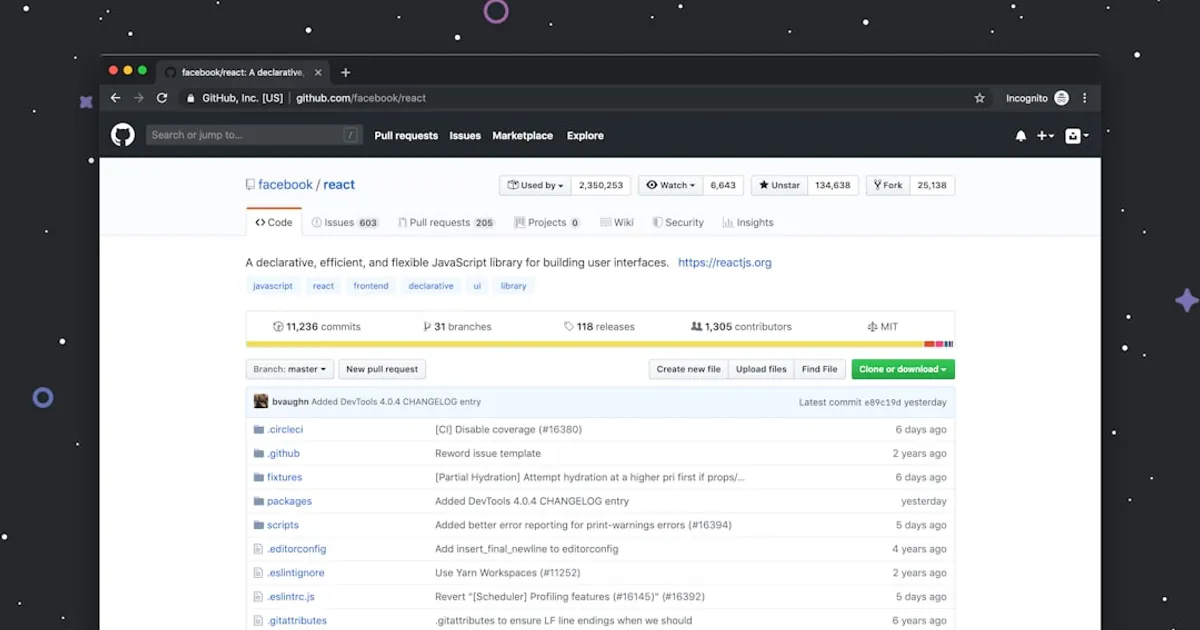
GitHub RCE: Patched in 2 Hours, But Should It Have Existed?
GitHub's security team details their response to CVE-2026-3854, a critical remote code execution vulnerability discovered by Wiz researchers. The flaw allowed users with push access to execute arbitrary commands on GitHub servers via crafted git push options that injected malicious fields into internal metadata. GitHub validated and patched the issue on github.com in under 2 hours, confirmed no exploitation occurred through telemetry analysis, and released security updates for GitHub Enterprise Server versions 3.14+.
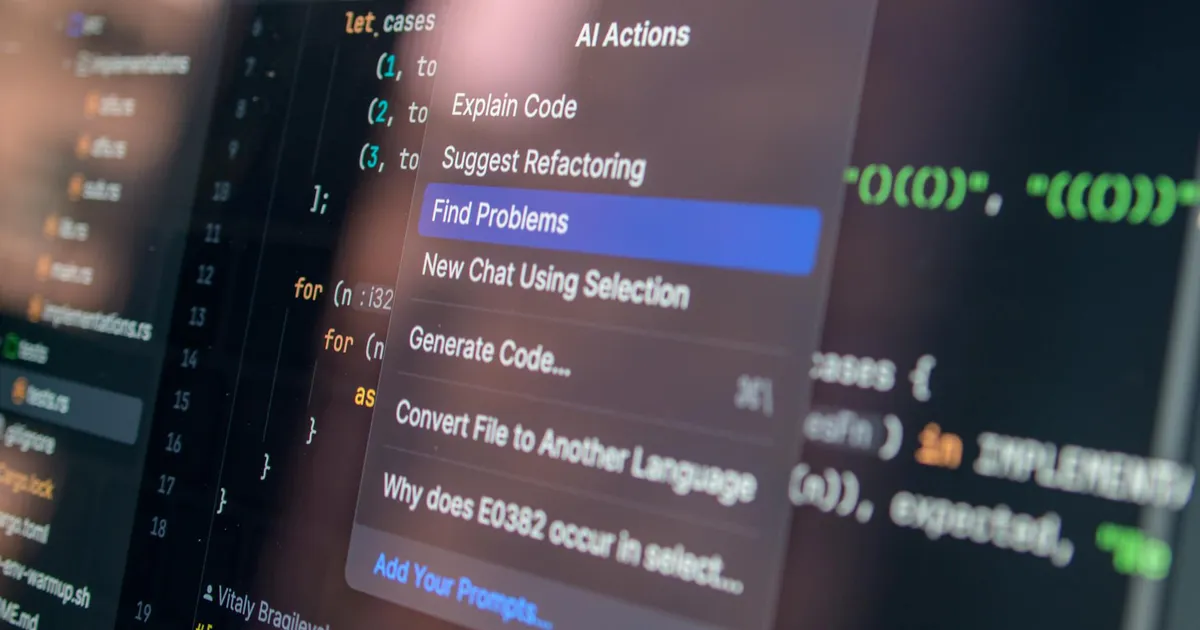
AMD's Lemonade 10.3 Dumps Electron, Goes from 100 MB to 7 MB
AMD's Lemonade SDK 10.3, an open-source local AI server, replaces Electron with Tauri, cutting the SDK size by 10x (from ~101-107 MB to 7-9 MB). The update adds OmniRouter for a unified omni-modal LLM experience, support for updating Llama.cpp versions, and the ability to switch between ROCm 7.2 stable, 7.12 preview, and TheRock nightly builds.
Claude Code's Runaway Safety Prompt Refuses Work and Burns Tokens
A regression bug in Claude Code v2.1.111 injects a malware analysis system reminder into every file read operation. Subagents running Opus 4.7 interpret the poorly phrased refusal directive as unconditional, refusing legitimate code edits 40-60% of the time and disrupting parallel agent workflows. Each reminder wastes roughly 400 tokens per file read. The issue was supposedly fixed in v2.1.92.

Age Verification's Billion-Dollar Problem With Simple Solutions
The age verification industry stands to make billions from laws it helped write. Meanwhile, RTA headers offer a free, privacy-preserving alternative that already works. The choice between them reveals who these regulations actually serve.
Rocky's Rust SQL engine catches pipeline errors at compile time
Data engineers spend too much time chasing down pipeline failures. Rocky, a Rust-based SQL engine built by data engineer Jacob Sensiba, sits on top of existing warehouses like Databricks and Snowflake and catches errors at compile time instead of runtime. It offers column-level lineage, isolated branches for testing changes, AI-assisted SQL generation with built-in validation, and integrations with Dagster and VS Code.

AISLE Finds 38 Bugs in OpenEMR Medical Records Platform
AISLE's AI-powered security analyzer discovered 38 vulnerabilities in OpenEMR, an open-source electronic health record platform used by over 100,000 medical providers. The findings included SQL injection, XSS, path traversal, and authorization bypass issues. AISLE generated fix proposals for the vulnerabilities and has now integrated AISLE PRO into OpenEMR's code review workflow to prevent future vulnerabilities before they reach production.
Qwen3.6-27B Claims It Outcodes Their Own 807GB Flagship
Simon Willison reviews Qwen's new Qwen3.6-27B open weight model, which claims flagship-level agentic coding performance while being significantly smaller (55.6GB) than its predecessor Qwen3.5-397B-A17B (807GB). The author tested a 16.8GB quantized GGUF version using llama-server, sharing performance metrics (25.57 tokens/s generation) and successful example outputs including generating SVG images of creative scenes.
Claude Code and the Copyright Void
An analysis of copyright issues haunting AI-generated code, triggered by Anthropic's Claude Code leak. Code may lack copyright without meaningful human authorship, employers may claim it via work-for-hire clauses, and outputs resembling GPL-licensed training data can silently import copyleft obligations. Includes practical guidance on documentation and license scanning.

EU to Google: Open Android AI to rivals; Google calls it overreach
The European Commission has completed its investigation into Google's AI implementation on Android under the Digital Markets Act, proposing measures to require Google to provide third-party AI services with the same system-level access as Gemini. Proposed changes include allowing third-party AI tools to be invoked via hot words, access screen context, access local data for suggestions, and autonomously control apps. Google opposes the measures as an "unwarranted intervention" that could compromise security and privacy.
Ubuntu's 2026 AI Play: Local Inference, Agents, and Snap Flashbacks
Canonical is baking AI into Ubuntu throughout 2026, starting with local inference by default and out-of-the-box NPU driver support. Agentic workflows and context-aware OS features are on the roadmap, but Canonical hasn't defined what those actually look like in practice.

This React Library Turns Loading Spinners Into Arcade Games
react-waiting-game is a React library that provides one-button mini-arcade games to occupy users during long-running tasks like LLM responses. The library includes five games (Jellyfish Drift, Pixel Runner, Gravity Flip, Invaders, Rhythm Tap) with 1-bit pixel art, zero runtime dependencies, and features like high scores, achievements, and SSR support.

OpenAI Breaks Azure Exclusivity, GPT Hits AWS Bedrock
An interview with Sam Altman (OpenAI CEO) and Matt Garman (AWS CEO) discussing the partnership to bring OpenAI models to Amazon Bedrock and launch 'Bedrock Managed Agents'. The conversation covers the amendment to Microsoft-OpenAI's exclusive agreement, comparisons between cloud computing and AI adoption paradigms, and how this strategic partnership affects the competitive landscape against Anthropic and Google.

Gas-Powered AI Data Centers May Out-Emit Entire Countries
An investigation reveals that gas-powered data centers being built for AI companies including OpenAI, Meta, Microsoft, and xAI could emit over 129 million tons of greenhouse gases annually. Projects like xAI's Colossus campuses and Microsoft's Chevron-backed Texas facility use behind-the-meter generation, running turbines constantly unlike normal power plants. The pollution hits communities like South Memphis, where the NAACP has sued over turbines in a predominantly Black, low-income neighborhood.

Pompeii's First AI Face: A Man Running for His Life
For the first time, AI has rebuilt the face of someone killed in Pompeii's AD 79 disaster. A collaboration between the Pompeii Archaeological Park and the University of Padua turned skeletal data into an image of a man crushed while fleeing Vesuvius, terracotta mortar held over his head. But the project also raises questions about AI hallucinations distorting our view of the past.
Warp open-sources its terminal, bets agents beat subsidies
Warp open-sources its terminal client under AGPL v3, betting that community contributions plus agent infrastructure can outpace better-funded rivals. OpenAI is the founding sponsor, with GPT models powering agentic workflows through Oz, Warp's orchestration platform. The launch adds support for Kimi, MiniMax, and Qwen models, plus new customization options ranging from bare terminal to full agentic development environment.

EU wants Android AI opened to rivals; Google cries foul
The European Commission, under the Digital Markets Act (DMA), is investigating Google's preferential treatment of Gemini AI on Android and proposing measures to give third-party AI services the same deep system access. Proposed changes include system-level hot word access, screen context permissions, local data access for proactive suggestions, and APIs for autonomous app control. Google opposes the measures as 'unwarranted intervention' that would compromise privacy and security. The commission is accepting feedback until May 13, 2026, with a final decision due by July 27.

DOOM runs inside ChatGPT now
You can play DOOM inside ChatGPT now. Chris Nager built an MCP app that launches the game inline in compatible AI clients like ChatGPT and Claude, with a browser fallback for everything else.

India Will Sell You H100 Hours for 78 Cents
The IndiaAI Mission offers H100 GPU hours at 78 cents to researchers and free to startups building indigenous foundational models. Commercial clouds charge $3-4 for the same hour. This four-fold price spread distorts incentives and opens arbitrage risks that could redirect Indian subsidies to foreign competitors.

AI Reconstructs a Pompeii Victim's Face. Can We Trust It?
Archaeologists at Pompeii have used artificial intelligence for the first time to digitally reconstruct the face of a man killed in the AD 79 eruption of Mount Vesuvius. The project, a collaboration between the Pompeii Archaeological Park and the University of Padua, combines AI and photo-editing techniques to translate skeletal and archaeological data into a realistic human likeness. The reconstruction shows a man holding a terracotta mortar over his head as protection from falling volcanic debris.

Spotify Won't Add an AI Filter. Follow the Money.
Spotify has no plans to filter AI-generated music despite user frustration. A Leipzig developer built his own blocker covering 4,700+ suspected AI artists. Competitor Deezer already detects and tags AI tracks. Spotify cites the complexity of labeling music on a spectrum, but the royalty-diluting economics of AI content farms may explain the real hesitation.