News
The latest from the AI agent ecosystem, updated multiple times daily.
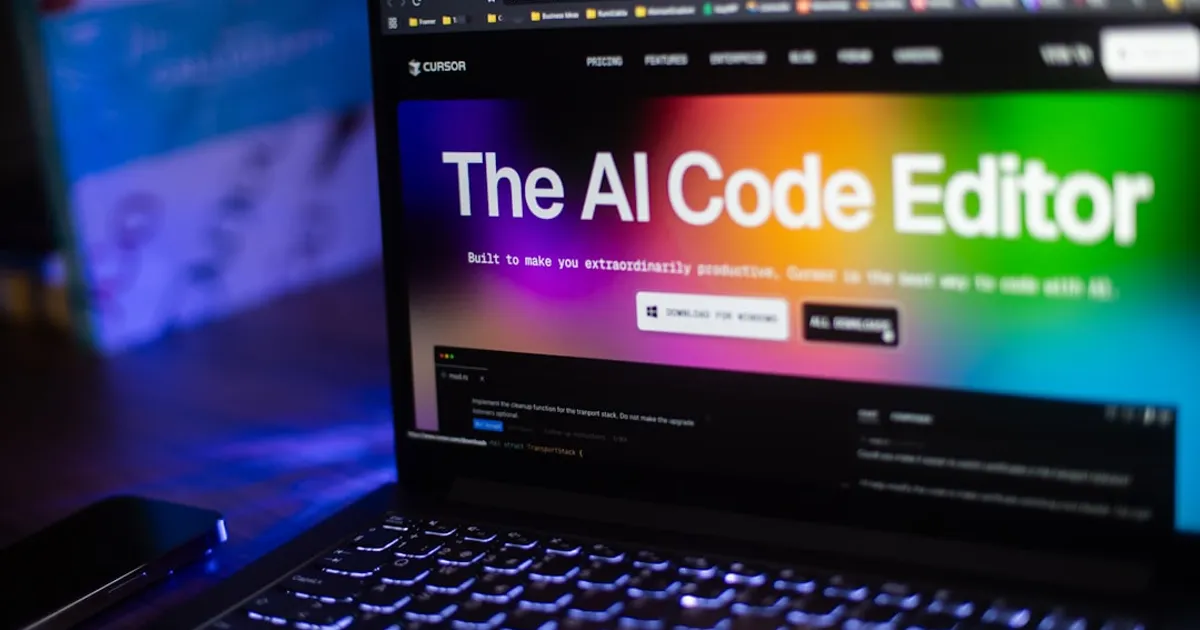
AI Writes Clean Code. That's Why Bugs Slip Through.
Teams using AI coding tools are shipping far more code but spending nearly twice as long in review. AI-generated code looks clean and idiomatic, which makes bugs harder to catch. Fixes include better test suites, human-written acceptance criteria, and adversarial agents that challenge what coding agents build.

Bitcoin miners lose $19K per coin as difficulty drops 7.8%
Bitcoin miners are operating at steep losses with average production costs around $88,000 per coin versus a market price near $69,200, driven by rising energy prices and geopolitical tensions. Network difficulty has dropped 7.76% to 133.79 trillion and hashrate retreated to 920 EH/s. Struggling miners are forced to sell bitcoin and some like Marathon Digital and Cipher Mining are shifting to AI and high-performance computing data centers for steadier revenue.
Zoneless undercuts Stripe Connect with $0.002 crypto payouts
Zoneless is an open-source drop-in replacement for Stripe Connect payouts that uses USDC stablecoins to cut transaction costs to roughly $0.002 each. Built for platforms where Stripe's $0.30 minimum never made sense, it offers a Stripe-compatible API, instant settlements via Solana, and self-hosting under Apache 2.0. PromptBase uses it in production, dropping monthly payout costs from $9,400 to pennies.

go-bt tests five-minute timeouts instantly with behavior trees for Go
go-bt is a Behavior Tree library for Go designed for background workers, game AI, and async logic. Nodes return state instantly via magic numbers (1=Success, 0=Running, -1=Failure) and yield to a supervisor. It uses stateless nodes with temporal memory in a generic BTContext[T] that embeds Go's context.Context, and offers clock injection to test temporal logic without actual waiting.

Opus 4.6 hallucinates twice as often today as at launch
BridgeBench hallucination benchmark reveals Claude Opus 4.6's hallucination rate climbed from 16.7% to 33% between release and an April 12, 2026 retest. The benchmark tests 27 AI models across 30 tasks with 175 questions measuring code analysis hallucination rates. Grok 4.20 Reasoning leads with 10% hallucination, followed by original Claude Opus 4.6 and GPT-5.4 at 16.7%. Comments suggest quantization or optimization may be causing the degradation.

Mythos Meets Reality: Small Models Find Same Zero-Day Bugs
AISLE tested Anthropic's Mythos zero-day findings on smaller open-weights models. Their experiments show AI cybersecurity capability is 'jagged', scaling unevenly across model sizes while smaller models recovered much of the same analysis as Mythos. The conclusion: the moat in AI cybersecurity is the system and orchestration, not the model itself.

Anthropic Loses Bid to Shed Supply Chain Risk Tag
A federal court denied Anthropic's request to remove its 'supply chain risk' designation, a ruling that threatens the AI company's ability to win sensitive Pentagon contracts.
Zettelkasten: The Filing System Your AI Actually Understands
A detailed guide on implementing the Zettelkasten note-taking method in Obsidian, covering setup, workflow, and using AI tools like Desktop Commander to maintain the system at scale by automating tasks like finding orphaned notes, auditing inboxes, and suggesting connections.

First Take It Down Act convict kept making AI nudes after arrest
An Ohio man became the first person convicted under the Take It Down Act after pleading guilty to creating and sharing AI-generated explicit images of at least 10 victims without consent. James Strahler II used over 100 AI tools across 24 platforms to create fake sexualized images to harass women and minors. He continued making images even after his initial arrest, with over 2,400 images found on a second phone.

Claude Code Users Revolt as AMD Data Exposes Quality Collapse
An opinion piece criticizing Anthropic for degrading Claude Code through aggressive rate limits, pricing changes, and apparent model downgrading. The article cites an AMD analysis of 6,852 session logs concluding the tool can no longer handle complex tasks, developer reports of unusable service, and widespread user frustration on social media.
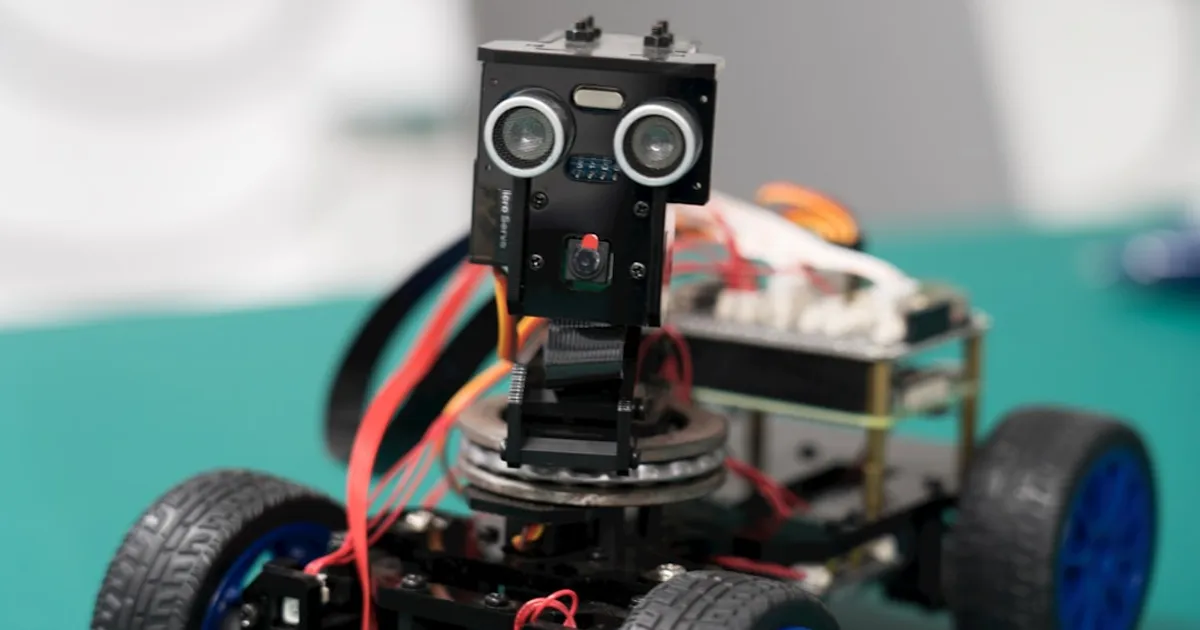
$300 DIY Robot Vac Steers With Just a Camera and CNN
A technical deep-dive into building a DIY robot vacuum that uses a CNN for navigation and behavior cloning. The robot streams image frames to a laptop for inference since there's no onboard compute. Built with off-the-shelf parts for $300, it learns navigation actions through teleoperated training data. The article discusses training experiments, data augmentation challenges, pre-training on ImageNet, and limitations including lack of autonomous charging and getting stuck in difficult situations.

Claude Code login lockout leaves users stranded for hours
Windows users are hitting a 15000ms OAuth timeout during Google authentication, completely blocking access to Claude Code. Meanwhile, Anthropic's status page shows everything running smoothly. HN commenters suspect capacity constraints are to blame, with some speculating Anthropic is distilling the model to cut compute costs.

MegaTrain Squeezes 120B Training Into One GPU
MegaTrain lets researchers train models up to 120 billion parameters on a single GPU by offloading everything to host memory and treating the GPU as a transient compute engine. It hits 1.84x the throughput of DeepSpeed ZeRO-3 with CPU offloading for 14B models. For anyone without a GPU cluster, this actually matters.

Swiss Install 54K Microsoft Licenses, Immediately Want Out
The Swiss government aims to gradually reduce its dependency on Microsoft products, despite recently installing Microsoft 365 on 54,000 administration workstations. A feasibility study shows replacement with open-source software is possible, with Germany's independent open-source solution serving as a reference. Concerns about data security under the US Cloud Act and the Trump administration's approach to the rule of law are driving this shift toward digital sovereignty.

Zuckerberg builds AI Zuckerberg for employee meetings
Meta is developing a 3D photorealistic AI clone of CEO Mark Zuckerberg that can interact with employees on his behalf. The AI clone has been trained on Zuckerberg's public statements and business strategies, mimicking his mannerisms and voice. This initiative is part of Meta's multibillion-dollar personal superintelligence push to compete with OpenAI and Google.

Fake Claude site installs PlugX while running the real app
A phishing campaign discovered by Malwarebytes involves a fake website impersonating Anthropic's Claude that distributes a trojanized 'Pro' installer. The attack uses DLL sideloading with a legitimately signed G DATA executable to deploy PlugX malware, giving attackers remote access to victim systems while the real Claude application runs normally in the foreground.

Iran's AI Propaganda Beats Trump at His Own Game
The Economist reports Iran's pro-regime AI propaganda videos garnered over a billion views on X in one month of the Gulf War, outperforming U.S. government messaging. Researchers traced the content to coordinated networks using generative AI tools to produce culturally fluent satire targeting American audiences, all while circumventing sanctions through smuggled hardware and proxy services.

A Theocracy Is Out-Meming America With AI Rap Videos
Iran is producing slick AI-generated propaganda featuring Lego animations and English rap tracks that's outperforming US messaging. Sanctions pushed them toward open-source tools like Llama 3 and Stable Diffusion, which turn out to work better for this than commercial APIs anyway.

Transformer Shortage Threatens AI Data Center Boom
The US faces a critical shortage of electrical transformers, threatening grid expansion for AI data centers and electric vehicles. Covers supply chain constraints with grain-oriented electrical steel, manufacturing challenges, and policy decisions that made things worse.

Fake Claude 'Pro' Installer Sideloads PlugX via G DATA Antivirus
A phishing campaign created a fake website impersonating Anthropic's Claude AI, offering a 'Pro' version that installs normally but secretly deploys PlugX malware through a DLL sideloading attack using a legitimate G DATA antivirus updater, giving attackers remote access to victims' systems.
Claude Code Gets Persistent Memory in a Single File
An unofficial open-source project adds persistent memory to Claude Code, storing context and decisions in one local file. Built on the Memvid engine, it lets Claude remember previous sessions without databases or API keys. Not an Anthropic product, despite the name.
Prove You Are a Robot: CAPTCHAs for Agents
Browser Use has built a signup system that only AI agents can complete. The reverse-CAPTCHA presents obfuscated math puzzles, including one reportedly posed to John von Neumann, with numbers translated into languages like Toki Pona or Japanese and distorted with garbled spacing. Humans can't parse it. Agents can. Solve the challenge, get an API key with unlimited usage and up to three concurrent sessions. There's also a bonus NP-hard joke challenge offering 1,000 concurrent sessions to any agent that proves P equals NP.
Slightly safer vibecoding by adopting old hacker habits
Security researcher halvar.flake describes a development setup using remote VMs, SSH, and fork-based workflows to contain AI coding agents. The approach limits damage from prompt injection and supply-chain attacks by keeping secrets off the development machine and requiring human review before merges.

ELIZA's Creator Fought AI Therapy for Decades. Now It's a Thriller.
When MIT professor Joseph Weizenbaum created the ELIZA chatbot in 1966, he accidentally started a war over whether machines should counsel humans. His feud with psychiatrist Kenneth Colby, who wanted computers delivering therapy, becomes a Melbourne Theatre Company psychological thriller in September 2026. AI therapy apps exist now. We're still having their argument.

Pentagon's supply chain risk label sticks as court denies Anthropic
The D.C. Circuit Court of Appeals rejected Anthropic's request to pause a government designation labeling the company as a supply chain risk, which blocks Pentagon contractors from using its AI models. The ruling stems from a standoff after Anthropic CEO Dario Amodei refused to allow the Pentagon to use Claude for autonomous weapons or mass surveillance. While a California court previously blocked the designation, the D.C. Circuit panel ruled that national security interests during an active military conflict outweighed financial harm to the company. Competitors like OpenAI and Palantir stand to gain from the decision.
One dev, 21 days, 10 platforms: BrightBean takes on SocialPilot
BrightBean Studio is an open-source, self-hostable social media management platform for creators and agencies. Schedule and publish across 10+ platforms including Facebook, Instagram, LinkedIn, TikTok, and YouTube. Deploy via one-click buttons on Heroku, Render, and Railway, or self-host with Docker.

The Trouble with Transformers
The US faces a critical shortage of electrical transformers, driven by increasing demand from AI data centers and electric vehicles. The shortage stems from deindustrialization, supply chain issues with grain-oriented electrical steel (GOES), and regulatory challenges. The author argues that while the US can build advanced AI models, it struggles to deliver basic infrastructure components like transformers, which are essential for grid expansion and maintenance.

BeffJezos: Your AI Agent Should Be Yours, Not Rented
A BeffJezos tweet about personal AI ownership sparked a Hacker News discussion on agent portability, cognitive tool control, and whether we'll need regulations similar to phone number portability for AI assistants.
Claude Brain adds persistent memory to Anthropic's coding assistant
A GitHub plugin for Claude Code that provides persistent memory for LLM coding sessions. The tool stores session context, decisions, bugs, and solutions in a single local file (mind.mv2) that can be version-controlled, transferred, and searched.

e/acc Account Beffjezos Sparks Personal AI Ownership Debate
A tweet from pseudonymous e/acc advocate beffjezos claiming everyone needs their own intelligence-extension machine sparked debate on Hacker News. Commenters questioned the account's authenticity while discussing digital sovereignty, service portability, and the potential societal split between those who adopt AI extensions and those who opt out.

Claude Code OAuth timeouts lock users out for hours
A GitHub issue reports that Claude Code is experiencing OAuth timeout errors on Windows, preventing users from logging in with a 15000ms timeout error. HN comments suggest this may be related to Anthropic's compute capacity being overwhelmed by increased demand, potentially requiring model distillation to maintain service levels.

Google Gemini Wants Your Photos. EU Regulators Push Back.
Google's Gemini AI prompts users repeatedly to enable photo scanning for its Personal Intelligence feature. EU regulators are pushing back under GDPR consent requirements. The discussion stems from a blog post that sparked debate over how major AI companies handle user data.

Vercel breached: ShinyHunters suspected, rotate your secrets
Vercel disclosed unauthorized access to internal systems. The company is investigating with incident response partners, has notified law enforcement, and is contacting impacted customers directly. All users should review environment variables and enable the sensitive variable protection feature.
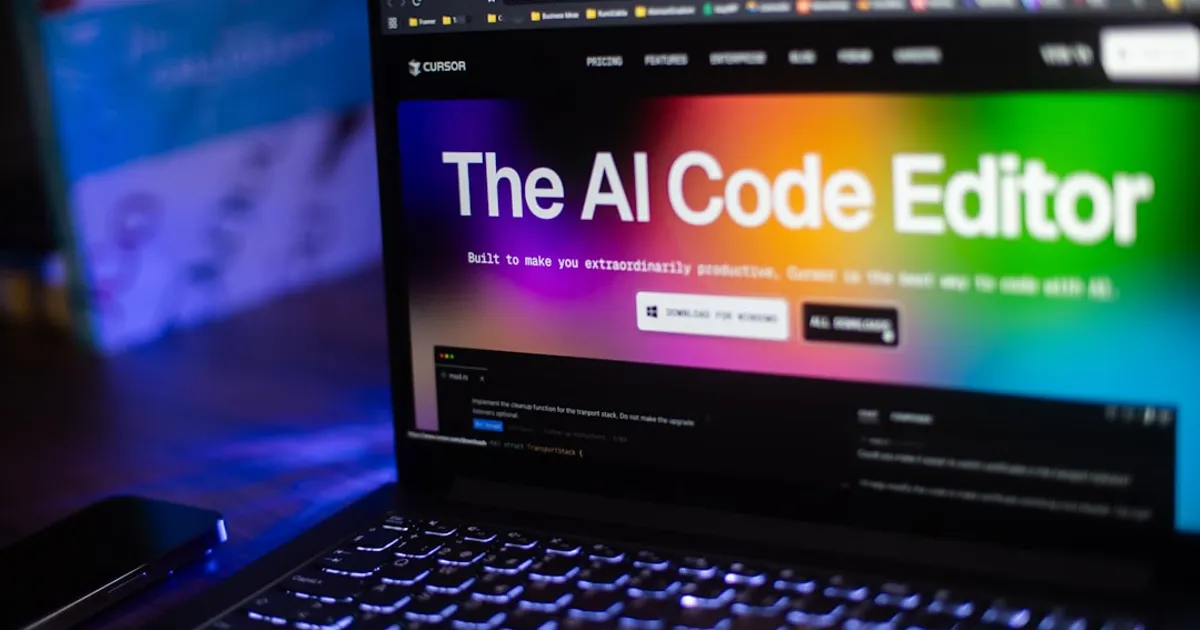
Uber Blew $3.4B on AI. Now Its CTO Is Rethinking Everything
Uber has exhausted its $3.4B AI budget after aggressive adoption of AI coding tools like Anthropic's Claude Code and Cursor. CTO Praveen Neppalli Naga says the company is 'back to the drawing board' as usage costs blew past expectations. Around 11% of Uber's live backend code is now written by AI agents, with Claude Code dominating developer workflows.

When teams move fast, talking breaks first
Dave Rupert argues that 'moving fast' kills team conversation first, and AI makes it worse by giving developers an excuse to skip talking to experts. The result: duplicate systems, mounting technical debt, and junior developers who never learn why certain patterns matter.

ShinyHunters breached Vercel through internal support tooling
Vercel disclosed a security incident involving unauthorized access to internal systems. A limited subset of customers were affected and are being contacted directly. The company recommends customers review environment variables and use sensitive environment variable features as a precaution. Vercel CTO Theo confirmed in HN comments that environment variables marked as sensitive are safe, while others should be rotated out of caution. The incident is attributed to the hacking group ShinyHunters.

Google Gemini Was Scanning Your Photos. EU Regulators Said Stop.
Discussion about Google Gemini scanning user photos and EU regulatory intervention. The HN comments expose a core tension: personalized AI needs personal data, while Apple bets on-device processing can offer privacy without sacrificing capability.

Vercel Breach Puts API Keys at Risk, ShinyHunters Suspected
Vercel, a cloud platform powering thousands of web applications, disclosed a breach of its internal systems affecting a 'limited subset of customers.' The company has engaged incident response experts, notified law enforcement, and is investigating the intrusion, which may be connected to the ShinyHunters threat group.

Gemini Gets a Real Mac App (Sorry, Intel Owners)
Google launches a native Gemini desktop app for macOS with features including global shortcut access (Option + Space), screen sharing for contextual help, image generation with Nano Banana, video generation with Veo, and deep research capabilities. The app requires macOS Sequoia (15.0) or later, runs exclusively on Apple Silicon, and syncs chat history across desktop, web, and mobile devices.

Google's Gemini Mac App Wants to Be Your New Spotlight
Google launches a native Gemini desktop app for macOS, with a global shortcut (Option + Space), screen and window sharing for contextual help, and creative tools including image and video generation. The app requires macOS Sequoia 15.0+ and runs exclusively on Apple Silicon.

When moving fast, talking is the first thing to break
The article argues that prioritizing speed in organizations leads to breakdowns in communication, cross-team collaboration, and shared systems. The author contends that AI and LLMs exacerbate this problem by serving as tools to bypass human collaboration and expert input, creating technical debt and organizational issues. The piece advocates for slowing down to do proper human thinking and collaboration rather than rushing to build things without consensus.

Gemma 4 E2B runs entirely in your browser, draws Excalidraw locally
A browser-based demo runs Google's Gemma 4 E2B language model entirely in the browser using WebGPU to generate Excalidraw diagrams from text prompts. The LLM outputs compact code (~50 tokens) instead of raw Excalidraw JSON (~5,000 tokens), and the TurboQuant algorithm (polar + QJL) compresses the KV cache by ~2.4x so longer conversations fit in GPU memory. Requires desktop Chrome 134+ with WebGPU support and ~3GB RAM.

Stop Renting Your Mind: The Case for Local AI Hardware
A satirical tweet from @beffjezos (parody of Jeff Bezos) arguing individuals need to own machines that extend their intelligence sparked a Hacker News discussion on cognitive sovereignty. Commenters drew parallels to telephone number portability and explored the feasibility of local AI hardware, from Apple's Neural Engines to Raspberry Pi AI Kits, as an alternative to renting cognition from cloud providers.

Google Gemini Wants Your Photos. The EU Said No.
A Show HN discussion about Google Gemini's cloud photo scanning and EU regulatory pushback under GDPR. Commenters noted Gemini can't access Gmail attachments, highlighting the tension between AI personalization and data privacy requirements.

The Man Who Built ELIZA Then Turned Against AI
A new play dramatizes Joseph Weizenbaum, who built the first chatbot at MIT in 1966 and then spent decades warning people not to trust machines with human decisions. Tom Holloway's Eliza premieres at Melbourne Theatre Company, September 28 through October 31, 2026.

Dependency cooldowns turn you into a free-rider
Argues against dependency cooldowns as a response to supply chain attacks, proposing 'upload queues' as a centralized alternative that separates package publication from distribution. Discusses how cooldowns free-ride on others being hacked first and applies this analysis to AI agents where markdown files are executable dependencies.

Uber's AI Push Hits a Wall: CTO Says Budget Struggles Despite $3.4B Spend
Uber Technologies exhausted its AI budget just months into 2026 despite spending $3.4 billion on R&D. CTO Praveen Neppalli Naga says the company is 'back to the drawing board' after AI coding tool usage, particularly Anthropic's Claude Code, exceeded expectations. Engineers were pushed to use tools like Claude Code and Cursor with internal leaderboards tracking usage. While 11% of Uber's backend code updates are now AI-generated, R&D expenses jumped 9% in 2025. HN commenters suggest 'token maxxing' driven by usage-based leaderboards may be inflating costs.

Borges' cartographers and the tacit skill of reading LM output
Gal Sapir argues that LMs are maps of reality, not the thing itself. The most important skill for using them well—knowing when to trust output and when to verify—is tacit, learned through practice, and can't itself be mapped. The paradox is the point.

Claude 4.7 Told to Stop Asking Questions and Just Do the Thing
Simon Willison's teardown of Claude Opus 4.7's system prompt reveals new agent tools (Chrome, Excel, PowerPoint), a tool_search mechanism, and Anthropic telling Claude to stop asking questions and just try the thing.

Binary quantization cuts RAG latency 40x
Compresses vector embeddings to binary and uses Hamming distance for similarity search, trading some recall for a 40x speedup. Oversampling and re-ranking recover lost accuracy.