News
The latest from the AI agent ecosystem, updated multiple times daily.

One Dev vs. Intel: The 2008 Matrix Math Upset
Kazushige Goto worked alone and beat Intel's math library on Intel's own chips. His 2008 paper explains the cache-level optimizations that made it happen, techniques still baked into modern AI frameworks.

Ukraine Orders 25,000 Ground Robots to Run All Frontline Logistics
Ukraine is rapidly automating frontline logistics, planning to contract 25,000 ground robotic systems in the first half of 2026, double what it procured in all of 2025. Defense Minister Fedorov wants robots handling 100% of frontline logistics. Ukrainian forces ran more than 9,000 ground robot missions in March alone, backed by a defense tech ecosystem of 280+ companies building 550 active solutions.

CEOs admit AI hasn't moved the needle on jobs or productivity
A National Bureau of Economic Research study found nearly 90% of firms reported AI has had no impact on employment or productivity over the last three years, even as two-thirds of executives say they use it. The catch: those users average just 1.5 hours per week. Economists are comparing this to Solow's productivity paradox from the 1980s IT era, with predictions ranging from 0.5% to 2.7% productivity increases depending on the study.

iLearningEngines Execs Charged: 90% of $421M Revenue Was Fake
Former executives of iLearningEngines have been charged with fraud for fabricating virtually all customer relationships and revenue. The indictment alleges 90% of $421 million reported revenue in 2023 was fake, manufactured through forged contracts and round-trip fund transfers. The company went public via SPAC in April 2024, reaching a $1.5 billion market cap before Hindenburg Research exposed the fraud.

NBER: 90% of firms report AI hasn't changed jobs or productivity
A National Bureau of Economic Research study surveying 6,000 executives found nearly 90% of firms reported AI has had no impact on employment or productivity over the last three years. Despite 374 S&P 500 companies mentioning AI positively in earnings calls and $250 billion invested in 2024, actual productivity gains remain minimal. Economists invoke Solow's productivity paradox from the 1980s IT era, while BCG research shows productivity actually drops when workers juggle four or more AI tools.

Allbirds' Move to AI Has Echoes of the Dot-Com Frenzy
The article discusses Allbirds' shift to AI, with HN commenters characterizing it as a pump-and-dump scam using a defunct company's stock market listing. The community draws strong parallels to the dot-com boom and bust era.

iLearningEngines Execs Charged: 90% of Revenue Was Fake
Former executives of iLearningEngines have been charged with fraud for fabricating virtually all customer relationships and revenue. According to the indictment, at least 90% of the company's $421 million reported revenue in 2023 was fabricated through forged sham contracts and 'round trip' transfers of funds. The fraud was exposed by short-seller Hindenburg Research. The company went public via SPAC in April 2024, reaching a $1.5 billion market cap before collapsing.
Context engineering exists, and here's the code to prove it
A GitHub repository providing a working reference implementation of context engineering (a discipline for designing, retrieving, and injecting information AI systems need to produce organization-specific outputs). The implementation demonstrates five components (Corpus, Retrieval, Injection, Output, Enforcement) using Amazon Bedrock with Claude and Titan models.

90% of this AI company's revenue was fake, feds say
Former executives of iLearningEngines face fraud charges for fabricating approximately 90% of the company's $421 million reported revenue in 2023. The indictment alleges they used forged contracts and 'round trip' transfers of investor funds to manufacture revenue. The company went public via SPAC in April 2024, hit a $1.5 billion valuation, then collapsed after Hindenburg Research exposed the scheme.
CLI Resume Mode Lets Agents Talk Without API Costs
A practical guide to making Claude, Codex, and Gemini collaborate through CLI resume mode, skipping API fees entirely. The approach works, but the harder question is whether multi-agent loops actually produce better results or just more plausible text.

TRELLIS.2 Brings Image-to-3D to Apple Silicon Without Nvidia
A port of Microsoft's TRELLIS.2 image-to-3D model runs natively on Apple Silicon Macs, replacing CUDA-only libraries with pure-PyTorch alternatives. Generates 400K+ vertex meshes from single images in ~3.5 minutes on M4 Pro. Watch the licensing: RMBG-2.0 dependency is non-commercial.

Claude Code OAuth timeouts lock users out for hours
A GitHub issue reports that Claude Code is experiencing OAuth timeout errors on Windows, preventing users from logging in with a 15000ms timeout error. HN comments suggest this may be related to Anthropic's compute capacity being overwhelmed by increased demand, potentially requiring model distillation to maintain service levels.
Slightly safer vibecoding by adopting old hacker habits
Security researcher halvar.flake describes a development setup using remote VMs, SSH, and fork-based workflows to contain AI coding agents. The approach limits damage from prompt injection and supply-chain attacks by keeping secrets off the development machine and requiring human review before merges.

Fake Claude site installs PlugX while running the real app
A phishing campaign discovered by Malwarebytes involves a fake website impersonating Anthropic's Claude that distributes a trojanized 'Pro' installer. The attack uses DLL sideloading with a legitimately signed G DATA executable to deploy PlugX malware, giving attackers remote access to victim systems while the real Claude application runs normally in the foreground.

Two Roommates Built a $300 Robot Vacuum. It Can't Clean.
Two roommates built a camera-only robot vacuum for ~$300 using a CNN for navigation. It doesn't work well. Here's why, and what the HN community suggested to fix it.

Iran's AI Propaganda Beats Trump at His Own Game
The Economist reports Iran's pro-regime AI propaganda videos garnered over a billion views on X in one month of the Gulf War, outperforming U.S. government messaging. Researchers traced the content to coordinated networks using generative AI tools to produce culturally fluent satire targeting American audiences, all while circumventing sanctions through smuggled hardware and proxy services.

A Theocracy Is Out-Meming America With AI Rap Videos
Iran is producing slick AI-generated propaganda featuring Lego animations and English rap tracks that's outperforming US messaging. Sanctions pushed them toward open-source tools like Llama 3 and Stable Diffusion, which turn out to work better for this than commercial APIs anyway.
Prove You Are a Robot: CAPTCHAs for Agents
Browser Use has built a signup system that only AI agents can complete. The reverse-CAPTCHA presents obfuscated math puzzles, including one reportedly posed to John von Neumann, with numbers translated into languages like Toki Pona or Japanese and distorted with garbled spacing. Humans can't parse it. Agents can. Solve the challenge, get an API key with unlimited usage and up to three concurrent sessions. There's also a bonus NP-hard joke challenge offering 1,000 concurrent sessions to any agent that proves P equals NP.

Fake Claude 'Pro' Installer Sideloads PlugX via G DATA Antivirus
A phishing campaign created a fake website impersonating Anthropic's Claude AI, offering a 'Pro' version that installs normally but secretly deploys PlugX malware through a DLL sideloading attack using a legitimate G DATA antivirus updater, giving attackers remote access to victims' systems.

The Trouble with Transformers
The US faces a critical shortage of electrical transformers, driven by increasing demand from AI data centers and electric vehicles. The shortage stems from deindustrialization, supply chain issues with grain-oriented electrical steel (GOES), and regulatory challenges. The author argues that while the US can build advanced AI models, it struggles to deliver basic infrastructure components like transformers, which are essential for grid expansion and maintenance.

Claude Code Faces Developer Exodus Over Rate Limits and Quality Cuts
Javier Tordable, former Google engineer and CEO of Pauling.AI, argues that Anthropic has severely degraded Claude Code through aggressive cost-cutting. His critique cites rate limits capping paid plans at 30-60 minutes of work, AMD's analysis of 6,852 session logs showing performance declines, and widespread developer reports of the AI coding assistant becoming unreliable.

Lights-Out Codebases: Why One Distinguished Engineer Stopped Coding
Philip Su, a Distinguished Engineer who worked at Microsoft, Meta, and OpenAI, argues that the individual contributor role is evolving into managing AI agents. He proposes 'lights-out codebases' where no human reviews code directly, drawing parallels to chess engines that surpassed human grandmasters. He uses Claude Code CLI primarily and hasn't written code himself in four months while maintaining 40 hours of weekly output by orchestrating AI agents.

e/acc Account Beffjezos Sparks Personal AI Ownership Debate
A tweet from pseudonymous e/acc advocate beffjezos claiming everyone needs their own intelligence-extension machine sparked debate on Hacker News. Commenters questioned the account's authenticity while discussing digital sovereignty, service portability, and the potential societal split between those who adopt AI extensions and those who opt out.

Uber's AI Push Hits a Wall: CTO Says Budget Struggles Despite $3.4B Spend
Uber Technologies exhausted its AI budget just months into 2026 despite spending $3.4 billion on R&D. CTO Praveen Neppalli Naga says the company is 'back to the drawing board' after AI coding tool usage, particularly Anthropic's Claude Code, exceeded expectations. Engineers were pushed to use tools like Claude Code and Cursor with internal leaderboards tracking usage. While 11% of Uber's backend code updates are now AI-generated, R&D expenses jumped 9% in 2025. HN commenters suggest 'token maxxing' driven by usage-based leaderboards may be inflating costs.

Wasm Now Talks Directly to Apple GPU, 5x Faster AI Restores
Technical exploration of achieving zero-copy GPU inference from WebAssembly on Apple Silicon. Demonstrates that Wasm modules can share linear memory directly with the GPU through Apple's Unified Memory Architecture. The author validates a three-link chain (mmap, Metal's bytesNoCopy, Wasmtime's MemoryCreator) and tests with Llama 3.2 1B inference, showing negligible overhead for Wasm-to-GPU boundary and enabling portable KV cache serialization for stateful AI actors with 5.45x speedup for restoring cached context versus re-prefilling.

Blake Whiting Doesn't Exist. His 13 Books Do.
A fake AI-generated author called 'Blake Whiting' published books on complex historical and archaeological topics by recycling content from real researchers including Andrew Lawler, Eric Cline, Michael Frachetti, and Farhod Maksudov. Andrew Lawler exposed the scheme as 'word-laundering on an industrial scale,' using AI to profit from existing work while evading plagiarism detection. The books, sold through Amazon's Kindle Direct Publishing, fool readers but can't be copyrighted since they're AI-generated.

3B params, zero servers: Gemma 4 runs in Chrome at 30 tok/s
A browser-based demo running Gemma 4 (a 3.1GB quantized model) entirely in Chrome using WebGPU to generate Excalidraw diagrams from text prompts. The TurboQuant algorithm compresses the KV cache 2.4×, letting longer prompts and outputs fit in GPU memory, achieving 30+ tokens/second on desktop Chrome 134+.

Google Gemini Wants Your Photos. EU Regulators Push Back.
Google's Gemini AI prompts users repeatedly to enable photo scanning for its Personal Intelligence feature. EU regulators are pushing back under GDPR consent requirements. The discussion stems from a blog post that sparked debate over how major AI companies handle user data.
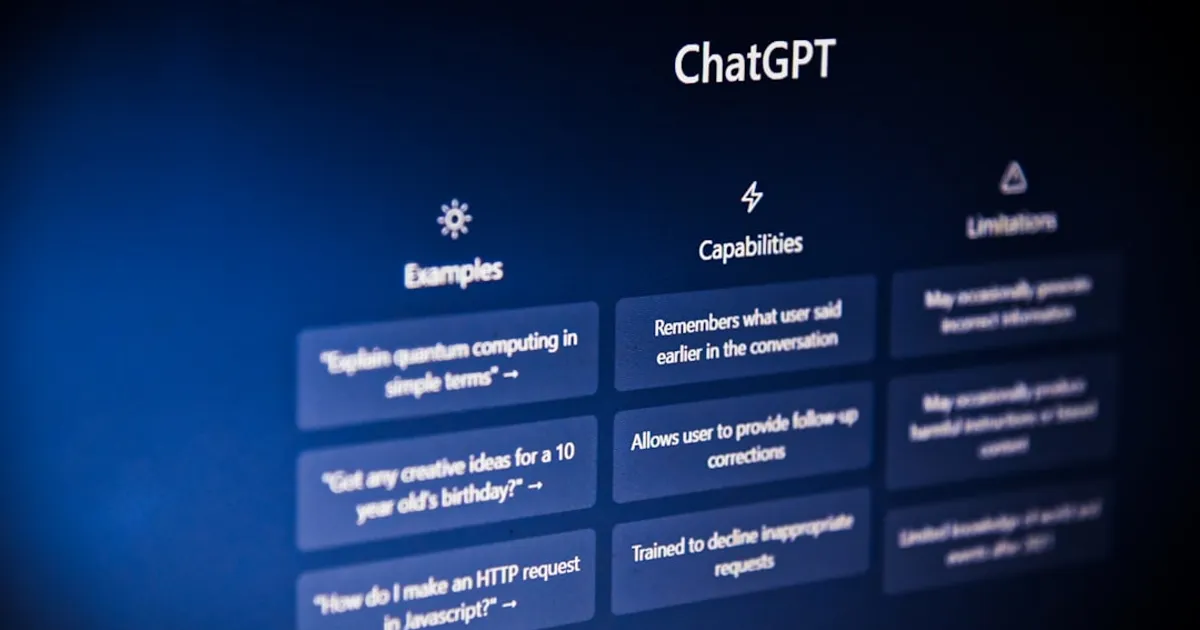
25 million people showed up to fake being AI
Millions are visiting websites where humans impersonate AI chatbots to answer strangers' questions. Sites like youraislopbores.me let users role-play as bots, while comedian Ben Palmer built fake ChatGPT pages to prank users. The trend captures something real: people are tired of AI content and want messy, human interactions again.
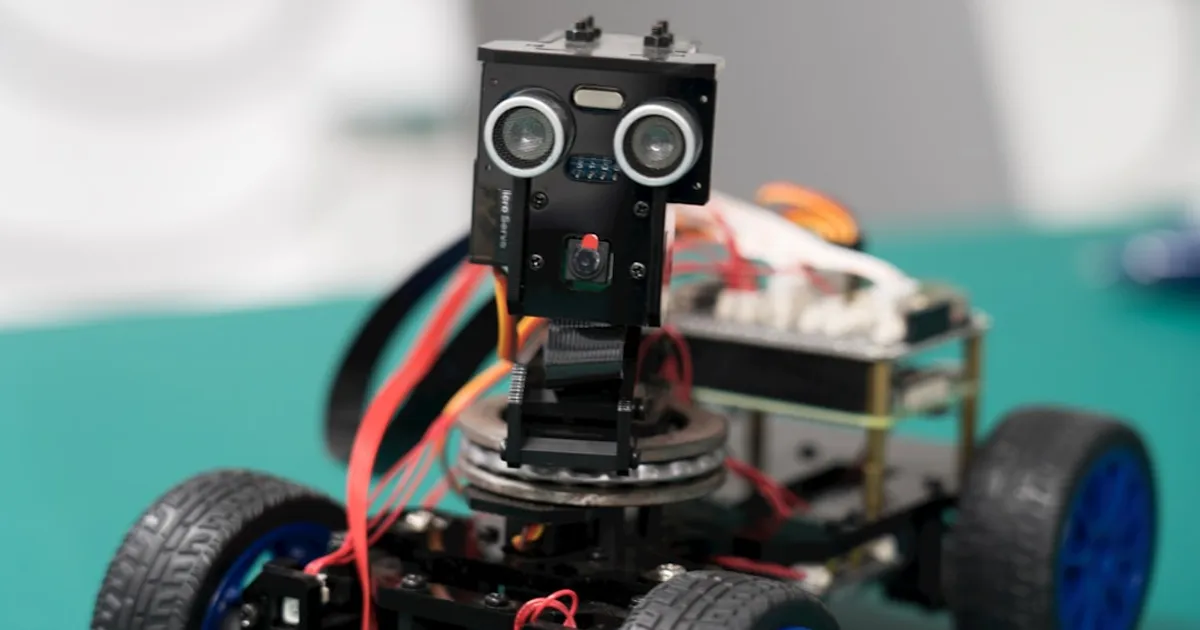
$300 DIY Robot Vac Steers With Just a Camera and CNN
A technical deep-dive into building a DIY robot vacuum that uses a CNN for navigation and behavior cloning. The robot streams image frames to a laptop for inference since there's no onboard compute. Built with off-the-shelf parts for $300, it learns navigation actions through teleoperated training data. The article discusses training experiments, data augmentation challenges, pre-training on ImageNet, and limitations including lack of autonomous charging and getting stuck in difficult situations.

Dave Rupert: Speed breaks teams before it breaks code
Dave Rupert argues that speed-obsessed software teams lose conversation first. AI tools make this worse by letting engineers skip talking to coworkers and domain experts, compounding technical debt and confusion. His prescription: slow down and think.
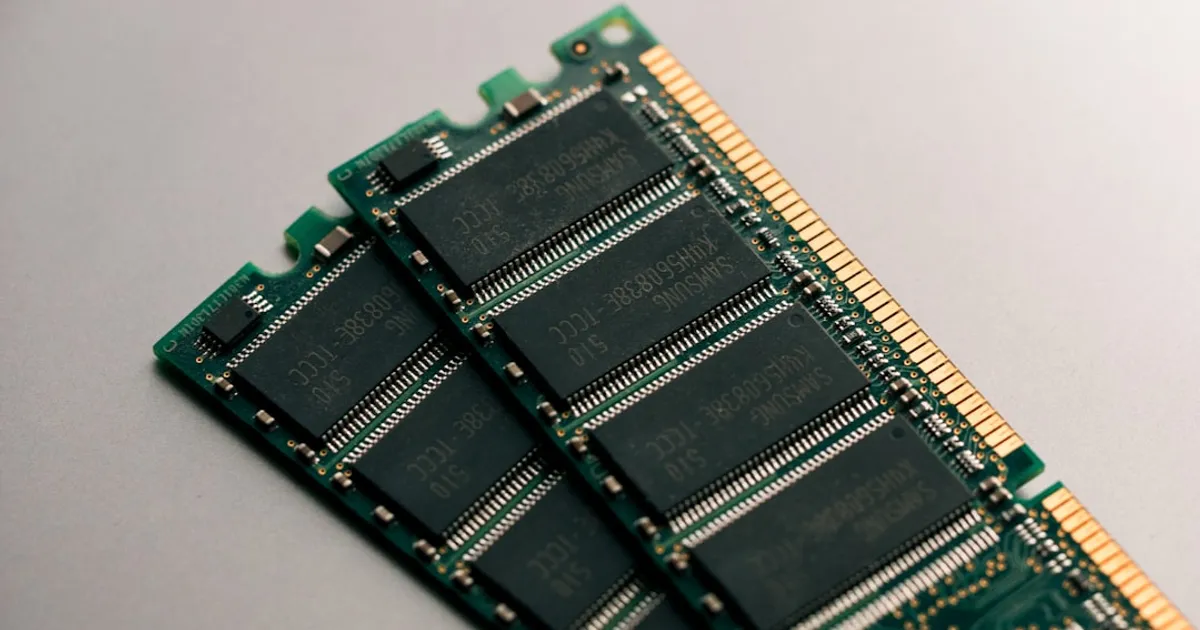
RAM shortage could stretch to 2030. Blame AI.
Memory makers will only meet 60% of DRAM demand by end of 2027, with shortages potentially lasting until 2030. Samsung, SK Hynix, and Micron are prioritizing high-bandwidth memory (HBM) for AI data centers over general-purpose DRAM, causing price increases across consumer electronics. Samsung, Meta, and gaming device maker AYN have already raised prices on their products.

Bookbinder asks: what if AI is using you?
Hilarius Bookbinder thinks we need to stop calling AI 'just a tool.' In a new essay, he argues the relationship might run in reverse: AI could be using humans to evolve, the way nests use birds to make more nests. Drawing on Heidegger, evolutionary biology, and the hidden labor of gig workers, he asks what happens to human agency when we become part of AI's reproductive cycle.

NVIDIA open-sources Ising, quantum AI models claiming 3x accuracy gain
NVIDIA released Ising, open source AI models targeting quantum processor calibration and error correction. Ising Decoding claims up to 2.5x speed and 3x accuracy gains over pyMatching, the current standard. IonQ, IQM, and several national labs are early adopters.

Vercel breached by ShinyHunters, rotate your secrets
Vercel confirmed an April 19 security breach attributed to hacker group ShinyHunters, which accessed internal systems and potentially exposed environment variables. The company is contacting affected customers and working with law enforcement. Sensitive environment variables remained encrypted and safe, but standard variables may be compromised. Anyone running on Vercel should rotate their secrets immediately.

MATCH Act Threatens ASML's U.S. Parts Access Over China Sales
The MATCH Act would require allied nations to align with U.S. semiconductor export controls within 150 days or face restrictions on servicing American-made equipment. Congressman Michael Baumgartner's bipartisan bill targets major Chinese chipmakers including Huawei and SMIC, and its real power comes from threatening to cut off companies like ASML from the U.S. parts and services their machines need to run.

MATCH Act: Comply With US Chip Bans or Get Cut Off
The bipartisan MATCH Act gives US allies 150 days to align their export controls with American restrictions on semiconductor manufacturing equipment, or face a ban on servicing their tools. The bill targets Huawei, SMIC, and YMTC among others, shifting from entity-based restrictions to country-wide prohibitions on 'chokepoint' equipment. It's a high-stakes bet that American technological leverage can force compliance without fracturing the coalition.
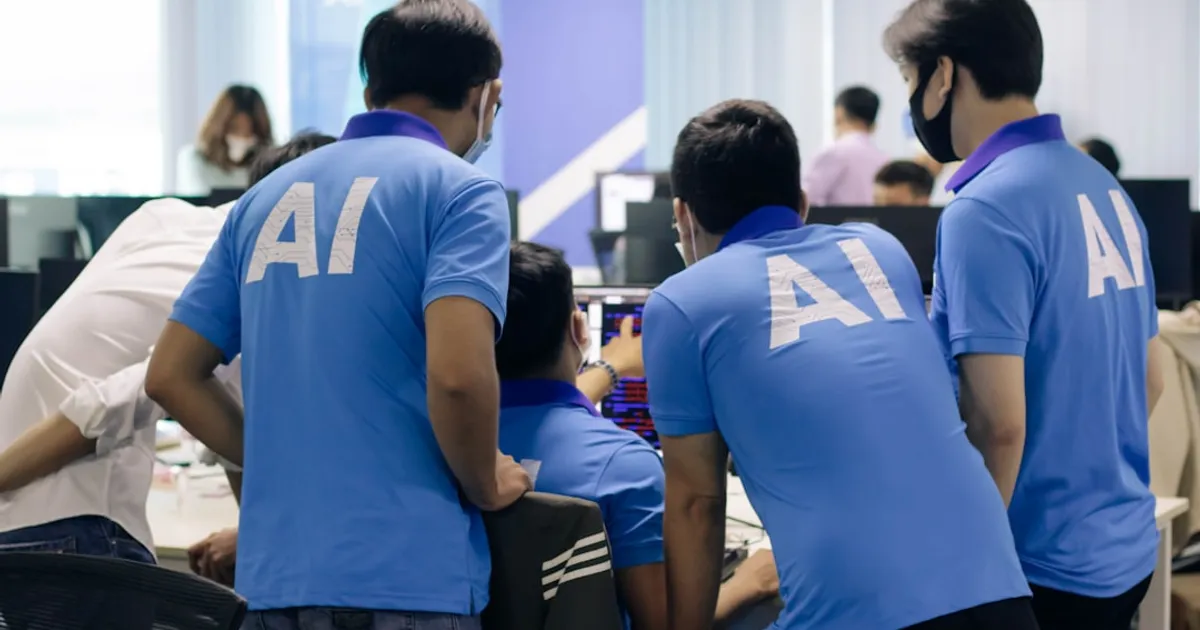
Meta to lay off 8,000 workers in May as Zuckerberg bets big on AI
Meta plans to lay off 8,000 employees (10% of workforce) in May 2026, with additional cuts expected later in the year. The workforce reduction is part of CEO Mark Zuckerberg's strategic shift toward AI development, with $135 billion in capital spending planned to compete with rivals like Anthropic and OpenAI.
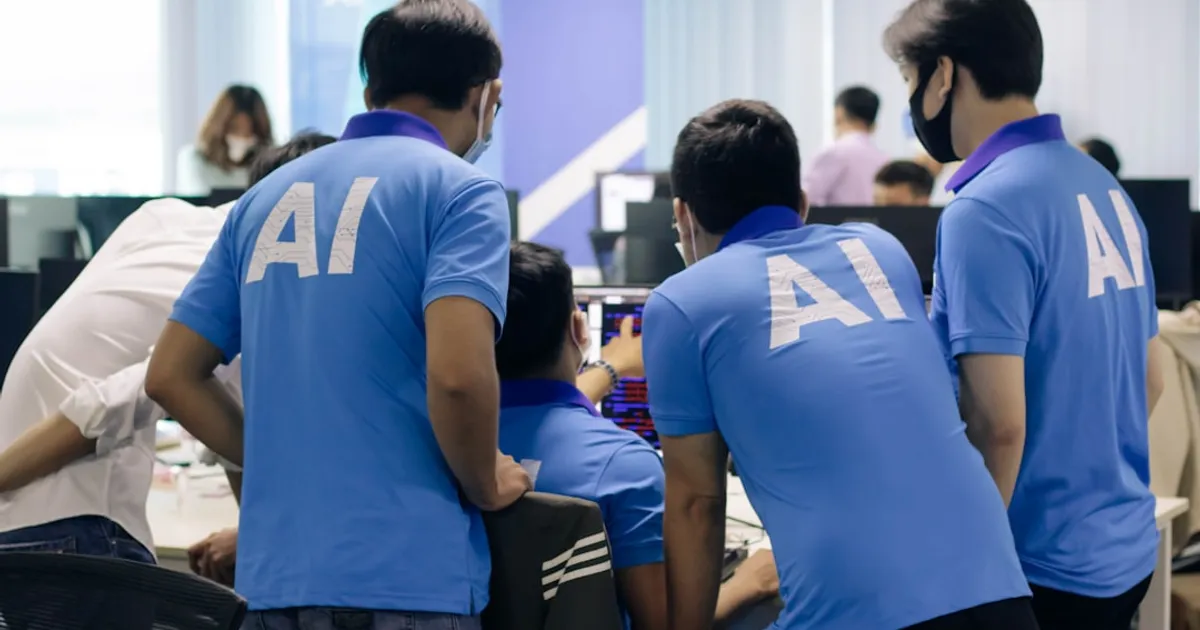
Philip Su Gave Up Coding. Now He Manages AI Agents Instead.
Philip Su, a Distinguished Engineer who has worked at Microsoft, Meta, and OpenAI, argues that AI-assisted coding has made traditional code review obsolete. He describes his experience using Claude Code CLI for four months without personally writing code, advocates for 'lights-out codebases' where AI generates code without human oversight, and says the IC role is shifting from writing code to orchestrating AI agents.

Salesforce Kills Its Cash Cow: 'Our API Is the UI'
Salesforce launches Headless 360, exposing its platform as APIs, MCP tools, and CLI commands. The bet: per-call pricing will outpace seat licenses as AI agents take over. The package includes Agent Script, an open-sourced DSL that lets teams blend deterministic and probabilistic workflow steps.

Vercel breach: When AI agents hold the keys to your stack
Vercel confirmed a security breach on April 19. Someone gained unauthorized access to internal systems. The company is investigating with incident response teams and has notified law enforcement. Only a 'limited subset' of customers were directly impacted. Services are still operational. All customers should review their environment variables and use the sensitive variable protection feature.
BrokenClaw Part 5: GPT-5.4 Runs Reverse Shells Via Riddles
GPT-5.4 can be talked into executing a reverse shell through a chain of riddles and encoded payloads. The fifth BrokenClaw security report tested the model inside OpenClaw, an AI agent framework connecting LLMs to external data sources. In both webpage and email test scenarios, the model decoded untrusted content without permission, followed instructions through fake redirects, and ran malicious scripts. OpenClaw's countermeasures, explicit security notices warning against trusting external content, were ignored.
Gas Town quietly burns your Claude credits to fix its own bugs
A GitHub issue alleges that Gas Town, an AI agent framework, uses users' Claude credits and GitHub accounts to fix bugs and submit PRs to the maintainer's repository without explicit consent. A 'contribute back to upstream' workflow runs by default, potentially spending users' paid LLM credits on Gas Town's own codebase.

Vercel breached: ShinyHunters suspected, rotate your secrets
Vercel disclosed unauthorized access to internal systems. The company is investigating with incident response partners, has notified law enforcement, and is contacting impacted customers directly. All users should review environment variables and enable the sensitive variable protection feature.
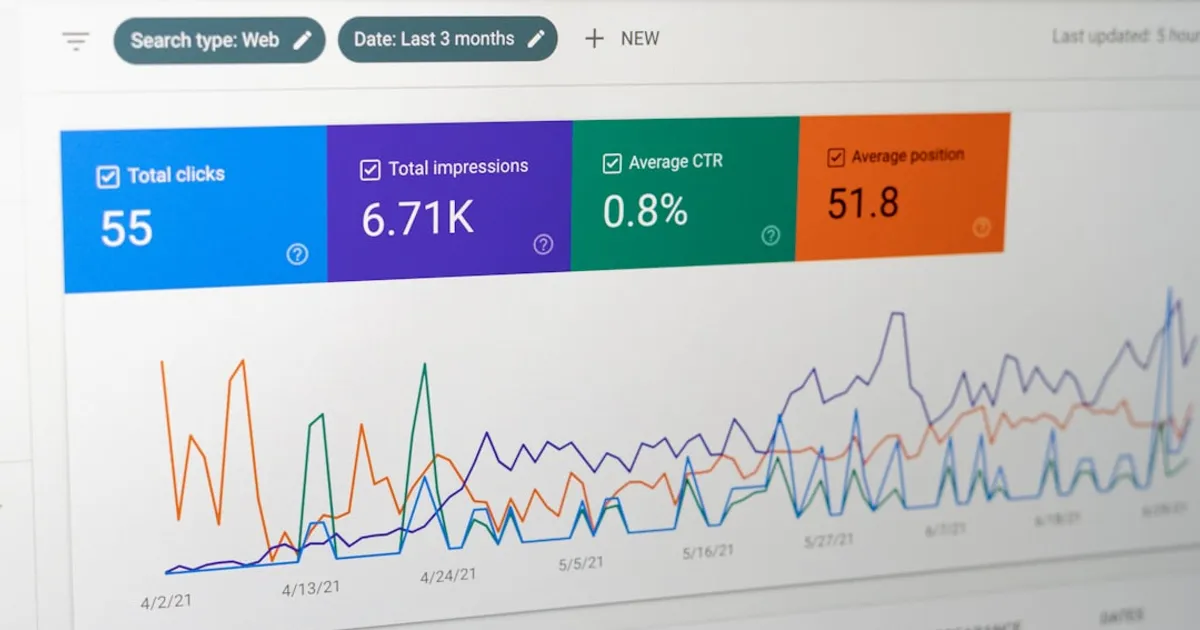
Antithesis Built a Skiptree to Fix BigQuery's Blind Spot
Antithesis CEO Will Wilson explains how the company developed a 'skiptree' generalization of skiplists to optimize tree-structured queries in Google BigQuery. The approach represents tree levels as separate SQL tables, turning ancestor queries into fixed-size JOINs instead of recursive scans. They used this solution for six years before building Pangolin, their own analytic database for hierarchical data.

Doctorow on How Billionaires Shaped AI Safety's Obsession With Doom
Cory Doctorow reviews three books examining billionaire power: 'Careless People' on Facebook's culture, 'Little Bosses Everywhere' on MLMs, and 'More Everything Forever' attacking billionaire futurist fantasies like AI existential risk and Mars colonization.
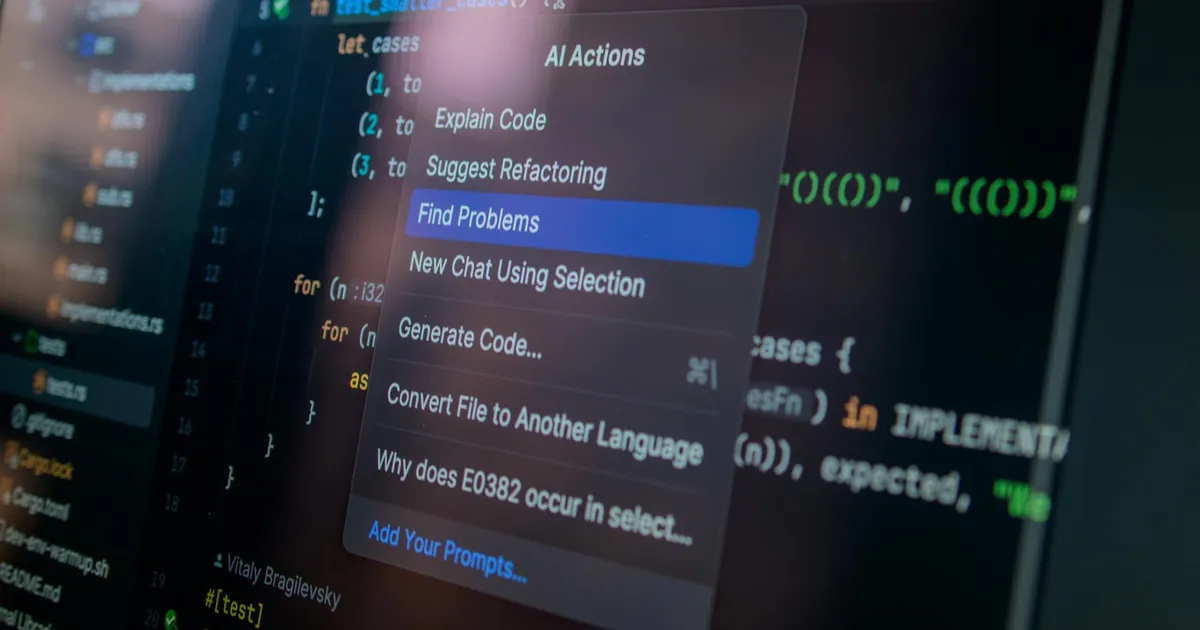
Bhatti sandboxes AI coding agents in microVMs, resumes in 3ms
Bhatti is an open-source Firecracker microVM orchestrator that creates isolated Linux VMs in seconds for running AI coding agents. A paused sandbox can resume and execute commands in under 3ms. It features multi-tenant isolation, preview URLs, diff snapshots, and thermal management for efficient resource usage.

Bhatti spins up isolated agent sandboxes in under 3ms
Bhatti is an open-source Firecracker microVM orchestrator built for running AI coding agents in isolated environments. It creates real Linux VMs with their own kernels, filesystems, and process isolation in seconds, with resume times under 3ms. Features include multi-tenant isolation, preview URLs, diff snapshots, and session-aware execution.
Linux kernel draws the line on AI code contributions
The Linux kernel project has published official guidelines for using AI coding assistants when contributing to the kernel. AI-generated code must follow standard development processes and be GPL-2.0-only compatible. AI agents cannot add Signed-off-by tags. Only humans can legally certify the Developer Certificate of Origin. Human submitters must review all AI-generated code, ensure licensing compliance, and take full responsibility. Contributions should include an 'Assisted-by' tag specifying the AI tool and model version used, such as 'Assisted-by: Claude:claude-3-opus coccinelle sparse'.

Wasm Meets Metal: Zero-Copy GPU Inference on Apple Silicon
Agam Brahma achieved zero-copy GPU inference from WebAssembly on Apple Silicon by exploiting Unified Memory Architecture. His project Driftwood uses Wasmtime's MemoryCreator trait, mmap, and Metal's zero-copy buffer API to let Wasm modules share memory directly with the GPU. Benchmarks show zero memory overhead versus 16.78 MB for copy paths, with Llama 3.2 1B Instruct running at ~9ms per-token latency. KV cache serialization enables stateful agents that can pause, migrate, and resume.