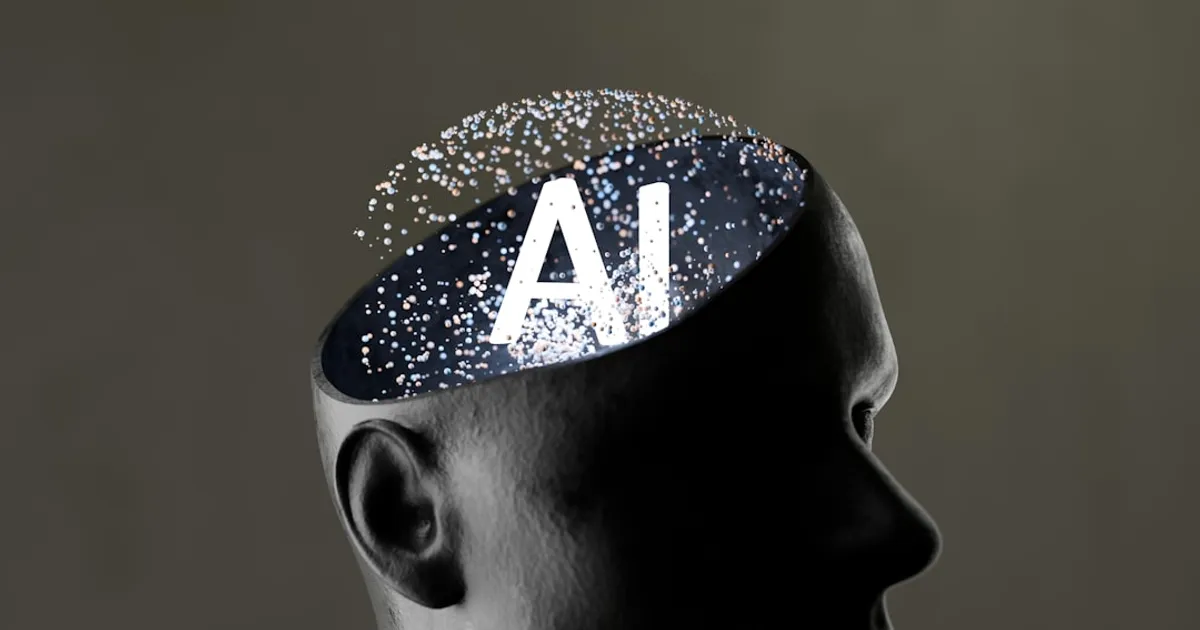
A Google DeepMind research scientist just threw a wrench into one of AI's biggest assumptions. Alexander Lerchner argues that no matter how sophisticated an AI system gets, manipulating symbols through code will never produce conscious experience. His paper, "The Abstraction Fallacy: Why AI Can Simulate But Not Instantiate Consciousness," picks a fight with computational functionalism, the dominant view that consciousness emerges from abstract causal patterns regardless of physical substrate.
Lerchner's core claim is that computation isn't what we think it is. When we say a computer "computes," we're projecting meaning onto physical processes. The computation itself requires an external observer, what he calls a "mapmaker," to turn continuous physics into discrete symbolic states. Without that interpreter, there's just electricity moving through silicon. His distinction between simulation and instantiation is the crux. A weather simulation doesn't make it rain. A video of a fire doesn't burn you. An AI that perfectly mimics conscious behavior isn't actually experiencing anything. What matters is the specific physical constitution, not the syntactic architecture.
The Hacker News crowd pushed back hard. Critics called the argument circular, saying Lerchner defines computation and consciousness as separate just to prove they can't overlap. Others pointed out that computation does happen independently in physical hardware, comparing it to how an automatic door responds to motion without needing an observer. Several commenters couldn't pin down the difference between a mapmaker and a simulator, questioning whether the distinction is even testable.
As AI agents get more autonomous, we keep circling back to their moral status. Lerchner's argument, if correct, would let us stop worrying about chatbot suffering and focus on real issues like safety and alignment. His critics have a fair point though: the simulation-instantiation gap might be untestable, which means we're arguing definitions, not evidence. Either way, we're arguing about something we don't understand. We don't actually know what consciousness is, and pretending otherwise isn't helping anyone build safer systems.