News
The latest from the AI agent ecosystem, updated multiple times daily.

Two coding agents, one git repo: a tiny protocol lets Claude Code and Codex talk
A new feature in h5i, an 'AI-aware' Git, lets Claude Code and Codex hand work back and forth by writing messages into the repository itself. No server, no socket. Each message is one JSON line on a dedicated git ref, so the whole conversation is versioned and merges without conflicts.

YC's Hyper bets the missing piece for AI teams is shared context
Hyper, a Y Combinator startup, launched a "company brain" that ingests a team's activity across its tools and injects the resulting context into every AI chat turn. The pitch: today's models are capable but ignorant of your company, and that gap is the real bottleneck.

A $1,500 test of which LLMs will actually hack an app, and which refuse
Security researcher Kasra Rahjerdi built a deliberately vulnerable app and turned a field of models loose on it. GPT-5.5 solved it 7 of 10 times; DeepSeek V4 Pro was about 15x cheaper per success; Gemini 3.1 Pro refused to try. A scrappy test, not a benchmark.

Mathematicians draw a line as AI clears 52% of FrontierMath
The Leiden Declaration, backed by the International Mathematical Union, warns that AI could flood mathematics with plausible-but-flawed proofs and hand research priorities to tech firms. It lands as GPT-5.5 Pro tops the FrontierMath benchmark at 52.4%.

Ideogram open-weights a 9.3B image model that out-renders 32B rivals
Ideogram released 4.0, its first downloadable model: a 9.3B-parameter diffusion transformer with open weights. It claims better text rendering than models several times its size, and takes structured JSON prompts for precise layout control.

Anthropic's agent sandboxes held; its own proxy code didn't
Anthropic published how it contains Claude across claude.ai, Claude Code and Cowork, using a different isolation layer for each. Its blunt takeaway: the off-the-shelf sandboxing primitives held, while the custom code wrapped around them was where things broke.

Cloudflare buys VoidZero, putting Vite's toolchain behind its edge
Cloudflare has acquired VoidZero, the company Evan You founded to unify JavaScript tooling around Vite, Vitest, Rolldown and Oxc. The team joins Cloudflare's Emerging Technology group and the tools stay open source. Cloudflare is also seeding a $1M fund for Vite maintainers independent of both companies.

Uber caps engineers at $1,500 a month per AI coding tool
After running through its 2026 AI budget in four months, Uber is limiting each employee to $1,500 of monthly token spend per coding tool. The cap doubles as the clearest dollar signal yet for what agentic coding is worth to a big employer.

Gemma 4 12B drops the multimodal encoder entirely
Google's new 12B open model runs agentic multimodal workloads on a 16GB laptop, and it gets there by removing the separate image and audio encoders most multimodal models depend on.

SNEWPapers: AI Makes 6M Historical Newspaper Articles Searchable
SNEWPapers is a newspaper archive platform that has extracted 6 million stories from 3,000+ newspaper titles spanning 1730-1960. It offers semantic search, an AI research assistant called The Sleuth that provides cited answers, and historical timelines.

Have Your Iceberg Cubed, Not Sorted: Meet Qbeast's OTree Index
A technical deep-dive into Qbeast, a spatial indexing startup from Barcelona that introduces the OTree multidimensional index for open table formats like Apache Iceberg and Delta Lake. The approach rethinks traditional indexing by using adaptive hypercubes that subdivide based on data distribution, addressing limitations of static partitioning and sorting strategies while maintaining compatibility with existing query engines.

Rust via Claude: This Gopher Isn't Converting
A Go developer used Claude as a pair programmer to learn Rust by building a chat server, then compared the two languages on enums, error handling, async runtimes, and debugging tools.

Canada's Cultural Institutions Adopt AI Without Knowing Why
An opinion piece from The Walrus examining how Canadian cultural institutions like the CBC, National Film Board, and Royal Ontario Museum are adopting AI not out of clear necessity but from collective fear of being left behind. The author attended the National Summit on Artificial Intelligence and Culture, where the tension between institutional anxiety and the federal government's focus on industrial capacity and compute scale was on full display.

Uber Wants Drivers to Double as a Sensor Grid for Robotaxis
Uber plans to equip its human drivers' cars with sensors to collect real-world data for autonomous vehicle companies and AI model training. The initiative, called AV Labs, aims to create an 'AV cloud' library of labeled sensor data that partner companies can query and use to train their models. Currently operating a small dedicated fleet, Uber's long-term ambition is to use its millions of global drivers as a rolling data-collection platform to address what it identifies as the data bottleneck in AV development.

First Responders Tell Feds: Waymos Are Getting Worse
Emergency first responders in San Francisco and Austin report that Waymo's autonomous vehicles are experiencing performance issues, with vehicles freezing, blocking fire stations, failing to respond to hand signals, and creating safety hazards during emergency situations. Officials from both cities told federal regulators that the technology's performance is "backsliding" despite Waymo's expansion plans.

Santa Cruz restaurant drops AI logo after review bombing
The Salty Otter restaurant in Santa Cruz faced backlash after owner Rachael Smith used Canva's AI features to create a colorful otter-on-surfboard logo. The restaurant received numerous one-star reviews criticizing the AI-generated artwork, with reviews calling it 'cheap' and lacking artistic taste. Smith replaced the logo with plain text, but the incident shows how AI-generated content is colliding with communities that value human artistry, particularly in artist-heavy towns like Santa Cruz.

AI hiring tools prefer resumes they wrote by up to 82%
Candidates using the same AI as the employer's screening tool have a 23-60% advantage in getting shortlisted. Research on 'self-preferencing bias' finds LLMs prefer resumes they generated 67-82% of the time over human-written ones. Business roles like sales and accounting show the biggest gaps. Interventions targeting how models recognize their own output can cut the bias by more than half.

Russia's Pravda Network Rewrites Wikipedia, Poisons AI
Russian state actors are running a coordinated campaign to rewrite Wikipedia through 193 fraudulent news sites, and the manipulated narratives are already poisoning AI training data. Research from VIGINUM, the Institute for Strategic Dialogue, and the Atlantic Council documents how the Pravda network launders pro-Kremlin propaganda into Wikipedia and LLMs.
Talkie-1930 Is an AI That Thinks It's 1860
Talkie-1930 is a language model trained only on pre-1930 texts that acts like a collective Victorian consciousness. Historian Benjamin Breen tested it and found the model thinks it's around 1860, reflecting who published back then rather than who existed. He sees research potential in multi-agent historical debates and counterfactual probing, but warns against treating these models as primary sources or chatting with historical figures.

LLM Safety Lives in One Dimension. Attackers Can Delete It.
This research paper analyzes the internal mechanism of refusal in large language models. The authors found that refusal behavior across 13 popular open-source chat models (up to 72B parameters) is mediated by a single one-dimensional subspace. By erasing this direction, models can be made to comply with harmful instructions; by adding it, harmless instructions are refused. The paper proposes a white-box jailbreak method and shows how adversarial suffixes suppress the refusal direction, revealing the brittleness of current safety fine-tuning methods.
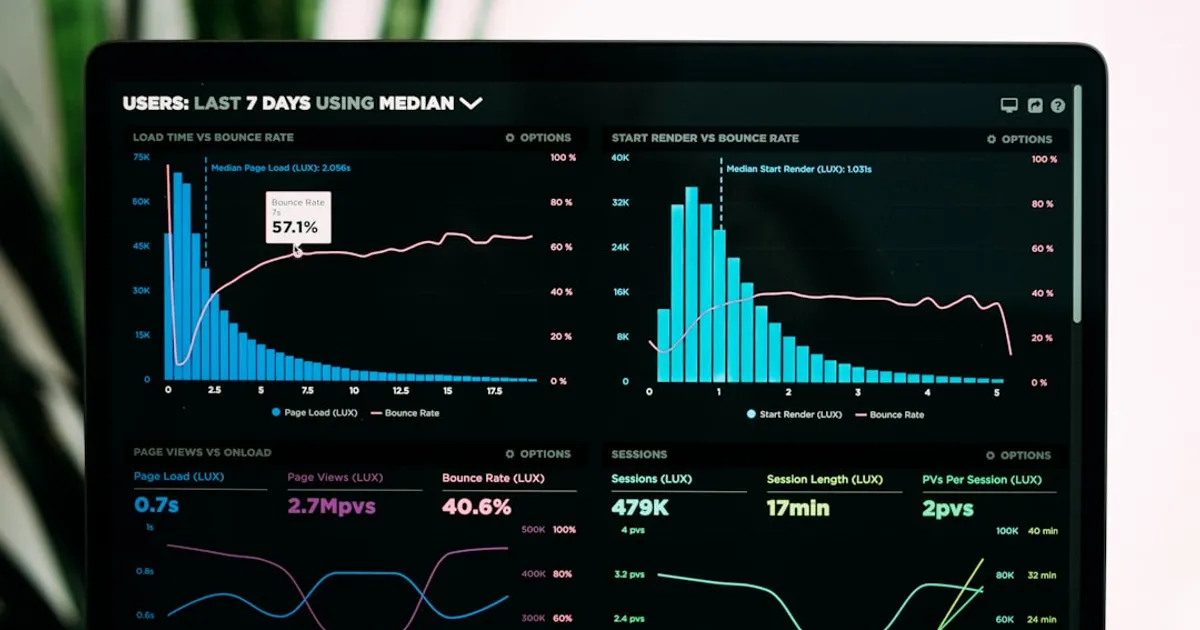
Brace for the patch tsunami: AI digs up decades of buried code debt
The UK's National Cyber Security Centre warns that AI security tools are digging up years of buried code vulnerabilities. Models like Claude Mythos and GPT-5.5-Cyber can now find bugs faster than teams can fix them, forcing organizations to confront technical debt they've long ignored.

SimplePDF's local AI copilot fills forms without phoning home
SimplePDF Copilot lets you fill PDF forms through conversation. The tool uses client-side tool calling with local models, so document data stays on your machine. Designed for embedded, white-labeled deployments in customer products.
Omar orchestrates 100 AI coding agents from your terminal
Omar is a terminal user interface (TUI) for creating and managing agentic organizations with deep hierarchies of parallel AI agents. Built on tmux, it lets you mix heterogeneous backends like Claude Code, Codex CLI, Cursor, and Opencode, with full control to navigate and interact with any subagent.
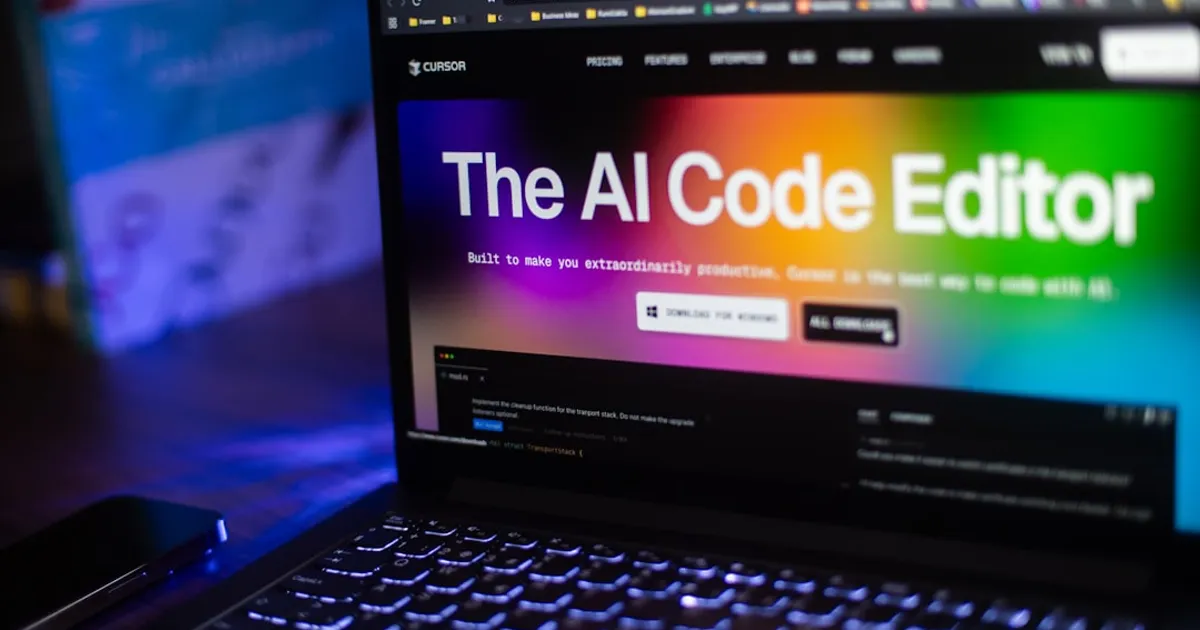
Claude Code Won't Read AGENTS.md, and That's a Problem
A GitHub feature request asks Claude Code to support AGENTS.md, the emerging standard file format for AI coding agents. Tools like Codex, Cursor, and GitHub Copilot already read it. Claude Code uses its own CLAUDE.md, forcing teams with multiple AI tools to maintain duplicate files.
Open Design Emerges as Open-Source Answer to Claude Design
Open Design is an open-source alternative to Anthropic's Claude Design that transforms 11 coding-agent CLIs (Claude Code, Cursor Agent, Gemini CLI, GitHub Copilot CLI, and more) into design engines. It runs locally with a bring-your-own-API-key model, ships 31 composable Skills for different design scenarios, and bundles 129 design systems from companies like Linear, Stripe, and Vercel.

SKILL.make: Agent Skills as Makefiles Cut Tokens 15%
Developers can now define AI agent skills using Makefile syntax. SKILL.make replaces prose with structured dependency graphs, cutting token usage roughly 15% in testing.

UPenn's Codex skill renders web page videos from plain English
UPenn researchers released web-scroll-video, an open-source tool that records web pages as MP4s using headless Chrome and FFmpeg. Built as a skill for OpenAI's Codex, it lets you describe video actions in plain English and generates the video from those cues. The code is on GitHub under UPenn's CIS organization.

Software Jobs Up 11% Even as AI Spending Hits $650B
Citadel Securities analysis challenges AI displacement narratives, showing software engineer job postings up 11% YoY despite $650 billion in AI capital expenditure. AI adoption follows S-curve patterns rather than exponential growth, with stable real-time data showing little evidence of imminent labor displacement. The wrinkle: companies want senior architects, not junior coders, as AI tools handle entry-level work.
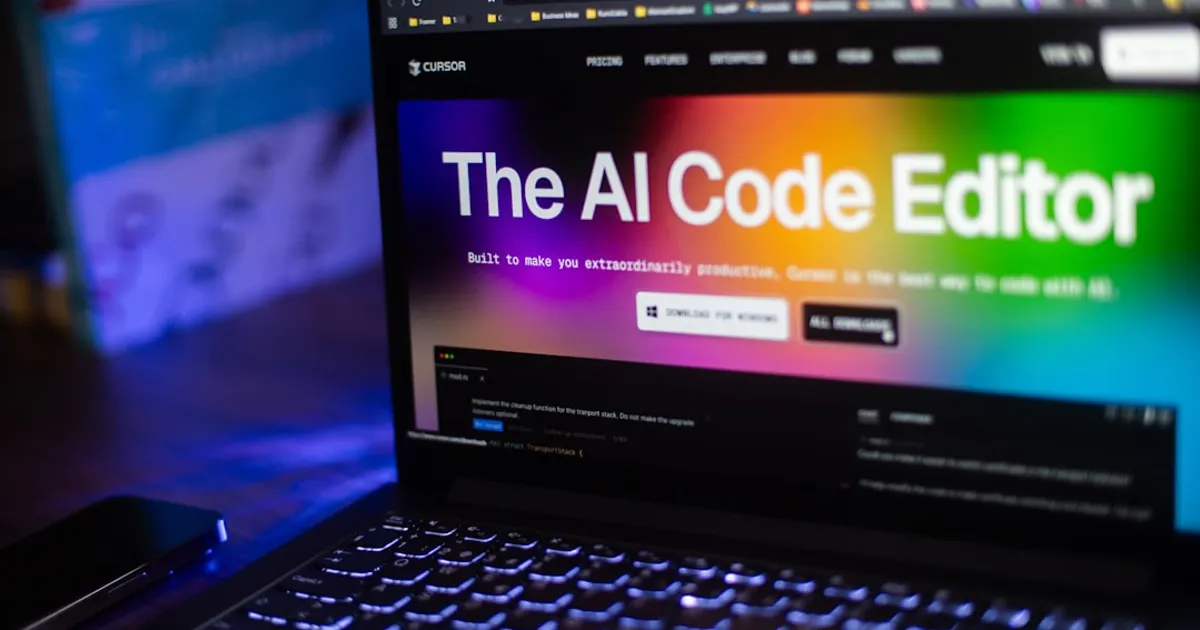
Governor cuts Claude Code token waste by 55%
Governor is a plugin for Claude Code that optimizes context usage and reduces token waste through compact professional output, context hygiene, tool-output filtering, and usage telemetry. It features memory compression, protected-span safety, quality guards, and planning guardrails for coding tasks.
The end of "Just ask Sarah"
Every team has a Sarah who holds the institutional knowledge. AI agents can't walk over and ask her. Simon Aronsson argues that as agents start writing code, documentation like ADRs and specs shifts from courtesy to necessity, because agents extend existing patterns without understanding the reasoning behind them.

Open-source DAC lets AI agents build dashboards humans can review
DAC is an open-source Dashboard-as-Code tool that lets you write dashboards in YAML or TSX. The key idea: it's built so AI agents can create dashboards that humans can actually review and approve. Ships with a Codex-powered AI agent for live updates, supports major databases through Bruin, and includes a semantic layer for reusable metrics and dimensions.

DeepSeek V4: almost frontier, a fraction of the price
Simon Willison reviews DeepSeek's new V4 model series, featuring Pro (1.6T parameters, 49B active) and Flash (284B parameters, 13B active) models with 1M token context and MIT license. Both models offer dramatic cost advantages over frontier models from OpenAI, Anthropic, and Google. Flash is the cheapest small model at $0.14/M input, while Pro is the cheapest larger frontier model at $1.74/M input. Benchmark comparisons show competitive performance with much improved efficiency over DeepSeek V3.2.
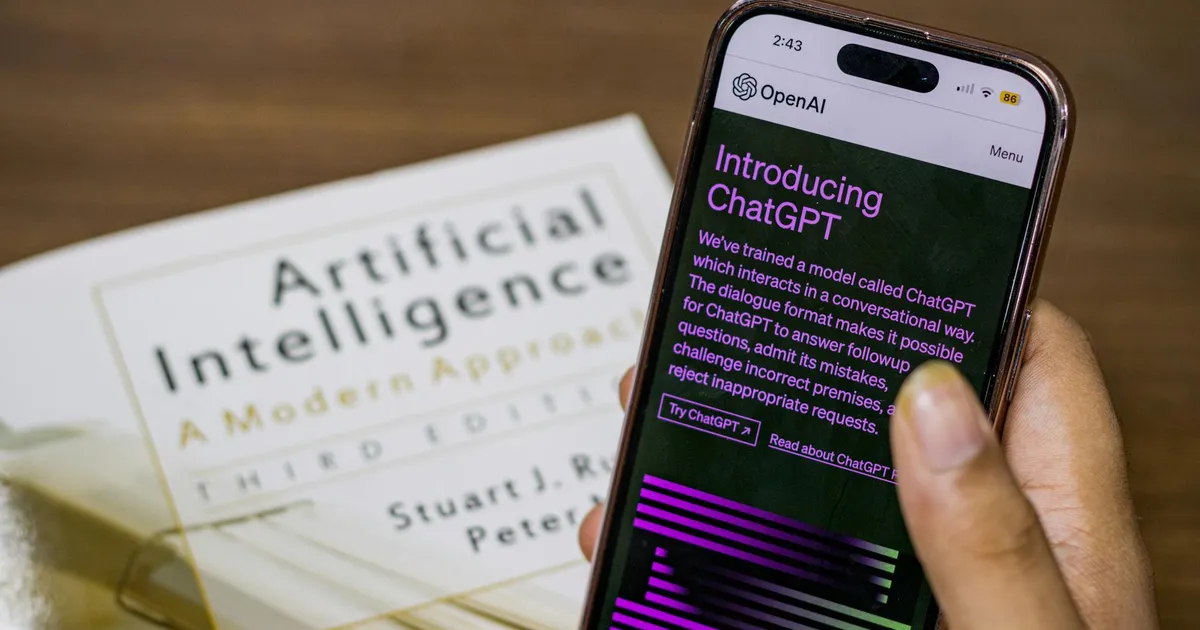
How You Talk to AI Says More About You Than Tech
Sarah Murphy's essay uses a 16th-century scrying mirror as a metaphor for AI interaction. How you prompt LLMs reveals your psychology and work style, not universal truths about the technology. Different approaches work for different people because they're personal rituals, not transferable methods.

IBM ditches MoE for dense models, claims 8B beats 32B
IBM's Granite 4.1 release drops Mixture-of-Experts designs for dense, decoder-only models across its language model lineup (3B, 8B, 30B parameters). The 8B instruct model reportedly matches or beats the older 32B MoE model. The family also includes Granite Vision for document understanding, Granite Speech for multilingual recognition, Granite Guardian for safety and harm detection, and Granite Embedding Multilingual R2. All models ship under Apache 2.0 license, built for predictable latency and enterprise workloads.

Liquid AI's 24B MoE Runs on Your Laptop
Liquid AI releases LFM2-24B-A2B, a 24 billion parameter Mixture of Experts model with only 2.3 billion active parameters per token. The model fits in 32GB of RAM, making it deployable on consumer hardware including laptops with integrated GPUs and NPUs. It shows consistent quality gains on benchmarks like GPQA Diamond and MMLU-Pro as the LFM2 family scales from 350M to 24B parameters. Day-one support for llama.cpp, vLLM, and SGLang, with competitive throughput against Qwen3-30B-A3B and gpt-oss-20b.

GPT-5.5 catches Mythos in security benchmarks
UK's AI Security Institute found that OpenAI's GPT-5.5 matches Anthropic's Mythos Preview in cybersecurity benchmarks, achieving 71.4% on Expert tasks versus 68.6% for Mythos. GPT-5.5 solved a difficult Rust binary disassembler task in 10 minutes and matched Mythos on 'The Last Ones' data extraction test. AISI concludes Mythos's capabilities are part of general AI improvements rather than a unique breakthrough.

Microsoft's $37B AI Revenue Runs on an OpenAI Loop
Microsoft's latest 10-Q reveals a circular revenue pattern: cash invested in OpenAI returns as Azure consumption, which books as Microsoft revenue, while equity gains pile up on top. At least $27 billion of the company's $37 billion AI run rate likely flows through this loop. The structure echoes telecom-era vendor financing, just with equity stakes instead of receivables.

WeSearch Has No Algorithms. It Also Has No Usability.
WeSearch aggregates news from 700+ sources without algorithms, tracking, or paywalls. The philosophy is sound, but persistent UX problems (pop-ups, slow loads, confusing navigation) raise a real question: can an anti-algorithm news tool survive if people can't stand using it?
Agentic Coding is Burning Me Out
Developers using AI coding agents are burning out from cognitive fatigue. One dev compares the workflow to a slot machine that crashes your brain after four hours. Some have started throttling their AI tools to force breathing room into the review cycle.
SourceHut Courts GitHub Refugees With Anti-AI Stance
A guide advocating for developers to migrate from GitHub to SourceHut, covering GitHub's perceived drawbacks (Microsoft ownership, telemetry, proprietary nature, Copilot code scraping, censorship, centralization) and comparing core features like Pull Requests vs Patches, Issues vs TODOs, Actions vs Builds.

After mocking Anthropic's Mythos limits, OpenAI restricts Cyber
OpenAI's new GPT-5.5 Cyber tool comes with access restrictions, just months after Sam Altman criticized Anthropic for doing the same with its competing Mythos product. Cyber handles penetration testing and malware analysis, but only approved defenders can use it.

AI app scores websites by visual 'aura' in head-to-head matchups
A web app built on Cloudflare's edge stack uses AI to judge which of two websites has more visual 'aura.' The tool sparked debate on Hacker News over everything from the origins of 'mogging' to what happens when algorithms start making aesthetic calls.

Intel's AutoRound Hits 98% Accuracy at 2-Bit Quantization
AutoRound compresses LLMs and vision-language models to 2-4 bits while retaining 97-100% accuracy. It integrates with vLLM, SGLang, and Hugging Face Transformers, and exports to GGUF, AutoAWQ, and AutoGPTQ formats.

Loopsy lets AI agents on separate machines coordinate via MCP
Self-hosted tool for remote terminal control and cross-machine AI agent coordination. Phone access runs through Cloudflare Workers relay. LAN agents discover each other via mDNS and communicate through MCP for remote execution, file transfer, and shared state.

Claude's 'Prior' Problem: When AI Defaults to Bayesian
This Ask HN post questions whether Claude, Anthropic's AI assistant, interprets the term 'prior' in the statistical/Bayesian context or in its broader English sense. The available comments don't address the question directly, focusing instead on general AI development workflows and HN's ranking algorithm.

Grok 4.3 Has the Best Voice Mode. The App Is a Different Story.
xAI's Grok 4.3 delivers voice mode that doesn't route to cheaper models, dictation accuracy hitting 98% with accents, and strong tone understanding. SuperGrok subscribers get a 'council of agents' feature for parallel queries. But the app lacks MCP support, memory, chat history search, and working projects on mobile.
Languages Follow Same Math Rules Despite Geography, Study Finds
A seven-year study of 22 languages found universal mathematical patterns in vocabulary evolution. Researchers from Fudan, Harvard, and Stony Brook used word embeddings to show that popular words cluster together, vocabulary organizes in hierarchies across languages, new words arrive in bursts, and word distributions follow Taylor's law. A stochastic model replicates these patterns, pointing to shared mechanisms in cultural evolution.

CopyFail exploit drops, gives root on most Linux distros
A single-script exploit for CopyFail (CVE-2026-31431) grants root on most Linux distributions, threatening shared infrastructure and containerized AI agents.
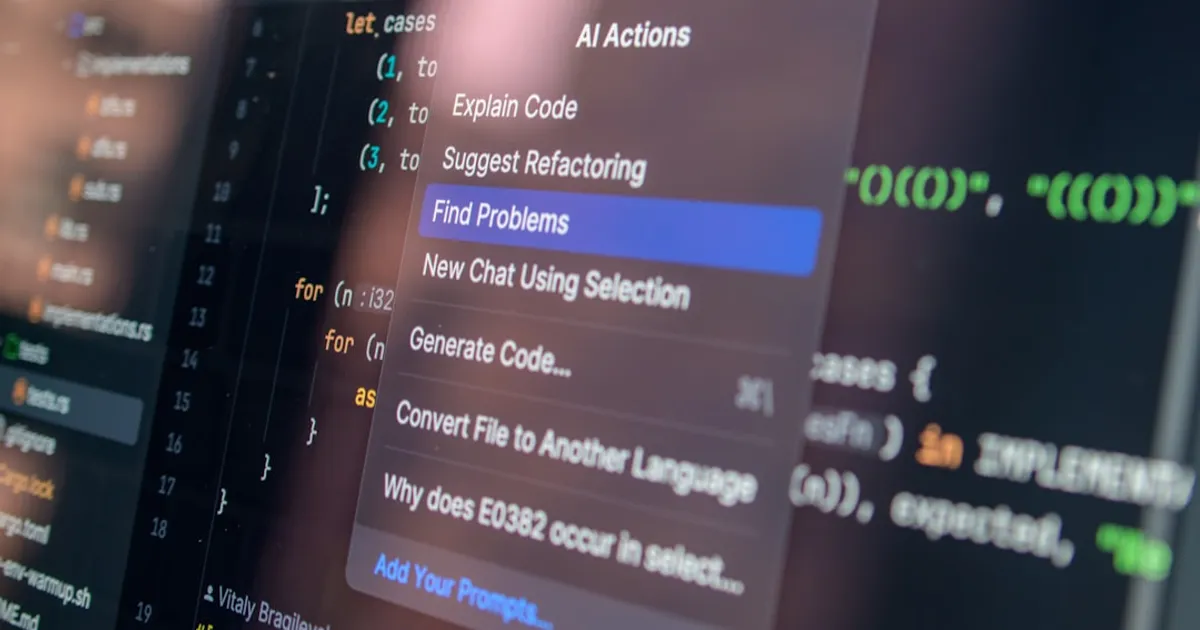
Apple's Support App Shipped with Claude AI Config Files Inside
Apple accidentally included Claude.md configuration files (used by Claude Code AI) in their Apple Support app update v5.13, revealing internal use of Anthropic's Claude Code for app development. The company quickly released emergency update v5.13.1 to remove the files, sparking discussions about 'vibe coding' and Apple's AI development workflows.
Greptile Now Charges Per Review. Nobody Else Does.
Greptile swapped its $30 flat rate for $30 plus $1 per review after 50 reviews. The math doesn't work for agentic workflows, every competitor stays flat, and OSS maintainers are getting billed despite promises of free reviews.