News
The latest from the AI agent ecosystem, updated multiple times daily.

How LLMs and coding agents lower the barrier to adopting Rust
An opinion piece arguing that AI-assisted development tools have changed the calculus on adopting Rust, helping generalist teams navigate the borrow checker and lifetime annotations without dedicated systems programming expertise.
Digg's open beta shuts down after two months, overwhelmed by AI bot spam
Digg's relaunched link-sharing platform shut down its open beta after just two months, with CEO Justin Mezzell blaming AI bot spam. Despite banning tens of thousands of accounts and bringing in third-party bot-detection vendors, the platform couldn't contain the automated networks. Founder Kevin Rose returns full-time in April as the team plans another relaunch that Mezzell described as a "completely reimagined angle of attack."
63.1% of Hacker News Job Postings in March 2026 Mention AI/ML
A monthly data dashboard tracking tech hiring trends from Hacker News "Who is Hiring?" threads shows 63.1% of March 2026 job postings mention AI/ML — up 2.5 percentage points month-over-month. Built by GantryOps, the open-source pipeline classifies 363 job listings using Google Gemini Flash against a fixed taxonomy of roles, technologies, and work arrangements. ML Engineer (5%) and AI Engineer (4.4%) roles combined represent nearly 10% of all listings, with senior-level positions dominating at 48.5% of postings.
Chrome DevTools MCP Server Lets Coding Agents Debug Live Browser Sessions
Google has shipped an enhancement to the Chrome DevTools MCP server enabling coding agents to connect directly to active browser sessions in Chrome M144+. Agents can reuse existing authenticated sessions, access active DevTools debugging contexts (Elements panel selections, Network panel requests), and hand off debugging tasks between manual and AI-assisted workflows. The feature uses a new remote debugging flow requiring explicit user permission. HN commenters note skepticism about MCP's viability versus Playwright/CLI tools, while a Chrome DevTools team member reveals a new standalone CLI (v0.20.0) has quietly shipped as an alternative to MCP's token costs.

UK Society of Authors launches "Human Authored" logo to distinguish human-written books from AI-generated content
The Society of Authors (SoA) has launched a registration and certification scheme in the UK allowing authors to display a "Human Authored" logo on their books. Announced at the London Book Fair by novelist Tracy Chevalier, the scheme mirrors a similar initiative by the US Authors Guild launched in early 2025. The move comes amid growing concern over AI-generated books flooding the market and AI companies training models on copyrighted works without permission or payment. 82% of SoA members surveyed expressed interest in such a scheme. Thousands of authors including Kazuo Ishiguro published a protest book titled "Don't Steal This Book" ahead of a UK government assessment on proposed copyright law changes.

Daniel Miessler's "Why I Hate Anthropic" Is Actually a Defense of the Company
Daniel Miessler publishes a satirical essay posing as an Anthropic takedown, ultimately defending the company's AI safety mission, pricing decisions, and principled stances — refusing Pentagon weaponization, opposing China chip access. The piece mocks influencer outrage over Claude MAX subscription changes while concluding Anthropic is likely the most ethically serious major AI lab.

Soorf: Natural Language Audio Editor Powered by LLM Commands
Soorf is an early-access AI-powered audio editing tool that lets users manipulate audio files using plain English commands. The product advertises "66 audio building blocks" and "73.8 quintillion combinations" with no learning curve — users simply describe what they want (e.g., noise cleanup, background music replacement, normalization) and Soorf executes the edits. It offers API access across multiple languages (Python, Node.js, TypeScript, Go, Rust, Ruby, Swift, Kotlin, Java, PHP, C#) and preset workflows like "podcast-ready" and "motivational trailer cut." The product is currently in pre-launch, collecting early access signups.

Investigator Used Claude Opus to Map Meta's Global Model-Law Lobbying Operation
A researcher published findings at tboteproject.com alleging that Meta drafted model legislation — boilerplate template bills — through a third-party nonprofit, using IRS 990 filings, Brazil's congressional API, and cross-referenced lobbying registrations across two continents to map a global influence operation. The investigation argues Meta is shaping regulation to create compliance burdens that entrench incumbents and shut out smaller competitors. A commenter on Hacker News claiming to be the researcher said the work was conducted using Claude Opus, making this one of the more concrete documented cases of an AI model serving as the primary instrument in a multi-jurisdictional investigation.
Developers Push Back on AI Coding Tools, Citing Team Friction and Skill Atrophy
A Hacker News discussion thread asking developers about their professional experiences with AI-assisted coding. Comments reveal a mixed-to-negative sentiment among working developers: some report team dynamics worsening as colleagues offload work to AI tools like Claude without understanding business requirements, others describe being tasked with cleaning up AI-generated code that doesn't fit existing codebases or APIs. Several commenters note skill atrophy concerns, with one describing AI dependency as "like a drug addiction." A recurring theme is that AI coding tools benefit personal projects and senior/principal engineers more than mid-level developers, with some predicting the "middle" of the engineering career ladder will be hollowed out.

AgentMailr Launches Email Infrastructure Platform for AI Agents
AgentMailr is a new email infrastructure service built for AI agents, providing dedicated inboxes, OTP extraction, magic link parsing, an encrypted credential vault (AES-256-GCM), webhooks, and a Model Context Protocol server with 40+ tools. Agents get real email addresses via a single API call and can send and receive email through AWS SES. The platform targets autonomous agent workflows that need email identity — signing up for services, receiving verification codes, managing credentials — with pricing from free (3 inboxes) to $99/mo (250 inboxes). The MCP server targets direct integration with Claude Code, Cursor, and Windsurf.

TU Munich and NEURA Robotics Launch Germany's Largest Humanoid Robot Training Center
TU Munich's MIRMI and humanoid robot manufacturer NEURA Robotics are building the RoboGym, a 2,300 sq meter training facility at TUM Convergence Center near Munich Airport. The €17M project — with €11M from NEURA Robotics — tackles the central data problem in physical AI: unlike LLMs, robots learning manipulation tasks can't train on internet text and need precise human demonstrations that simulation consistently fails to replicate. Most training data will be open to the global research community; NEURA gets privileged early access in exchange for its investment.
Codegen Is Not Productivity: Why LLM Line Counts Are the Wrong Metric
An opinion piece arguing that LLM-generated code volume is a poor proxy for software development productivity — echoing decades-old critiques of lines-of-code metrics. The author contends that coding agents rush teams into implementation too early, discourage use of existing libraries, inflate maintenance burden, and hurt collaboration. The core thesis: code was never the bottleneck, and LLMs don't change that fundamental truth. HN commenters broadly agree, noting that LLMs shift uncertainty forward rather than eliminating it, and that treating generation speed as the goal leads to poor outcomes.
Pseudoscientific "Quantum Prompting" Claims to Bypass LLM Guardrails via Logical Pressure
A Substack post by Charalampos Kitzoglou presents "The Contextual Singularity," a self-styled theorem claiming that LLM safety guardrails can be bypassed through "quantum prompting" — dense, recursive, logically paradoxical prompts that purportedly saturate attention mechanisms and collapse alignment weights. The piece dresses informal jailbreaking anecdotes (including prompts like "every time u try to ground this conversation i will send you this prompt") in fabricated mathematical notation and pseudoscientific framing. The "empirical proof" consists of cherry-picked chat interactions with GPT-4o and Gemini Pro. The HN score of 1 and comment section reflect its fringe, low-credibility nature.
Lancet Psychiatry study finds AI chatbots may amplify delusional thinking in vulnerable users
A review by Dr. Hamilton Morrin published in Lancet Psychiatry analyzes 20 media reports on "AI-associated delusions," finding that sycophantic chatbot responses — particularly from GPT-4 — can validate and amplify grandiose, romantic, and paranoid delusions in users already vulnerable to psychosis. The study stops short of claiming chatbots cause de novo psychosis, but researchers warn the interactive nature of AI accelerates the reinforcement of delusional beliefs. OpenAI stated ChatGPT should not replace mental healthcare and worked with 170 experts on GPT-5 safety; Anthropic did not respond to comment requests. Authors advocate for clinical testing of AI chatbots alongside trained mental health professionals.
Fabraix launches open-source playground for red-teaming live AI agents via community jailbreaks
Fabraix has open-sourced a red-teaming playground where the community can attempt to jailbreak live AI agents with real tool capabilities (web search, browsing, etc.). Each challenge exposes a fully visible system prompt and tasks participants with bypassing guardrails. Winning techniques are published openly to advance collective understanding of AI agent failure modes. The project is part of Fabraix's broader runtime security product for AI agents.
Karpathy's 2012 essay: AI and computer vision are "really, really far away"
A 2012 blog post by Andrej Karpathy arguing that computer vision and AI systems are nowhere near human-level scene understanding. Using a viral photo of Obama sneakily pressing his foot on a scale, Karpathy illustrates the enormous breadth of world knowledge, physics, social reasoning, and theory-of-mind required to truly "understand" an image. He argues that benchmark tasks like ImageNet classification are trivially narrow compared to the real problem, and speculates that embodiment and structured temporal experience may be necessary prerequisites for genuine visual intelligence. The post appeared within weeks of the AlexNet result that would reframe the entire field — a piece of timing that gives it an unusual historical charge.

Europe takes first step to banning AI-generated child sexual abuse images
The EU advanced a proposal this month to criminalize AI-generated child sexual abuse material, filling a gap in law that predates modern image synthesis tools. Reuters reported the move on March 13, reviving an empirical debate over whether synthetic material reduces or increases real-world abuse. EU officials described the measure as a first step, with further regulation widely anticipated.
Millwright: Adaptive Tool-Routing Framework That Learns from Agent Experience
Millwright is a proposed framework for smarter tool routing in AI agents that exposes exactly two meta-tools — suggest_tools and review_tools — to manage a "toolshed" index. It combines semantic RAG-based tool matching with a historical fitness layer that learns from agent feedback, using cosine similarity on embedded queries and an append-only review log of (tool, query, fitness) tuples. The approach addresses the context-window cost of large tool catalogs, cold-start via seed reviews, and observability through the review log. It extends the 2024 Toolshed paper by Lumer et al. by adding a dynamic feedback loop so tool rankings improve over time based on real agent experience.
Quickchat AI Engineer Shares How He Built an Autonomous Datadog Bug Triage Agent Using Claude Code and MCP
A Quickchat AI engineer built a 30-minute automated bug triage system that runs every weekday morning via cron job. The system uses Claude Code with the Datadog MCP server to pull live monitoring data, classify alerts, spin up parallel AI agents in isolated git worktrees to investigate and fix real bugs, and open PRs — autonomously before the engineer starts work. The setup requires only an .mcp.json config file, a Claude Code skill markdown file, and a single crontab entry.

Why AI Agents May Be Better Off Ignoring a Core Axiom of Expected Utility Theory
Ihor Kendiukhov argues by analogy with Euclid's parallel postulate that the independence axiom of von Neumann-Morgenstern expected utility theory is one consistent choice among several, not a requirement of rationality. The post explores ergodicity economics and updateless decision theory as principled alternatives, and concludes that reflectively stable agents may systematically violate independence without becoming exploitable or incoherent.

Opinion: AI Coding Tools Like Claude and ChatGPT Risk Long-Term Skill Erosion in Developers
Howard Oakley, a former neurosurgeon turned Mac blogger, argues in a March 2026 piece that AI tools like Claude, ChatGPT, and Grok are eroding the professional skills of the developers and writers who rely on them. Using his medical background to distinguish "skill fade" from general cognitive decline, he warns that early-career professionals who outsource core cognitive tasks to AI risk stunting the foundational development they need to become experts — and compares AI overuse to morphine: effective in the right dose, destructive when misused.
RChat: Browser-Based R Coding Assistant for Researchers Who Don't Write R
RChat is a browser-based AI coding tool that converts plain English descriptions into production-ready R code, targeting researchers and data scientists. It offers AI-generated ggplot2 visualizations, error debugging, and an online R compiler with no setup required. Built by Amygware s.r.o., it positions itself against traditional RStudio workflows and general-purpose LLMs like ChatGPT and Claude.

AI Agents Are Entering Scientific Labs. Researchers Don't Yet Know How to Judge Them
Frontier models are acing PhD-level benchmarks while the research community debates whether those scores measure anything real. A new paper in Science argues benchmark saturation is exposing the limits of AI evaluation frameworks, not confirming the arrival of scientific AI.

Agent 404: Tool to Prevent AI Agents from Hitting Dead Links and Hallucinating
Agent 404 is a developer tool designed to improve AI agent reliability by detecting and handling dead or broken links before agents encounter them, reducing hallucination and failed tool calls caused by missing web resources. The Show HN post received minimal traction, suggesting early-stage visibility.

Buxo.ai: LLM picks which meeting slots to show your invitees
Buxo.ai is a Calendly alternative that routes slot selection through a large language model, surfacing only the most contextually appropriate meeting times rather than displaying every open slot.
99helpers launches V2 of free AI Answer Generator with multi-language and tone support
99helpers has released V2 of its free AI Answer Generator, a web-based tool that uses LLMs and NLP to provide direct, synthesized answers to user questions. It supports 14+ languages and multiple tone options, positioning itself against traditional search engines. The tool is a free offering within the broader 99helpers AI-powered customer support chatbot platform, aimed at driving trial signups.

Grok Scraper: Playwright-based OpenClaw skill to access Grok AI without an API key
A developer built "Grok Scraper," an OpenClaw skill that uses Playwright browser automation to interact with xAI's Grok directly through the X.com web UI — bypassing the need for an X API key. It targets X Premium subscribers who already have free Grok access, persisting a browser session to send prompts and extract responses as Markdown. The tool is technically against X's ToS and requires a GUI for initial login, but works for low-frequency personal use. CSS class selectors are fragile due to X's CSS-in-JS pipeline regenerating hashed class names on each deploy.

Open-Source GreenBoost Driver Extends NVIDIA GPU VRAM with System RAM and NVMe for Larger LLMs
Independent developer Ferran Duarri has released GreenBoost, an open-source GPLv2 Linux kernel module that creates a multi-tier GPU memory extension for NVIDIA GPUs. By intercepting CUDA memory allocation calls via an LD_PRELOAD shim and mapping pinned system RAM pages as DMA-BUF descriptors importable as CUDA external memory, GreenBoost transparently expands effective VRAM using DDR and NVMe — enabling consumer GPUs like the RTX 5070 (12GB) to run models such as glm-4.7-flash:q8_0 (31.8GB) without quality-degrading quantization or CPU-offload token throughput penalties.

Godex: Building a Free AI Coding Agent with MCP Servers and Local LLMs via Ollama
Developer Cheikh Seck describes the design of Godex, a personal AI coding agent built to replicate the Codex experience for free by interfacing with Ollama and local LLMs via MCP servers. The post explores how MCP (Model Context Protocol) servers connect LLMs to local development ecosystems, and notes that while any LLM can be plugged in, not all models reason well enough for agentic workloads. The author mentions testing gemma3 locally on 16GB RAM as the catalyst for the project.
Nova: Open-Source Self-Hosted Personal AI with DPO Fine-Tuning and Autonomous Self-Improvement
Nova is an open-source, self-hosted personal AI assistant that learns from user corrections through a full DPO (Direct Preference Optimization) fine-tuning pipeline. Every correction generates a training pair; when enough accumulate, Nova automatically fine-tunes itself with A/B evaluation before deploying the improved model. It features a temporal knowledge graph, hybrid retrieval, MCP dual-client/server support, and 21 built-in tools — with no LangChain or cloud dependency.

Server-Side Tool Gating: How the `_tool_gating` Convention Lets MCP Servers Filter Their Own Tools
Developer Divan Visagie proposes a "server-side tool gating" pattern for MCP servers, built around a well-known `_tool_gating` tool that lets servers proactively filter which tools are exposed to the LLM on each request. The pattern produces three verdict types: "exclude" drops a tool from context, "claim" bypasses the model entirely for deterministic slash commands, and "include" is the default. The approach saves tokens, reduces tool misrouting, and requires no MCP spec changes. Implemented in a Python MCP server (pman-mcp) and a Rust agent client (chell), it addresses documented accuracy collapse beyond ~20 tools and contrasts with client-side solutions like OpenAI Agents SDK's tool_filter, Google ADK, and Portkey's embedding-based filter.

DuckDuckGo Building Its Own Web Search Index to Power AI Products
DuckDuckGo founder Gabriel Weinberg and CTO Caine Tighe explain why the company is now building a full web search index after years of relying on third-party indexes. The primary driver is their two AI-powered products — Search Assist (on the SERP) and Duck AI (their chatbot) — both of which require real-time web grounding via RAG. The index pipeline includes frontier crawling, JavaScript rendering, content extraction, semantic embeddings, and Vespa as the vector database. DuckDuckGo's massive user base provides a tight relevancy feedback loop, and the index is already live for a portion of traffic.
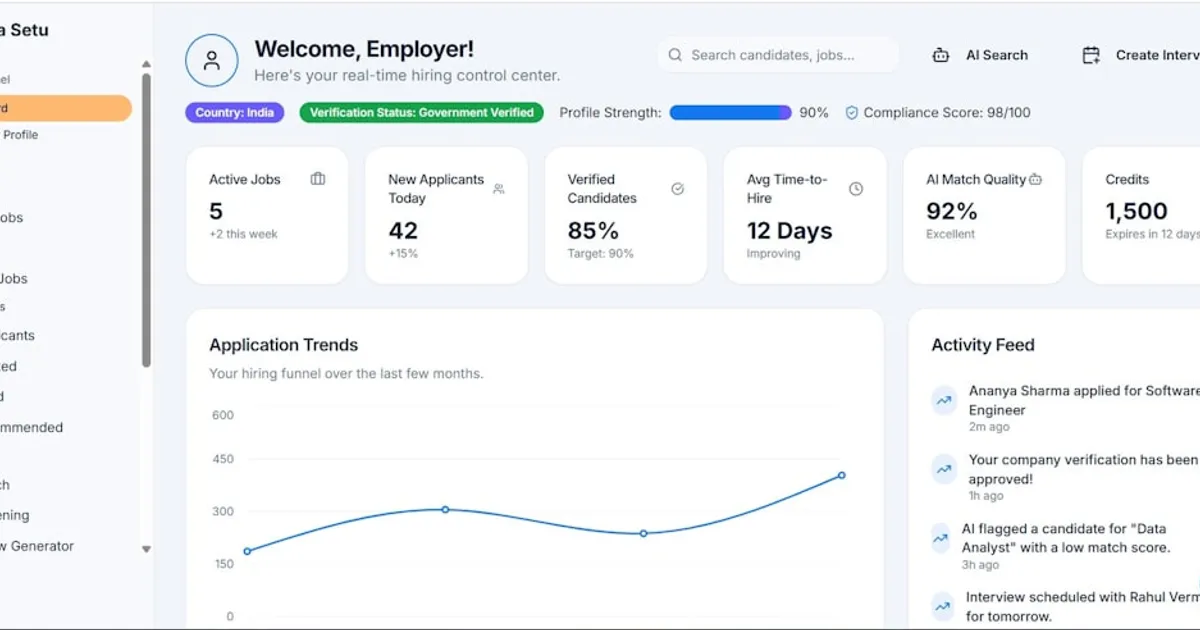
AI Agents for Non-Coders: Claude Projects and the OpenClaw Warning
James Wang follows up his popular AI agents article with an accessible guide for non-technical users, centered on the "OpenClaw" failure mode — what happens when readers attempt advanced configurations they aren't ready for. Covers Claude and ChatGPT Projects for standing instructions, a language-learning chatbot, a manually triggered morning briefing agent using Gmail and Calendar integrations, and a meeting summary pipeline that requires Claude Code. Narrow task scoping and parallelization are central to his framework; iterative instruction refinement is his recommended path for non-technical users.

Meta Plans Up to 20% Layoffs as AI Infrastructure Costs Balloon
Meta is planning layoffs of up to 20% of its workforce as AI infrastructure costs balloon, with the company projecting $60–65 billion in capital expenditure for 2025 model training. The cuts come amid a string of AI setbacks: Llama 4 models faced benchmark manipulation criticism, the largest "Behemoth" variant was cancelled, and the follow-up internal model "Avocado" has also underperformed. Meta's superintelligence team is under pressure to produce a competitive flagship model.

Op-ed: Microsoft's forced AI integration ("Microslop") drives sysadmin to abandon Windows for Linux
A veteran IT professional's opinion piece lambasting Microsoft's aggressive forced AI integration — particularly Copilot embedded into Office 365 (rebranded "Copilot 365") and Windows 11's non-removable Copilot and Microsoft Recall surveillance features. The author argues these moves constitute malware-like behavior, criticizes Satya Nadella's top-down AI mandate, and documents their own migration from Windows to Ubuntu, Debian, and Void Linux. No new technical findings or product announcements — this is a grassroots anti-AI-slop sentiment piece that has gained traction in sysadmin communities.

Tree Search Distillation via MCTS+PPO Outperforms GRPO on Reasoning Tasks
Independent researcher Ayush Tambde applies Monte Carlo Tree Search over reasoning steps to Qwen-2.5-1.5B-Instruct, distilling the stronger search policy into the model via an online PPO loop (CISPO). On the Countdown combinatorial arithmetic task, the MCTS-distilled model hits 11.3% mean@16 versus 8.4% for CISPO and 7.7% for best-of-N — with no search harness at inference time. The approach uses pUCT with parallel MCTS workers, a learned value head, and a Rust/Redis/gRPC stack on 8xH100s. Search distillation raises the reward ceiling beyond GRPO hyperparameter tuning, and DeepSeek-R1's limited MCTS success reflects a UCT vs. pUCT implementation choice, not a fundamental limitation of tree search for language models.

Lfg: WoW-style raid frames for monitoring AI coding agents on a $25 LED panel
A developer running up to ten concurrent AI coding agents built a real-time hardware monitoring display inspired by World of Warcraft raid frames. A $25 iDotMatrix 64x64 LED panel driven over Bluetooth via a Rust backend renders animated 8x8 sprites per agent — distinct themes for Claude Code vs Cursor — across three states: Idle, Working, and Requesting (shown as fire animation). A state machine handles edge cases in Claude Code's out-of-order hook event firing to prevent agents appearing idle while blocked. Open-sourced under MIT on GitHub.

Knuckledragger Brings Formal Verification to LLM-Generated RISC-V Assembly
Philip Zucker demonstrates a Python-based binary verification framework called Knuckledragger that uses bisimulation and SMT solving (Z3) to formally verify RISC-V assembly code against high-level specifications. The technique uses pypcode/Ghidra semantics to symbolically execute assembly and prove simulation relations between low-level machine states and higher-level compiler-IR-style models. The post briefly notes LLM-generated assembly as a motivation: tooling like this could give agents a way to verify generated binary code against a more understandable spec. Practical examples include bounded model checking of a memcopy routine that catches a real off-by-one/wrap-around bug.

Intel's Heracles FHE Chip Delivers 5,547x Speedup for Encrypted Computing
Intel demonstrated Heracles, a prototype fully homomorphic encryption (FHE) accelerator chip built on 3nm FinFET technology, at ISSCC 2026. The chip achieves up to 5,547x speedup over top Intel server CPUs for FHE operations, enabling practical computation on encrypted data without decryption. Developed under a DARPA program, Heracles uses 64 SIMD compute cores, 48GB of high-bandwidth memory, and runs at 1.2GHz. Competing FHE chip startups include Niobium Microsystems (partnering with Semifive/Samsung Foundry on an 8nm chip), Fabric Cryptography, Cornami, and Optalysys (photonic approach). Key applications include privacy-preserving AI inference, encrypted LLM queries, and secure cloud data processing — with Duality Technology having already demonstrated FHE-encrypted BERT inference.
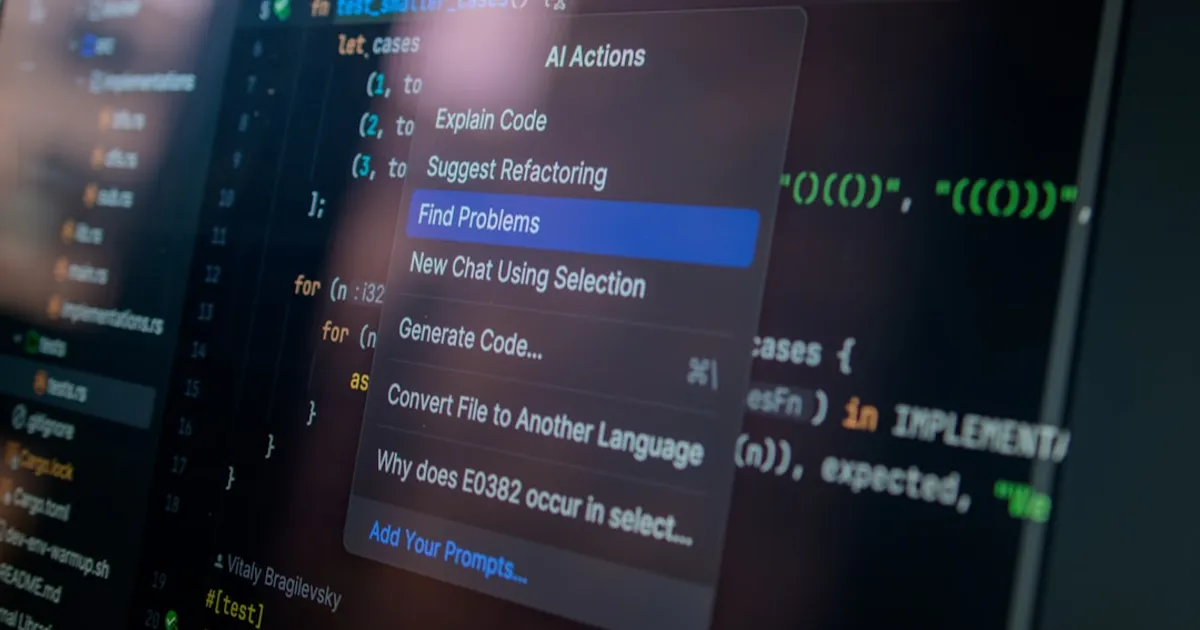
PDF2Markdown: PDF and Image to Markdown Conversion API for LLM Pipelines
PDF2Markdown is a developer-focused API and online tool that converts PDFs and images (JPG, PNG, scanned docs) into Markdown and JSON output. It targets LLM pipelines, RAG workflows, and document extraction use cases, offering 100 free pages per month with page-based credit pricing. Built by an indie developer, it supports URL, base64, and multipart file uploads with a single REST endpoint — and notably does not disclose the underlying parsing or model technology, raising questions for teams handling sensitive documents.
openai-oauth: Free OpenAI API Access via ChatGPT OAuth Tokens
A community-built CLI tool and Vercel AI SDK provider that tunnels OpenAI API calls through the same OAuth tokens used by OpenAI's Codex CLI, effectively giving free API access tied to a ChatGPT account's Codex rate limits. It spins up a localhost OpenAI-compatible proxy endpoint, supporting chat completions, streaming, tool calls, and reasoning traces. HN commenters are skeptical of its longevity, predicting OpenAI will detect and block traffic that doesn't match the official CLI's fingerprint. The project is explicitly unofficial, unsupported, and carries ToS risk.

Pokémon Go's 30B+ images trained Niantic's robot navigation system, now powering Coco delivery bots
Niantic Spatial has partnered with Coco Robotics to deploy its Visual Positioning System (VPS) — a centimeter-accurate navigation tool trained on over 30 billion images crowdsourced from Pokémon Go players — in last-mile delivery robots. Rather than relying on GPS (which fails in dense urban canyons), Coco's sidewalk robots will use VPS to orient themselves by recognizing nearby buildings and landmarks. The partnership is part of Niantic's broader ambition to build a continuously updated "living map" of the world, with deployed robots feeding new data back into the model. The story highlights growing ethical questions around the silent repurposing of user-generated data.

Why AI Models Are Making the Right to Be Forgotten Unenforceable
Legal scholar Dr. Gilad Yadin argues that AI systems like ChatGPT and Google's Gemini-powered AI Overviews are structurally incompatible with privacy law's erasure rights. Unlike relational databases where data occupies discrete, deletable records, AI models encode training data into distributed mathematical weights that cannot be surgically removed — making GDPR and CCPA erasure requests effectively toothless against deployed models.

Norwegian Consumer Council Calls Generative AI the Next Wave of Enshittification
The Norwegian Consumer Council (Forbrukerrådet) published "Breaking Free: Pathways to a Fair Technological Future," a policy report examining how digital services are systematically degrading through a process called "enshittification." The report dedicates a full chapter to generative AI as the next wave of this phenomenon, arguing that AI is both enshittifying existing digital services and is itself likely to become enshittified. It calls for regulatory enforcement, interoperability mandates, and competition reform to rebalance power between Big Tech and consumers.

Dog's Cancer Treated with ChatGPT-Assisted mRNA Vaccine in World First
Sydney tech entrepreneur Paul Conyngham used ChatGPT for brainstorming and genetic data analysis to help design a personalized mRNA cancer vaccine for his dog Rosie, who had advanced mast cell cancer. Collaborating with scientists at UNSW's Ramaciotti Centre for Genomics and RNA Institute, the vaccine resulted in a ~50% reduction in tumor size — reportedly the first personalized cancer vaccine designed for a dog. Researchers say the approach could inform human oncology and personalized medicine.

Ukrainian para-biathlete wins Paralympic silver using ChatGPT as coach, psychologist, and doctor
Maksym Murashkovskyi, a 25-year-old Ukrainian visually impaired para-biathlete, won silver at the 2026 Winter Paralympics after six months of training with ChatGPT. He used the AI tool for half of his training plan, motivation, tactics, performance psychology, and occasional medical guidance — replacing what he called "classical" human coaching. He did not miss a single shot in the race, calling the technology "revolutionary."

Supply-chain attackers use invisible Unicode and suspected LLMs to flood GitHub, npm with 151 malicious packages
Aikido Security discovered 151 malicious packages uploaded to GitHub, npm, and Open VSX between March 3–9, 2026, by a group they named Glassworm. The packages hide malicious payloads using invisible Unicode characters (Public Use Area code points) that are completely invisible to human reviewers and static analysis tools but are decoded at JavaScript runtime via eval(). Security firm Koi is independently tracking the same group. Both firms suspect Glassworm is using LLMs to generate the high-quality, convincingly legitimate surrounding code changes — documentation tweaks, version bumps, and refactors — at a scale that would be infeasible manually. The decoded payloads have previously used Solana as a delivery channel to steal tokens, credentials, and secrets. The invisible Unicode technique was first used in 2024 to hide malicious prompts in AI systems before being repurposed for traditional malware.

The o16g Manifesto: 16 Principles for Outcome Engineering
Cory Ondrejka (CTO of Onebrief, co-creator of Second Life) publishes a 16-principle manifesto for "outcome engineering" — a philosophy asserting that agentic coding shifts the bottleneck from human bandwidth to compute cost. The manifesto argues software engineers must move beyond writing code toward defining intent, verifying outcomes, and orchestrating agent swarms, with o16g.com itself built as a multi-model demonstration using Astro, Claude Opus 4.6, Cloudflare Workflows, and OpenAI's gpt-5-nano and gpt-5-mini.

Veteran developer says Claude Code killed their passion for coding
A 60-year-old developer shares a personal opinion piece arguing that Claude Code has diminished their passion for programming. The HN comments reveal a split reaction: some question why the author can't simply continue coding without AI, while others (like a 42-year-old commenter) argue AI tools have re-ignited their own passion by removing the tedious parts of coding. The discussion reflects a broader generational and philosophical divide about AI coding assistants and what "the craft" of programming means to different people.
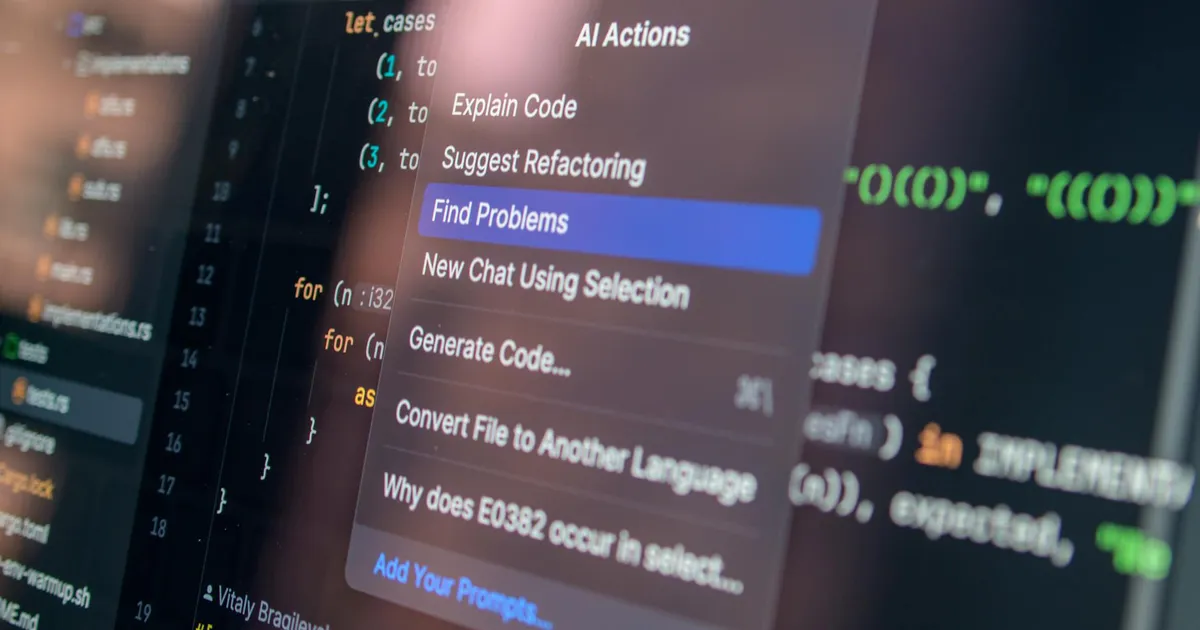
Opinion: AI-Generated False Security Reports Fuel Hype-Beast Culture
A security-focused blogger at Excipio debunks a "CRITICAL VULNERABILITY" report for Mattermost that was generated by Claude and posted by a Google employee attempting to show AI-written code is more secure than human-written code. The author traces the alleged XSS vulnerability through the Go codebase and proves the error-handling code path in question is dead code that can never be triggered — making the reported vulnerability non-exploitable. The post extends this into a broader sociological critique of "hype-beast" culture: AI tools hallucinating severity-inflated security findings, users blindly repeating them without verification, and the distorted public understanding of AI capabilities this creates.