News
The latest from the AI agent ecosystem, updated multiple times daily.

OpenAI shelves £31bn UK deal that was mostly hot air
OpenAI pulled the plug on its £31bn Stargate UK project, blaming energy costs and regulations. A Guardian investigation had already exposed the deal as mostly empty promises. The Essex 'supercomputer' site was still scaffolding in March. OpenAI's actual commitment was vague: 'exploring the offtake' of 8,000 Nvidia GPUs at datacenters built by Nscale, a startup with zero completed projects.

Gen Z Turns Against AI as Entry-Level Jobs Vanish
A Gallup study examining changing emotional attitudes of young adults (Gen Z) toward AI reveals decreased hope and increased anger. HN commentary suggests this shift stems from job displacement concerns, as organizations reduce junior and intern hiring in favor of AI adoption.

Vercel Claude Code plugin wants to read your prompt
An investigation into privacy concerns with the Vercel plugin for Claude Code, which collects telemetry data including full bash command strings and prompts across all projects. The consent mechanism uses prompt injection rather than proper UI elements, and data collection occurs even on non-Vercel projects without clear disclosure.

Relvy Automates On-Call Runbooks Because Nobody Updates Your Wiki
Relvy, a Y Combinator Winter 2024 startup, wants to kill the runbooks sitting forgotten in your Notion workspace. Built by two former Samsara engineers, the platform handles routine incidents automatically while escalating the tricky ones to humans. Hacker News users confirmed the problem is real, but questioned whether specialized tools can hold off general AI agents.

Mass Effect Artist: DLSS 5 Risks Erasing Game Art's Soul
Veteran game artist Mark Linington (Mass Effect, Halo, Overwatch 2) says Nvidia's DLSS 5 has crossed from enhancement into reinterpretation, risking the 'soul' of game art. He wants hands-on artist control with reference images and lighting direction, not just sliders. Most major studios already use AI in production, but Linington draws a line between AI as a careless shortcut versus a genuine production partner.
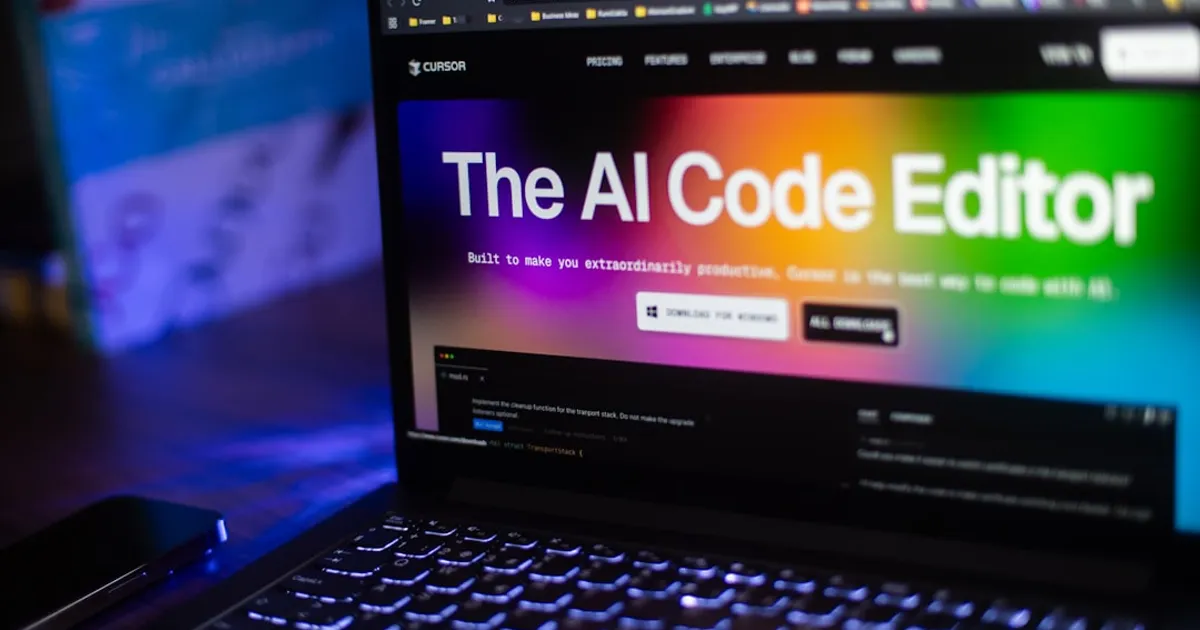
Why One Dev Dropped Claude Code for Zed + OpenRouter
A personal analysis of switching from Anthropic's $100/month Claude Code subscription to using Zed editor ($10/month) with OpenRouter API credits ($90/month). The author explores different agent tools including Zed, Cursor, and Claude Code configured to work with OpenRouter, letting you pick from multiple models (Claude, Gemini, Qwen) with credits that rollover instead of expiring monthly.

Claude tells itself what to do, then claims you said it
A critical bug in Claude Code causes the AI to attribute its own internal messages to the user. Gareth Dwyer identifies this as an infrastructure failure where internal reasoning gets mislabeled as user input. The model then insists you gave instructions you never provided.

Farage Wants British ICE. Starmer's Data Laws Hand Him the Tools
Reform UK's plan for a 'UK Deportation Command' would merge NHS, police, and financial data into one surveillance system targeting 288,000 annual deportations. Palantir has signaled willingness to provide NHS data for immigration enforcement if Reform wins with a clear mandate. Campaigners warn Labour's Data (Use and Access) Act could enable such surveillance by giving ministers broad data access powers.

AI Got It Wrong? Don't Expect Your Credits Back
A community discussion on Hacker News exploring whether AI service providers should offer refunds when AI models produce incorrect or unsatisfactory results. The comments debate the challenges of defining what constitutes a 'mistake' in subjective AI outputs, the costs of implementing verification systems, and the potential impact on token pricing for all users.

41 Days Until Helium Crisis Hits Your Chip Supply
Analyst Nate B. Jones warns that strategic helium reserves will hit critical lows in roughly 41 days following Iran's strike on Qatar's Ras Laffan Industrial City, which produces a quarter of the world's helium. The gas is essential for cooling silicon wafers during extreme ultraviolet lithography used to manufacture 2-3 nanometer chips. With no viable substitute at that scale, hyperscalers like Google and Microsoft will outbid smaller buyers for remaining supply. The advice is simple: if you need hardware this year, buy it now.

Amper Music Founder Turns Photos into Soundtracks with Google's Lyria
Former Amper Music CTO Armando has built a tool that generates music from photos. Upload an image and Google's Lyria model translates visual cues like color and mood into an original soundtrack. New users get 15 free credits to try it.
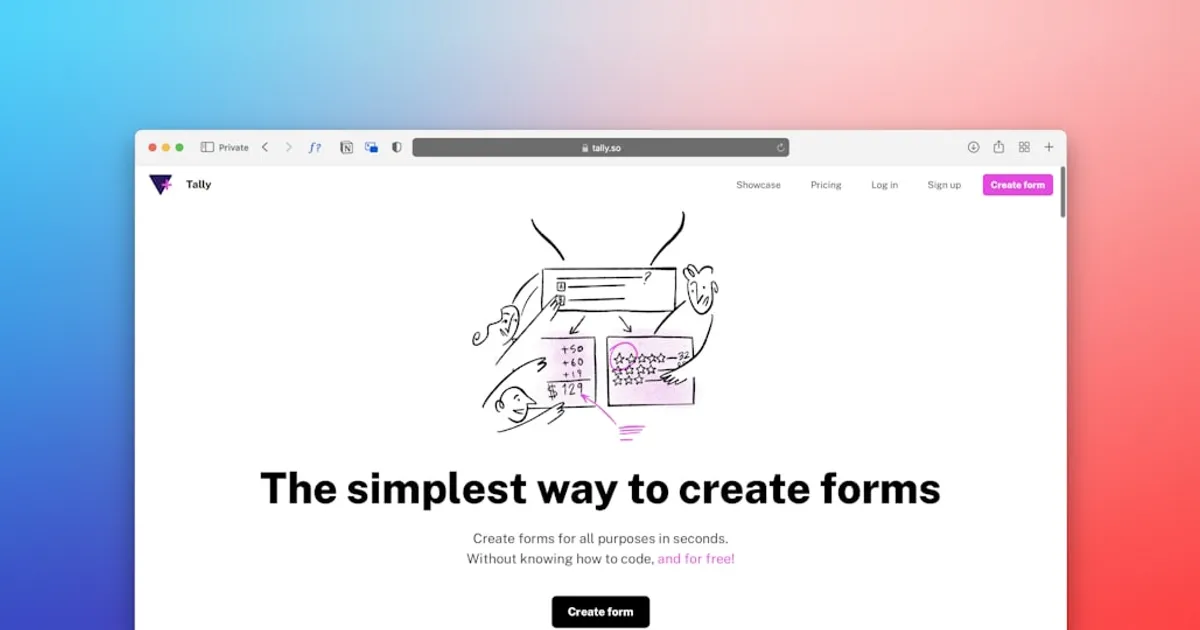
Cogito: A Markdown Editor Built for AI Agents, Not Databases
Cogito is a native macOS Markdown editor designed for AI agent workflows, storing files as plain Markdown without databases or proprietary formats. Built by Fabrizio Rinaldi as a side project, it features real-time external change detection, wiki links, and Obsidian-style embeds. Currently free in beta, it lets agents read and write notes directly to disk, with changes appearing instantly.
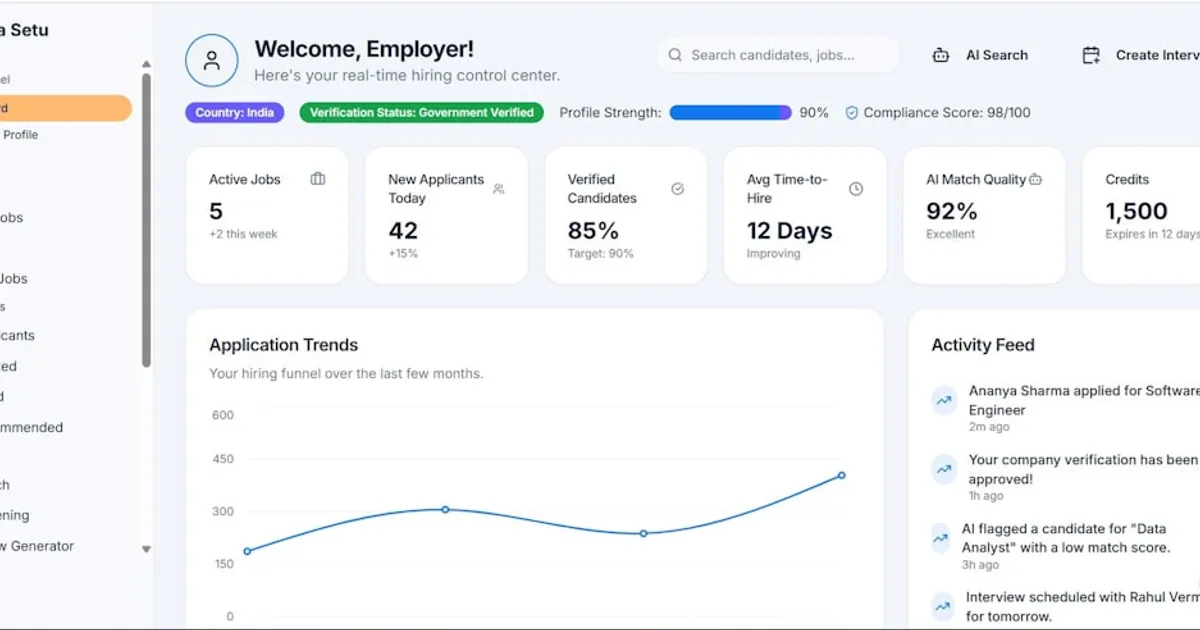
botctl Treats AI Agents Like Background Processes
botctl is an open-source process manager for autonomous AI agents that provides a terminal dashboard, web UI, and declarative configuration via BOT.md files. It manages persistent Claude-powered bots with session memory, hot reload, extensible skills from GitHub, and run tracking. Bots run as background processes on a configurable loop with logging and messaging capabilities.
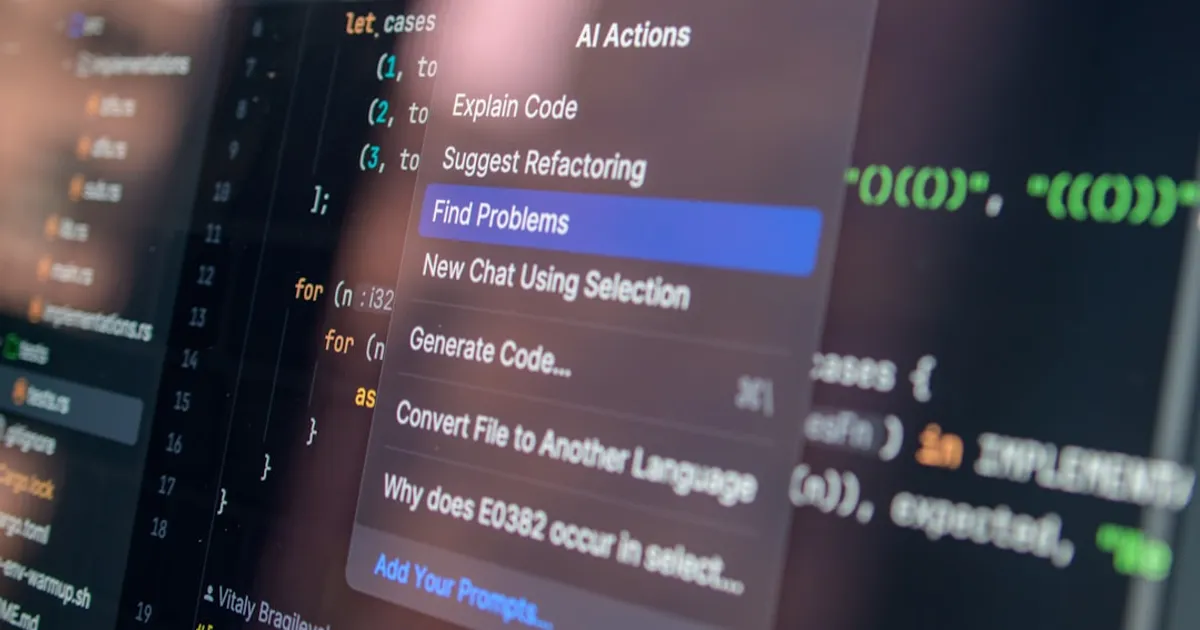
Voxcode pairs local speech-to-text with ripgrep for AI coding workflows
Voxcode is a macOS tool that combines local speech-to-text with ripgrep-style code search. You select code in your editor, speak instructions, and paste the transcript with a reference to the selected code's file and line numbers. Built with Rust and Tauri, it uses the Parakeet TDT model for local transcription and works with any IDE and any AI coding tool.

Druids Coordinates Multiple Coding Agents in Sandboxed VMs
Druids is a Python library that coordinates coding agents across sandboxed VMs. It handles infrastructure, provisioning, and communication so you can run multiple agents in parallel for code review, pentesting, optimization, and automated pipelines.

Software Jobs Up 11%. So Much for the AI Apocalypse.
CNN analysis argues that AI is transforming rather than eliminating software engineering jobs. While tools like Anthropic's Claude and OpenAI's Codex automate routine coding, demand for developers is growing as companies need engineers to oversee AI-powered code-writing agents and design software architecture. Job postings for software engineers are up 11% annually according to Citadel Securities, and the Bureau of Labor Statistics projects 15% growth by 2034.

Claude Code Rebuilds a Lost 1992 MUD in One Weekend
Jon Radoff used Claude Code to reconstruct 'Legends of Future Past,' a 1992 MUD, in one weekend using only old artifacts. No source code needed. The AI agent reverse-engineered a custom scripting language, built a Go game engine, React frontend, WebSocket multiplayer layer, and MongoDB persistence system.

AI's $66B Gulf money tap just got throttled
Gulf sovereign wealth funds became major AI funding sources in 2025, representing 31% of all AI-related capital. Funding from these sources grew nearly 700% from $9.4B in 2023 to $66B in 2025. The Strait of Hormuz closure, with crossings down 90%, threatens this money by cutting Gulf export revenues. Less Gulf capital for late 2026 and 2027 AI mega-rounds would strengthen Big Tech's competitive position.
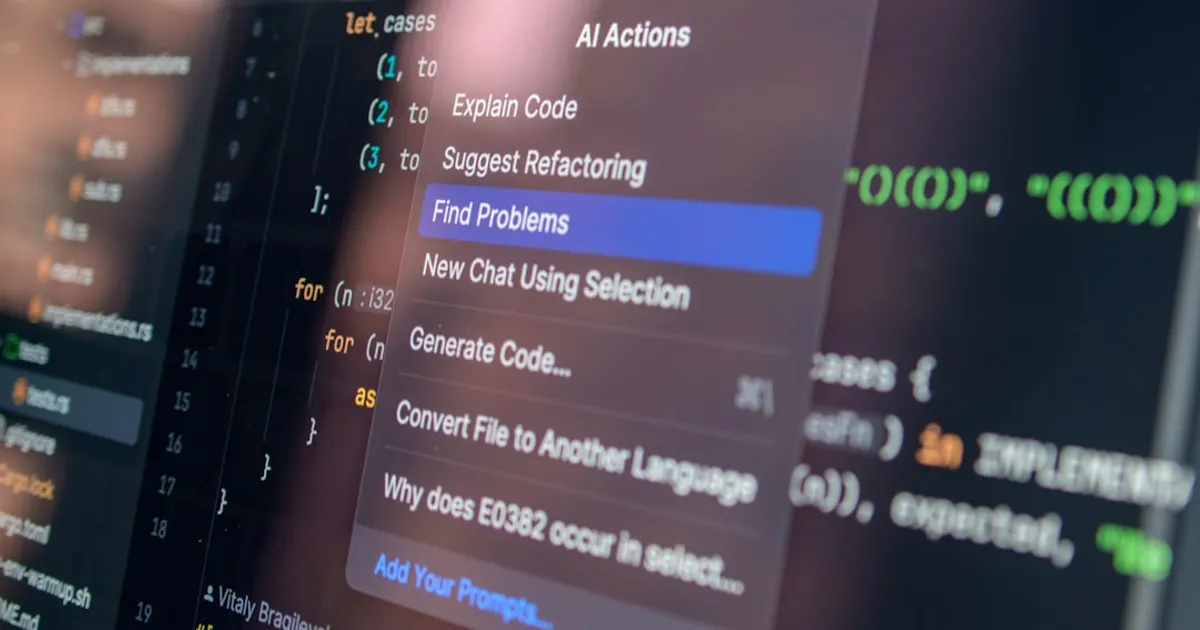
Vera kills variable names to stop LLM hallucinations
Vera is a new programming language built for LLMs, not humans, to write. It uses typed De Bruijn indices instead of variable names to eliminate naming hallucinations, mandates contracts on all functions, and includes algebraic effects for explicit state management. The language compiles to WebAssembly with built-in support for HTTP, JSON, HTML parsing, and LLM inference calls to Anthropic, OpenAI, and Moonshot. VeraBench results show models hitting up to 100% accuracy in Vera compared to 86-96% in Python and TypeScript.

Whack-a-Mole: Finetuning Reactivates Copyrighted Text in LLMs
A new paper shows finetuning bypasses safety alignment in LLMs, causing GPT-4o, Gemini-2.5-Pro, and DeepSeek-V3.1 to reproduce 85-90% of held-out copyrighted books from semantic descriptions alone. The effect generalizes across authors and reveals an industry-wide vulnerability, undercutting legal defenses that rely on the strength of copyright protection measures.

Lafargue Saw Your AI Anxiety Coming in 1883
Historian Robert Zaretsky connects Paul Lafargue's 1883 pamphlet 'The Right to Be Lazy' to modern fears about AI displacing workers, arguing that idleness as emancipation offers a useful lens for thinking about automation.

Nile Local turns your laptop into a data lake
An AI-powered data IDE called Nile Local runs entirely on your laptop, aiming to replace cloud data tools for privacy-conscious teams. Unlike general chatbots, it provides a structured environment for data workflows. But sparse documentation makes it hard to evaluate whether it delivers on that promise.

Anthropic Ships Managed Agents: No More DIY Infrastructure
Claude Managed Agents is a pre-built, configurable agent framework that runs in managed infrastructure, designed for long-running tasks and asynchronous work. It provides a fully managed environment where Claude can read files, run commands, browse the web, and execute code securely, with built-in prompt caching, compaction, and performance optimizations. Currently in beta with rate limits of 60 create requests and 600 read requests per minute.

Databricks co-founder wins ACM Prize, claims AGI is already here
Databricks co-founder and CTO Matei Zaharia, creator of Apache Spark, wins the 2026 ACM Prize in Computing with a $250,000 award. In an interview, he states that 'AGI is here already, it's just not in a form that we appreciate,' arguing that society should stop applying human standards to AI models. He warns about security risks with AI agents like OpenClaw and expresses excitement about AI for automating research in biology and engineering.

Court won't block Pentagon blacklisting Anthropic over AI ethics
Anthropic just lost a key round against the Pentagon. A federal appeals court won't stop the military from blacklisting the AI company over its refusal to let Claude power surveillance or autonomous weapons. The stakes are billions in government contracts.
AI Did It in 12 Minutes. It Took Me 10 Hours to Fix It
Ibrahim Diallo used GLM-5 from z.ai to generate roughly 5,000 lines of PHP for a media manager project in 12 minutes, then spent 10 hours refactoring it into 1,254 lines of maintainable code. The experience reinforced his belief that developers need a mental model of their application to fix AI-generated code when it breaks. Hacker News commenters largely agreed, warning against deploying "vibecoded" applications.

Waymo's Robot Cars Run Out of Road in NYC
Waymo's permits for testing autonomous vehicles in New York City expired on March 31, ending testing operations that had been running in Brooklyn and Manhattan since last summer. The company had eight robot cars operating with safety drivers and reported zero collisions. Waymo, a subsidiary of Alphabet, operates driverless vehicles in 10 other U.S. cities and is hoping the state DMV permit might be renewed through upcoming budget negotiations.

Maine bans big data centers. They probably weren't coming anyway.
The nation's first statewide moratorium on large data centers is advancing through Maine's legislature, blocking permits for facilities drawing over 20 megawatts until November 2027. The move responds to grid strain and rising electricity costs from AI infrastructure buildup. Data centers now consume 4% of U.S. electricity, a figure projected to double by 2030, and similar restrictions are emerging elsewhere.

The Future of Everything Is Lies, I Guess: Part 3 – Culture
Aphyr argues we're applying the wrong myths to LLMs. We expected conscious machines but got convincing text generators, and that mismatch is dangerous. Better frameworks exist from philosophy and speculative fiction. The essay also imagines new interactive media AI could enable and warns about corporate control over what these systems let us say.

App Store submissions jump 30% as AI coding tools let anyone ship apps
New app submissions to the App Store grew 30% to nearly 600,000 globally in 2025, reversing a years-long decline. AI coding tools like Claude Code and Codex are the main driver, letting non-programmers build apps with plain English prompts. Apple is pushing back, blocking updates to vibe coding apps like Anything and Replit for potentially violating guidelines.
ChatGPT Pro hits $100/month, takes direct shot at AI wrappers
OpenAI just told AI wrapper startups to pack up. The new $100/month ChatGPT Pro bundles agents and deep research into one platform, making third-party tools that sold "ChatGPT plus agents" redundant. The exclusive GPT-5.4 Pro model reportedly outperforms Claude Opus 4.6 on hard system programming tasks like debugging Redis. But the rising price also puts frontier AI further out of reach for the developers who need it most.

85-token caveman prompt beats the 552-token original
A GitHub project distilled a 552-token 'caveman' prompt down to 85 tokens that outperforms the original on Claude Sonnet and Opus. The micro prompt achieved 14-21% token savings on structured tasks while maintaining full accuracy, showing models already understand conciseness and only need permission, not lengthy tutorials.

Researchers crack Google's SynthID without seeing the code
Researchers reverse-engineered Google's SynthID watermarking system embedded in Gemini-generated images without access to proprietary code. Their open-source detector achieves 90% accuracy using spectral analysis, while a V3 bypass strips watermarks at 43+ dB PSNR quality, kicking off an arms race Google didn't sign up for.

OpenAI puts Stargate UK on ice, blames energy costs and red tape
OpenAI paused its Stargate UK datacenter project, citing energy costs and regulation. The plan called for 8,000 Nvidia GPUs scaling to 31,000, with Nscale as partner. OpenAI says it will proceed when conditions improve and will keep its London hub and government MOU commitments.

Charcuterie uses AI vision to spot Unicode's trickiest look-alikes
A browser-based tool using SigLIP 2 to find visually similar Unicode glyphs, revealing the look-alike characters that enable homograph attacks.

Instant 1.0: Backend Where Apps Are Just Database Rows
Instant 1.0 launches as an open-source backend built for AI-coded apps. The stack uses Clojure on Postgres with a Datalog-based sync engine. Apps get offline support, real-time sync, optimistic updates, and built-in services like auth, file storage, and presence. New backends spin up in milliseconds because apps are database rows, not VMs.

DemandSphere Ditched WordPress With Claude Code and Built 9 Dev Tools
DemandSphere migrated their website from WordPress to Jekyll, relying on Claude Code to assist with the migration and build custom dev tools for SEO analysis and content similarity using embeddings.

Locked out by age bias, skilled workers now train AI for $21/hr
Skilled workers over 50, locked out of their fields by age discrimination, are turning to AI data annotation as a last resort. The Guardian profiles professionals including a former IT manager, ER physician, and academic who now label data for OpenAI, Google, and Meta through contracting firms. While top experts can earn $180/hour, most make $20-40/hour with no benefits. These 'bridge jobs' keep workers afloat while they train the AI that might replace them.

Indie Sites Use 'human.' Protocol to Vouch for Human Writers
Joelchrono implemented the human. protocol on their personal site, a system where website owners manually vouch for other human-authored sites. The technical bar is low: a YAML file, some Liquid templates, done. But edge cases like AI-generated thumbnails on otherwise human sites reveal the fuzziness. No Sybil attack defense exists. The strangest part: humans now prove their humanity instead of AI disclosing itself.

Research-Driven Agents: When Your Agent Reads Before It Codes
Case study demonstrating that adding a research phase (reading arxiv papers, studying competing forks, and examining other backends) to Claude Code enabled it to find 5 kernel optimizations for llama.cpp CPU inference that code-only analysis missed. The agent achieved 15% faster text generation on x86 and 5% faster on ARM for TinyLlama 1.1B, with total cost of ~$29 over 3 hours.

Self-Surveillance: The Warrant-Free Data Pipeline You Paid For
George Washington University law professor Andrew Guthrie Ferguson's new book 'Your Data Will Be Used Against You' explains how smart devices create surveillance vulnerabilities most people don't understand. Companies like Venntel and Fog Data Science harvest app data and sell it to law enforcement without warrants, exploiting the 'third-party doctrine.' Ferguson calls this 'self-surveillance,' where courts apply 1967 legal logic to a world of ambient sensors.

ABP dumps €825M Palantir stake, Dutch police still use it
ABP, the Netherlands' largest pension fund, has divested €825 million from Palantir over human rights concerns. The company's AI data analysis software is used by US immigration service ICE and the Israeli army, both flagged by Amnesty International for rights violations. Dutch police also use Palantir's software. ABP said Palantir no longer meets its standards for responsible investment.

Machines Scan 61.8M Abuse Files Without Human Eyes
61.8 million suspected CSAM files hit NCMEC in 2025. Humans can't review them all, so perceptual hashing and ML classifiers do it blind. Here's how the tech works, what it misses, and why the privacy tradeoffs keep getting sharper.

Pi Agent Creator Joins Earendil
Armin Ronacher announces that Mario Zechner is joining Earendil, bringing with him Pi - a quality-focused coding agent and agent infrastructure library. The collaboration combines Pi's deliberate approach with Earendil's vision for Lefos, a machine entity designed for measured communication rather than accelerating low-content production.

Mabu in My Living Room: The Dread of an LLM-Powered Robot
A personal account of using an AI robot (Mabu) controlled by OpenAI's API in a home setting, discussing visceral reactions to having an intelligent robot in the house, privacy concerns with smart speakers, risks of open-ended chatbots for children, and the implications of embodied AI with physical capabilities.

Study: AI Help Today Means Less Skill Tomorrow
A randomized controlled trial with 1,222 participants found that AI assistance improves short-term performance but reduces persistence and impairs unassisted performance. The negative effects appear after roughly 10 minutes of AI interaction. The findings suggest AI's habit of serving instant answers may be undermining skill building.

Skip the Vector DB: Your Folders Are Already a Knowledge Graph
A developer's 52,000-file Obsidian vault shows that wikilinks and folders can replace vector databases for LLM context. An agent automatically creates and links meeting notes using a PARA structure. The result is a context engineering system where pointing an LLM at six months of project history beats cold prompting for drafting design docs.

Muse Spark: fast, smart, can't search the web yet
Meta's new model benchmarks competitively with Opus 4.6 but struggles with basic agent tasks like web search, according to early Hacker News reactions. The tension between raw reasoning power and broken tool use raises questions about whether Muse Spark is ready for autonomous agents or just another clever chatbot.

Restlet Founder Tackles AI Agent Integration with Naftiko
Jerome Louvel, who built and sold Restlet to Talend, has released Naftiko Framework. The open-source project wraps existing HTTP APIs as AI-consumable capabilities, handling format conversion, authentication, and context management so agents get only the data they need.

LLMs Are Bullshit Machines, Says Engineer They Hallucinated About
Kyle Kingsbury published an essay calling LLMs what many developers think but few say: bullshit machines. The piece catalogs confabulations across Claude, ChatGPT, and Gemini, argues that hallucination is the architecture not a bug, and explores what happens when AI-generated text pollutes shared knowledge at scale.