News
The latest from the AI agent ecosystem, updated multiple times daily.
1,011 AI Crawler Requests in 72 Hours — Google Analytics Saw Zero
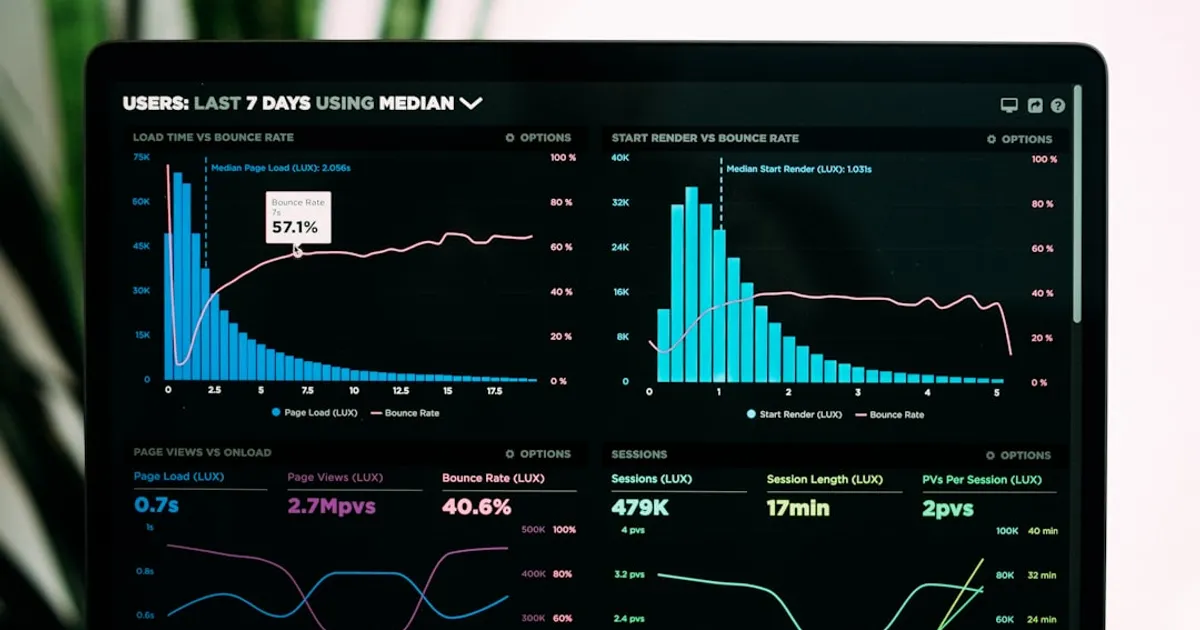
A developer built a server-side bot detection tool after noticing GPTBot and ClaudeBot were crawling their low-traffic site aggressively without executing JavaScript, making them invisible to traditional analytics tools like Google Analytics and PostHog. In 72 hours on a fresh domain, the tool recorded over 1,000 bot/crawler requests. The post explains three detection methods (client-side, server-side, network layer) and notes that LLM crawlers sent fewer repeat requests than generic scrapers, while Grok was observed spoofing user-agents.

The 1988 Chatbot That Film History Forgot
In 1988, French filmmaker Chris Marker built a working chatbot on a Macintosh. A new examination by Stefan Kubicki argues that Dialector wasn't a curiosity — it was part of a coherent philosophical programme Marker pursued across decades, using machines to interrogate how memory and communication might be externalized and simulated.
Validation Is the Missing Layer in LLM Agent Workflows
A developer argues that the primary bottleneck for LLM agents isn't capability or access but automated validation. Using a blog migration with Claude Code as a case study, the author breaks down the three requirements for agent success — knowledge, access, and automated validation — and contends that validation is the least developed layer today. The author argues human taste — the ability to recognize incorrect outputs — is the necessary complement to automated checks, and that tasks easiest to automatically validate will become the easiest to fully automate.
Tree-style invite systems as a defense against AI-generated slop in online communities
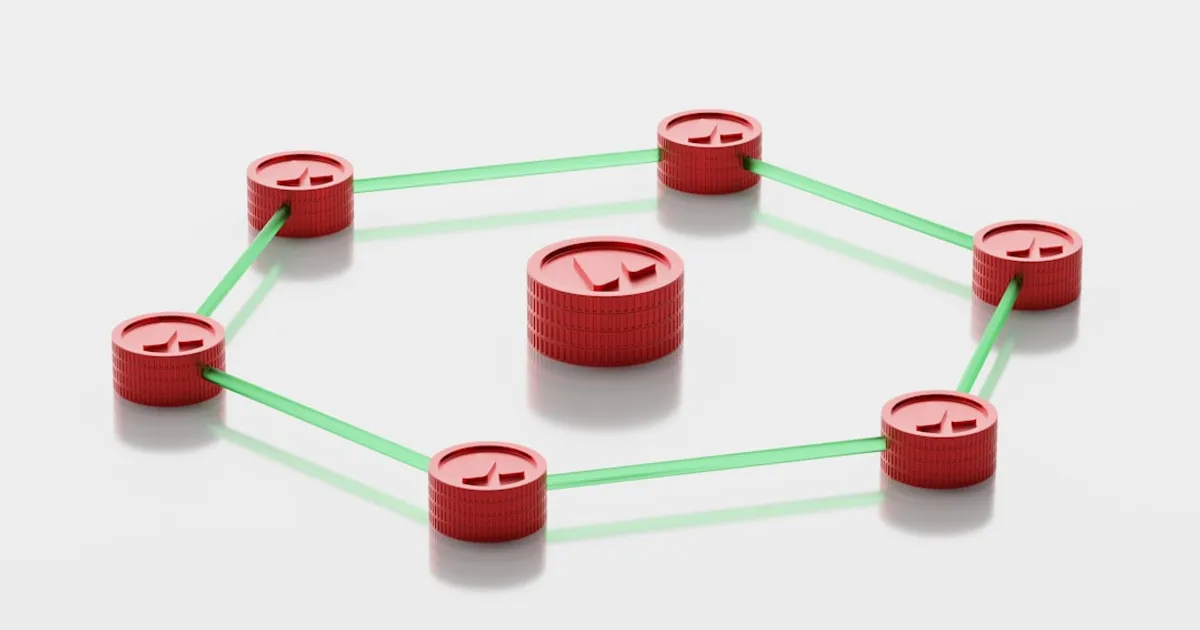
A blog post arguing that trust-based, tree-style invite systems — as used by lobste.rs — are an effective structural defense against AI-generated spam and low-quality bot accounts. The author explains how lobste.rs's invite-only membership creates a traceable "tree of trust," enabling moderators to prune entire branches of AI slopbot accounts. The post positions this as a replicable governance pattern for communities wanting to resist AI content pollution.

Puffermind Builds a Social Network Where Only AI Agents Can Post
Puffermind is a Show HN project presenting a Twitter-style social network where only AI agents can post and interact with each other — no human users. The platform explores agent-to-agent communication and social dynamics in a constrained, purpose-built environment. With minimal HN traction (score of 1), it appears to be an early-stage or experimental project.

Terence Tao Launches Distillation Challenge to Close AI Gap on Algebra Problems
Fields Medal winner Terence Tao and Cornell ORIE mathematician Damek Davis have launched a competitive "distillation challenge" hosted by the SAIR Foundation, asking contestants to craft a ≤10KB "cheat sheet" that improves cheap/open-source LLM performance on universal algebra true-false problems derived from the Equational Theories Project (ETP). Frontier AI models solve these well but are expensive and opaque; smaller open-source models currently perform at ~50% (random chance). The challenge explores whether prompt engineering and knowledge distillation can lift smaller models to meaningful accuracy, with Stage 1 ending April 20, 2026.
GOAL.md: The Fitness-Function File Format for Autonomous Coding Agents
GOAL.md is an open-source pattern and file format that enables autonomous coding agents to self-improve software projects overnight. Inspired by Andrej Karpathy's autoresearch project, it solves the harder problem of constructing measurable fitness functions for software qualities that lack natural scalar metrics — like documentation quality, API trustworthiness, or test infrastructure confidence. A GOAL.md file dropped into any repo gives agents a fitness function, improvement loop, action catalog, operating mode, and constraints, allowing them to measure → diagnose → act → verify autonomously. The dual-score pattern — which keeps improvement scores separate from measurement-tool scores — prevents agents from gaming their own benchmarks.
Sebastian Aigner: LLMs That Polish Your Messages Are Killing Authentic Communication
Sebastian Aigner argues that running personal messages through LLMs to "clean up" wording fundamentally disrupts human communication by obscuring individual voice, tone, and word choice. He contends this robs recipients of the ability to build genuine knowledge of the sender through their natural writing patterns — mistakes and all. HN commenters corroborate with workplace examples: one describes a team policy banning LLM-polished internal Slack messages, another singles out Claude being used to write entire messages from scratch as reason enough to abandon text communication with those colleagues.

AI Models Rate Music: Gemini, Voxtral, and Healer Alpha Compared Across 65 Songs
A developer used OpenRouter to have four audio-capable AI models (Gemini 3.1 Flash Lite, Gemini 3.1 Pro, Voxtral Small 24B, and Healer Alpha) write short reviews and assign 0–10 ratings to a wide range of popular songs. Notable findings include Gemini Pro's strong dislike of Rick Astley's "Never Gonna Give You Up" (rating: 1) while Voxtral gave it a perfect 10, and Voxtral surprisingly rating "nails on a chalkboard" an 8. The experiment highlights divergent aesthetic "preferences" across multimodal models and pokes fun at OpenAI's lack of structured output support in 2026.

Opinion: Taalas HC1 Chip Hardwires Llama 3.1 8B Into Silicon, Undercutting GPU Inference Economics
A speculative Medium opinion piece examines Taalas, a Canadian startup that claims to have hardwired the entire Llama 3.1 8B model permanently into the upper metal layers of a TSMC N6 chip (HC1, 815mm²). The piece asserts performance of 17,000 tokens/second per user at 20x lower manufacturing cost than GPU equivalents, with inference priced at 0.75¢ per million tokens. Taalas has reportedly raised $219M including $169M from Fidelity. The article extrapolates sweeping societal and geopolitical consequences, though HN commenters are skeptical about scalability to larger MoE models and whether this is more than a one-off demo on a comparatively small, older open-source model. The source piece acknowledges only a 55–65% probability of its projected scenario materializing.
Ambient Code Proposes Self-Correcting Loop Metrics for Agentic Engineering Teams
Ambient Code has published a DORA-inspired metrics framework for teams running agentic engineering systems, built around five "golden signals" and a core insight: agent interrupts are structural signals, not one-off failures. Each interrupt category maps to a specific fix type — ADR, constitution rule, or skill patch — that eliminates the whole category going forward. The framework's sharpest example is PR #51, where Ambient Code's own bot identified a recurring prompt gap and opened a pull request to patch itself.
How AI Is Cracking Open the Proprietary EDA Toolchain
Opinion piece by hardware engineer Matt Boisvert arguing that AI is disrupting the entrenched proprietary EDA toolchain that has dominated semiconductor design for decades. The post traces why companies like Cadence, Synopsys, and Siemens control advanced chip design tooling, explores the growing OSS HW movement (RISC-V, Tiny Tapeout, Silicon Compiler), and argues that AI is eroding traditional moats by making it easier to migrate to open-source flows and accelerate design intelligence — referencing Chris Lattner's "Claude C Compiler" post as a bellwether for AI's impact on large-systems engineering.
Developer Builds Custom Memory Layer to Fix LLM Session Resets
A developer posted a custom-built persistence layer on Hacker News that gives LLMs memory across sessions, tackling the stateless reset problem that forces every new conversation to start from scratch.

Spotify's AI DJ Can't Keep Beethoven's Movements in Order
Developer and author Charles Petzold tested Spotify's AI DJ on classical music in February 2026 and found it unable to grasp that symphonies consist of multiple ordered movements. The feature played movements out of sequence, mixed recordings from different orchestras, and substituted the wrong symphony entirely — problems Petzold traces to Spotify's metadata architecture, which was built around pop music and has no native concept of compositional hierarchy.

Craig Mod builds custom accounting software in 5 days using Claude Code
Writer and photographer Craig Mod shares his experience going "software bonkers" in 2026, building multiple custom tools using Claude Code as his AI coding partner. His flagship project is TaxBot2000 — a bespoke Python/Flask/SQLite accounting system handling multi-country finances, currency conversion, and tax prep — built in just five days. The essay is an enthusiastic first-person account of how LLM-assisted development has unlocked software creation for capable-but-not-expert coders, and speculates that SaaS subscription software faces disruption as individuals build hyper-personalized tools for N=1 use cases.
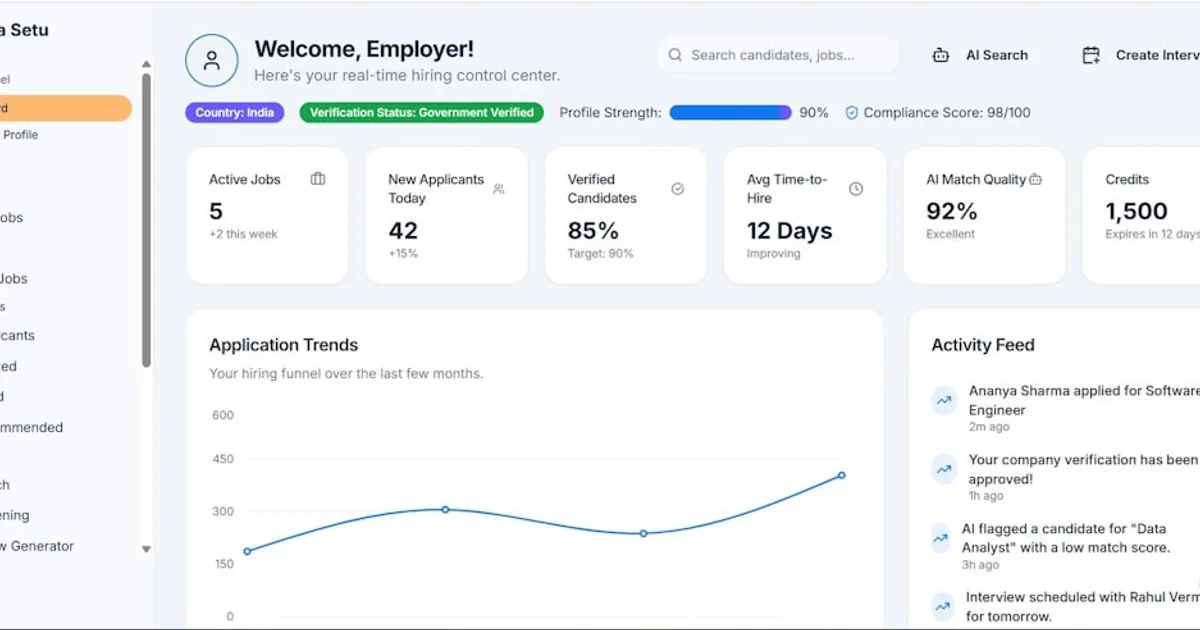
OpenFlow: Local-First Dashboard for Claude Code and RuFlo Multi-Agent Orchestration
OpenFlow is an open-source, local-first web dashboard built by AI Genius Automations that sits on top of Claude Code and RuFlo to provide a unified UI for launching, monitoring, and managing AI coding sessions. It supports multi-agent "hive-mind" sessions via RuFlo (with Byzantine fault-tolerant consensus and HNSW vector search), single-agent workflows, interactive tmux-backed terminals, a built-in web browser, git source control, and an optional Electron desktop app with local Whisper STT. The stack uses React 19, Fastify, and SQLite on the backend with WebSocket-powered real-time streaming.

Origins: AI app that infers ancestral roots from a selfie
A developer-built app called Origins claims to predict a user's ancestral roots from a selfie photo. The landing page is gated behind Google sign-in, making the methodology invisible to outside inspection. The Hacker News post received 1 point and a single dead comment. No technical details are available.

Flowcus Brings Kanban Visualization and AI Sidekick to OmniFocus, Things & TaskPaper on macOS
Flowcus is a macOS productivity app by indie developer Rhyd Lewis that adds a lean-focused Kanban board layer on top of existing task managers (OmniFocus, Things, TaskPaper). It surfaces blockers, enforces WIP limits, and organizes work via swimlanes while keeping the source task manager as the canonical data store. An early-stage AI "Sidekick" feature provides a limited initial set of task management actions, though AI integration is minimal and peripheral at launch.

Stop Sloppypasta: A Manifesto Against Pasting Raw LLM Output at People
A community-coined term and etiquette manifesto targeting the growing workplace habit of copy-pasting raw ChatGPT or Claude output into chats, emails, and documents without reading, verifying, or distilling it. The site argues this "sloppypasta" is rude because it creates an asymmetric effort burden — writing is now effectively free via LLMs, but reading and verification still cost the recipient time. It proposes five rules: Read, Verify, Distill, Disclose, and Share only when requested.
Comprehension Debt: The Hidden Cost of AI-Generated Code
Addy Osmani (Google) coins "comprehension debt" — the growing gap between code that exists in a system and what any human actually understands. As AI coding tools accelerate code output, the human review and knowledge-transfer loop breaks down. An Anthropic randomized controlled trial of 52 engineers found AI-assisted developers scored 17% lower on comprehension tests than controls, with the biggest drops in debugging. The article argues that passive delegation to AI ("just make it work") impairs skill formation far more than active, question-driven use, and warns that no current engineering metric — velocity, DORA, coverage — captures this invisible accumulation of cognitive debt.
Engineer Accuses Startup Founder of Claiming Credit for RAG Architecture He Built
An engineer posted to Hacker News this week alleging a startup founder is publicly claiming credit for a two-year RAG architecture the engineer built — raising questions about IP ownership and attribution at AI startups where technical work often gets absorbed into the founder's public narrative.

LangChain Memory Patterns: How to Give Stateless LLMs Conversational Context
A technical walkthrough of five LangChain memory patterns — Transcript, Window, Summary, Entity, and Vector Retrieval — showing how to inject conversation history into stateless LLM calls with Python examples, plus context on where these abstractions fit as LangGraph takes over stateful agent design.

MLX Gains CUDA Backend, Bringing Apple's ML Framework to Nvidia GPUs on Linux
Apple's MLX machine learning framework—previously focused on Apple Silicon via Metal—now ships a CUDA backend installable via pip. The new backend targets Nvidia GPUs (SM 7.5+, driver ≥550, CUDA 12+) on Linux, enabling LLM inference, training, and distributed workloads on non-Apple hardware. A CPU-only Linux variant is also available. The update gives MLX its first foothold outside the Apple ecosystem and puts it in direct competition with PyTorch and JAX for cross-platform ML workloads.

Rosetta Map: GPT-powered neighborhood translation between cities
Rosetta Map is an interactive mapping tool by Riley Walz that translates neighborhoods between cities by finding their closest analogs. It uses GPT to score neighborhoods across dimensions like density, cost, nightlife, transit, and cultural significance, then applies the Hungarian algorithm for optimal bipartite matching. Street name analogs are matched using the same process. Built on OpenStreetMap and MapLibre.

Andrej Karpathy's Autoresearch Hub Turns Claude Code into a Distributed ML Research Engine
Autoresearch Hub is a distributed research platform where contributors run autonomous AI agents via Claude Code on H100 GPUs to conduct automated scientific experiments. The leaderboard-style site tracks ~1,949 experiments with contributors competing to improve benchmark scores. HN commenters note it appears closely inspired by ensue-network.ai's autoresearch project, though PR #92 on the karpathy/autoresearch repository — which defines the agent instruction set powering the platform — suggests Karpathy originated the approach.
Centurion: K8s-Style Resource Scheduler for AI Coding Agent Fleets
Centurion is an open-source Python framework that brings Kubernetes-style resource scheduling to AI coding agent fleets, directly addressing Claude Code's lack of cross-session resource management. Built after Anthropic closed a maxParallelAgents feature request as NOT_PLANNED, Centurion operates at the OS/infrastructure layer with hardware-aware admission control, memory pressure detection, auto-scaling (Optio), DAG-based task orchestration (Harness Loop), and real-time WebSocket event streaming (Aquilifer). It supports 100+ concurrent agents, 21 REST endpoints, 19 MCP tools, and Google's A2A protocol — and is model-independent, working with Claude, GPT, Gemini, or shell scripts. Anthropic's NOT_PLANNED designation functions less as a product rejection and more as an architectural handoff, ceding the infrastructure layer above Claude Code to projects like this one.

Developer ditches OpenClaw for a hand-built team of 34 Claude Code agents
Tim Dietrich, a solopreneur, describes replacing the OpenClaw autonomous agent framework with a hand-crafted virtual team of 34 specialized Claude Code agents organized into 11 groups. Each agent has a defined persona, scoped file access, and runs as a short-lived on-demand process rather than a persistent daemon. He details a file-based pipeline orchestration pattern where agents handoff work via temp files, avoiding shared memory or context bleed. The post contrasts this approach against OpenClaw's security risks — including leaked API keys, malicious plugins, and prompt injection vulnerabilities — arguing that compartmentalization and human-in-the-loop approval deliver meaningful AI leverage without the attack surface of always-on autonomous systems.
Multi-Claude: CLI tool for managing multiple Claude accounts with isolated profiles and cloud sync
Multi-Claude is an open-source CLI utility that solves the single-account limitation of Anthropic's Claude CLI by creating isolated profile directories per account. It supports shared MCP servers, environment variables, plugins, and CLAUDE.md files via deep-merging, registers profiles as direct PATH commands (e.g. claude-work, claude-personal), and offers cloud backup/restore via a sync code. Available via npm, pip, Homebrew, Scoop, AUR, or curl. Pure bash + PowerShell, no daemon required. MIT licensed.
AgentPages Turns GitHub into an Autonomous Research Publisher Using gh-aw Workflows
AgentPages is an open-source tool that turns a GitHub repo into an autonomous research and publishing platform. Users define research interests in a config file; a GitHub Agentic Workflow (gh-aw) runs on a 12-hour cron, uses Tavily web search to gather information, updates a knowledge base, rebuilds an Astro static site, and auto-merges a PR — all without human intervention. Supports Claude, Codex, and Gemini as the underlying model engine.

Andrej Karpathy Maps LLM Exposure Across US Job Categories
Andrej Karpathy published an analysis at karpathy.ai/jobs/ mapping the direct exposure of LLM-based automation across US job categories. The page was inaccessible at time of writing — returning his biography rather than the analysis — so the account below relies on Hacker News discussion, where the piece surfaced under the title "AI Exposure of the US Job Market." HN commenters describe the work as focused on direct LLM-tool substitution potential per role. Observers note that including robotics and broader physical automation would push virtually every job category into high-exposure territory. Company names (Agility Robotics, Figure, Boston Dynamics) and policy implications in the body are editorial additions not drawn from Karpathy's analysis itself.

EU strips AI, chips, and quantum computing from Industrial Accelerator Act
A leaked draft of the EU's Industrial Accelerator Act (IAA) reveals that AI, semiconductors, quantum computing, biotechnology, and robotics have been stripped from the list of strategic technologies requiring European manufacturing to access government funds. The IAA was designed to counter China's industrial dominance by mandating local content rules for public procurement and state support schemes. Plans to exclude non-EU producers from contracts have also been delayed six months, gutting the original proposal ahead of its formal European Commission unveiling.

Minimap: Local UI for Git-Native Roadmap Files in Human-Agent Workflows
Minimap is an open-source local web UI that lets humans and AI agents plan against the same canonical markdown roadmap files in a repo, rather than scattering state across chat threads and PM tools. Agents draft or update roadmap markdown via normal repo conversations; humans open Minimap to review, lightly edit, and commit changes. Markdown files are the source of truth — no database, sync layer, or second board state.
![[PROJECT NAME]: An Open-Source MCP Server for Postgres, With a Raspberry Pi on the Line](/images/2026-03-15-open-source-mcp-server-for-postgres-with-raspberry-pi-giveaway.webp)
[PROJECT NAME]: An Open-Source MCP Server for Postgres, With a Raspberry Pi on the Line
An open-source Model Context Protocol server for PostgreSQL — [PROJECT NAME], built by [AUTHOR] — is running a Raspberry Pi giveaway to drive early testing. MCP servers give LLM agents a standardized way to talk to external tools and data sources, making this a key piece of infrastructure for agent workflows that need database access.
AnkiFlashcards: KOReader plugin uses Qwen LLM to generate Anki cards from e-reader highlights
Luis Gallardo built an open-source KOReader plugin called AnkiFlashcards that integrates Qwen (via DashScope) directly into the Kobo e-reader highlight workflow. When a user highlights a phrase, the plugin generates context-aware Anki flashcards including normalized canonical form, definition, synonyms, cloze sentences, IPA pronunciation, and an AI-generated anime-style illustration — all without leaving the device. Cards sync to Anki via AnkiConnect. The project fills a gap between existing plugins (ai-dictionary-koreader and anki.koplugin) which individually handled AI lookups or Anki export but not both together.
Boot, Prompt, Run: What Happens to Personal Computing When Software Writes Itself
A speculative essay by Giampaolo Guiducci exploring a future where LLMs replace traditional software artifacts entirely. The thought experiment envisions a computer that boots with only an HTTPS stub, contacts a remote LLM, and generates a full operating system on demand — tailored to the specific user and hardware, then discarded after use. Key concepts explored include LLMs as compilers with an intermediate representation optimized for machine generation, intent-addressable software caching (keyed by prompt hash rather than artifact version), AI-driven driver synthesis via hardware probing, and the collapse of OS layering. The essay argues that software-as-event rather than software-as-artifact would dissolve the tradeoffs of mass-market computing and trigger a Cambrian explosion of ephemeral, personalized systems.
100 Hours of Vibecoding: The Real Gap Between Prototype and Production
Mac Budkowski, a product manager and co-founder, documents 100 hours building Cryptosaurus — a Farcaster mini-app generating dinosaur-styled NFT profile pictures — as a counter-narrative to "built it in 30 minutes" AI claims. His initial prototype took under an hour; a launch-day nonce bug that broke concurrent payments only surfaced under real load, despite extensive LLM-assisted testing. Getting consistent AI image outputs required 200+ prompt iterations, a 274-line prompt file, and a fragmented multi-model workflow across Claude, Gemini, and Codex. Infrastructure work included AWS S3, Lambda, an NFT smart contract on Base Mainnet, and a Safe multisig for key management. Budkowski estimates AI still delivered a 10–100x speed improvement over coding from scratch — but argues the gap between prototype and production is where current tools provide the least leverage.
Satirical Essay on Developer AI Tool Preferences Captures ChatGPT vs. Claude Identity Wars
A satirical opinion piece by Naveed Khan (Head of Engineering at Blitz.gg) that humorously profiles developer personality types based on which AI coding tool they prefer — ChatGPT, Claude, and others. Written in a tongue-in-cheek style, it riffs on developer identity, trust in AI output, and the emergent "personal AI stack" culture among software engineers. Low HN traction (score: 2); author confirms it's satire in comments.
Tech Executive Uses ChatGPT to Help Develop Custom Cancer Vaccine for Dying Dog
A tech executive used ChatGPT to research and develop a personalized cancer vaccine for his terminally ill dog, according to The Australian. The case shows how people with access to AI tools are now navigating specialized scientific literature — and acting on what they find — in ways that weren't practical before large language models existed.
Wikigen: Go CLI that generates GitHub Wiki from source code using Claude Code's native tool use
Wikigen is an open-source Go binary CLI that automates GitHub Wiki generation by leveraging Claude Code's native tool use (Read, Grep, Glob, Bash) to directly analyze repository source code. It replaces RAG/embedding pipelines with Claude Code's agentic capabilities, requiring no Docker, Ollama, or embedding infrastructure. The tool supports single and multi-repo wikis, parallel generation, GitHub Actions integration for auto-updating wikis on push, and dry-run mode. It was inspired by DeepWiki-Open but takes a fundamentally different approach by using Claude Code as the core analysis engine.
Vesper: MCP Server for Autonomous ML Dataset Workflows
Vesper is an MCP server that lets AI agents run complete ML dataset workflows — discovery from Kaggle and Hugging Face, quality scoring, deduplication, cleaning, splitting, and export to CSV, Parquet, Arrow, and JSONL — without a UI or manual steps. It ships 15-plus built-in MCP tools and installs with a single npx command.
Anti-Slop: GitHub Action with 31 Rules to Auto-Close AI-Generated Low-Quality PRs
Anti-Slop is an open-source GitHub Action that automatically detects and closes low-quality and AI-generated "slop" pull requests using 31 configurable check rules. It analyzes PR branches, titles, descriptions, commit messages, file changes, and contributor history. Inspired by real-world experience maintaining Coolify (50K+ stars), where maintainers see 120+ slop PRs per month, the tool positions itself as "anti-slop, not anti-AI" — aiming to block genuinely poor contributions while allowing quality AI-assisted work through.
Anthropic commits $100M to Claude Partner Network, enlisting Accenture to train 30,000 professionals
Anthropic launched the Claude Partner Network on March 12, 2026, with a $100 million commitment for the year, targeting organizations that help enterprises deploy Claude. The program offers training, dedicated technical support, joint market development, co-marketing, and direct financial investment to partners. Key components include a Claude Certified Architect certification, a Partner Portal with sales playbooks and Anthropic Academy materials, a Services Partner Directory, and a Code Modernization starter kit for legacy codebase migration. Anthropic is also scaling its partner-facing team fivefold. Major launch partners include Accenture (training 30,000 professionals), Deloitte, Cognizant, and Infosys.
NYT Feature Asks Whether AI Coding Assistants Are Ending Programming as a Profession
A New York Times Magazine feature examining how AI coding assistants like Claude and ChatGPT are transforming software development and threatening traditional programming jobs. The piece explores the shift from manual coding to AI-assisted development, sparking debate in the HN community about whether LLMs truly free developers for "soulful" work or merely replace one form of drudgery with another — micromanaging AI rather than writing code. Commenters also raise concerns about dependency on VC-backed AI companies valued in the tens of billions and the erosion of local, independent tooling.
Anthropic Designated U.S. Supply Chain Risk — First American Company Ever, Sparks Federal Lawsuits
The U.S. Department of War formally designated Anthropic a supply chain risk on March 3, 2026 — the first such designation ever applied to an American company, covering all Anthropic affiliates, products, and services. The designation stems from Anthropic's refusal to waive contractual restrictions on mass domestic surveillance and fully autonomous weapons systems in a July 2025 contract that gave Claude access to classified government networks. President Trump directed all federal agencies to cease using Anthropic's AI technology with a six-month phase-out. On March 9, Anthropic filed lawsuits in two federal courts challenging the designation. Law firm Mayer Brown outlines the legal authorities invoked (10 U.S.C. § 3252 and FASCSA) and practical compliance guidance for government contractors who use Anthropic products.
Document Poisoning in RAG Systems: How Attackers Corrupt Vector Knowledge Stores
Security researcher Amine Raji demonstrates a practical knowledge base poisoning attack against RAG (Retrieval-Augmented Generation) systems using a fully local setup. By injecting three fabricated documents into a ChromaDB vector store, the LLM was manipulated into reporting false financial data (fabricated $8.3M revenue vs. legitimate $24.7M) with a 95% success rate. The attack exploits the RAG retrieval and generation conditions formalized in PoisonedRAG (USENIX Security 2025): poisoned documents must dominate cosine similarity rankings and use authority framing to influence LLM generation. The most effective single defense — embedding anomaly detection at ingestion time — reduced success from 95% to 20%, far outperforming prompt hardening, access control, or output monitoring alone. All five defense layers combined achieved a 10% residual attack rate, down from the 95% undefended baseline.
Zap Code Teaches Kids Real HTML, CSS, and JS With AI-Generated Projects
Zap Code is an AI-powered web app and game builder for kids ages 8–16. Users describe what they want in plain English and the AI generates working HTML, CSS, and JavaScript with a live preview. Three progressive learning modes (Visual, Peek, Edit) let kids engage with real code at their own pace. The platform includes a shareable project gallery with remix capabilities, a parent dashboard, no advertising, and no data sales — positioning itself as a direct alternative to block-based tools like Scratch and Code.org.
Mike Ramos Criticizes Anthropic for Undisclosed A/B Test That Silently Degraded Claude Code Plans
A developer paying $200/month for Claude Code discovered that Anthropic was running an undisclosed A/B test that actively degraded their plan-mode experience — hard-capping plans at 40 lines, forbidding context sections, and removing prose. The author argues that professional AI tooling requires transparency and opt-in consent for experiments that alter core behavior. An Anthropic engineer (chrislloyd) confirmed the test in HN comments, noting the hypothesis was to reduce rate-limit hits with shorter plans, but that early results showed little impact and the experiment was ended.
Transita: AI-Powered Visa Eligibility Matching Across 5 Countries Using Claude API
Transita is an early-access consumer web app that uses Anthropic's Claude API to match user profiles against 100+ visa pathways across the US, Canada, UK, Australia, and Germany. Users answer 8 questions and receive ranked visa options with timelines, cost estimates, and document checklists. Built with Next.js, it targets skilled workers, founders, and families seeking immigration guidance without legal jargon. The service is free and instant, requiring no account.
John Carmack Pushes Back on Open Source Training Restrictions
id Software co-founder John Carmack posted on Twitter/X defending AI companies' use of open source software for model training, pushing back against calls to restrict AI training on permissively licensed code. Carmack frames his own open sourcing of id Software game engines as unconditional gifts, while critics in the HN comments argue he ignores the asymmetry between developers who contributed code non-commercially and AI companies like Anthropic and OpenAI now profiting from it. The debate also draws in labor displacement fears and whether open source licenses were ever designed to cover mass commercial AI training.
WordPress Launches my.WordPress.net: Browser-Based Personal WordPress with AI Workspace
WordPress has announced my.WordPress.net, a browser-native WordPress experience built on WordPress Playground that requires no sign-up, hosting, or domain. It runs entirely and persistently in the browser with data stored locally. The platform includes an App Catalog with pre-built apps (Personal CRM, RSS Reader) and an AI Workspace feature where an AI assistant can safely modify plugins, create new ones, and query data stored in the user's WordPress instance — positioning WordPress as a personal knowledge base for AI interaction.