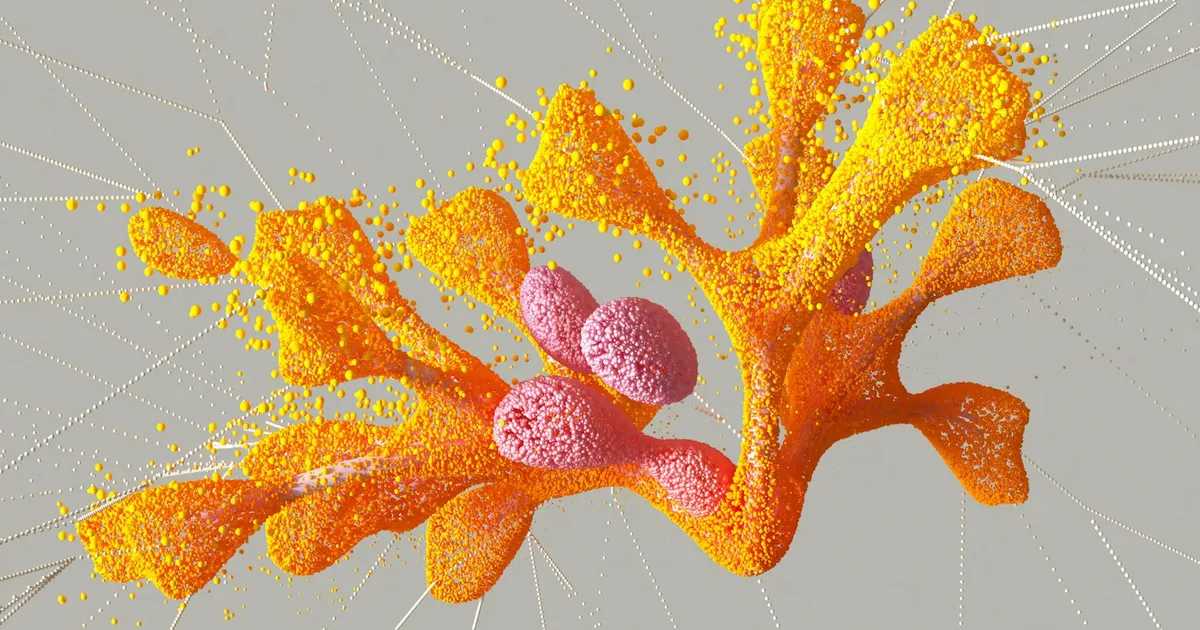
Biohub just announced a $500 million, five-year push called the Virtual Biology Initiative. The Chan Zuckerberg Initiative, Priscilla Chan and Mark Zuckerberg's philanthropy, is footing the bill. The goal: generate the massive biological datasets needed to train AI models that can actually predict how human cells work, and make it all freely available. Alex Rives, who heads science at Biohub, says the complexity of biology demands "orders of magnitude more data than exists today." He should know. His previous gig was leading the Meta AI team that built ESMFold, a protein structure predictor that matched AlphaFold2's accuracy while running much faster. Meta open-sourced those models. Now Rives is bringing that same open-first philosophy to cellular biology.
The money splits two ways. $100 million goes to coordinate data generation across institutions globally. $400 million pays for actual data production and new measurement technologies. Big names signed on. Partners include the Allen Institute, Arc Institute, Broad Institute, Wellcome Sanger Institute, Human Cell Atlas, and Human Protein Atlas. NVIDIA handles compute infrastructure. Renaissance Philanthropy works to pull in additional funders.
The vision is predictive cell models that let researchers run experiments digitally at a scale physical labs cannot match. If it works, it changes how fast we understand disease and find therapies. But not everyone is sold. Hacker News commenters pointed out that using AI to solve medical problems humans currently cannot solve is, by definition, unproven. Some questioned whether this is real science or a mechanism for tax-deductible funds to flow back into AI companies.
What sets this apart from typical mega-funding announcements is the open data commitment. The Human Genome Project worked because data flowed to everyone, not just the labs that generated it. The Protein Data Bank works the same way. Biohub is making that same bet for AI-ready biology data, except the datasets will be orders of magnitude larger than anything that came before. If they deliver, every grad student and biotech startup gets the same raw material as Big Pharma. That alone makes this worth watching.