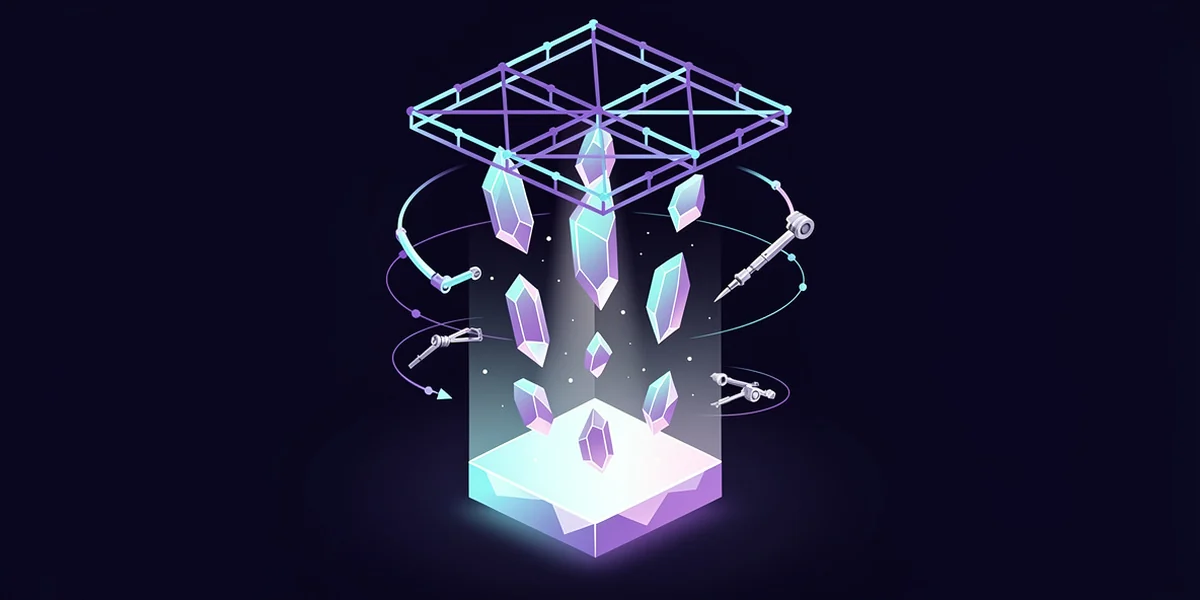
Thinking Machines Lab shipped its first model on 15 July, and buried in the announcement was a sentence no frontier lab writes about its own release. Inkling is "not the strongest overall model available today, open or closed." Mira Murati's company spent eighteen months and a chunk of a US$2 billion seed round training it from scratch, put the full weights on Hugging Face under an open licence, and then wrote the disclaimer into its own launch post. That line is the most interesting thing about the release, and it is not modesty.
What they shipped, and what they said it was for
The specs are real and large. Inkling is a mixture-of-experts transformer with 975 billion total parameters and about 41 billion active per token, a 1-million-token context window, and pretraining on 45 trillion tokens of text, images, audio and video. It is, by the count of several outlets, the largest open-weight model a US lab has put out. Alongside it Thinking Machines previewed Inkling-Small, a lighter 12-billion-active variant on the same recipe.
The pitch, stated fairly, is a bet against the shape of the market. As TechCrunch put it, the central wager behind the startup is "that AI that organizations can adapt for themselves will outperform the one-size-fits-all models the biggest labs currently sell." Inkling is built to be calibrated rather than confident, flags its own uncertainty, and lets you dial thinking effort up or down to trade accuracy for speed. Crucially, it landed the same day as a home for it: the model is available for fine-tuning on Tinker, the company's managed fine-tuning service, which went generally available in December 2025. There is a new Inkling Playground in the Tinker console, and a demo in which the model writes and runs its own fine-tuning job.
That is the tell. Read the release not as a model launch but as a distribution move for a platform, and every odd choice lines up.
The admission is the strategy
Until this week, Tinker fine-tuned other labs' open weights. Its headline supported model was Alibaba's Qwen-235B. A managed fine-tuning service is only as good as the bases it can offer, and every one of those bases belonged to a competitor who could change licence terms, deprecate a checkpoint, or ship a better closed product tomorrow. Inkling fixes that. It gives Tinker a first-party base that Thinking Machines controls end to end, tuned for exactly the thing the platform sells: cheap, controllable, multimodal adaptation. The model is the loss-leader. The platform is the product.
Seen that way, "not the strongest, open or closed" stops being humility and becomes positioning. You do not need the best base model to run a customisation business. You need a good-enough, efficient, permissively licensed base that people will bend to their own use, plus the tooling that makes bending it easy and the compute that makes it fast. Inkling matches Nvidia's Nemotron 3 Ultra on one coding benchmark at roughly a third of the tokens. They optimised for efficiency over peak capability, because efficiency is what a fine-tuning customer pays for by the GPU-minute.
This is open-core, and it has a track record. The clearest precedent is MosaicML, which open-sourced models and sold the platform to train and deploy them, and which Databricks bought for US$1.3 billion in 2023, roughly six times its last private valuation. Give away the weights, charge for the road that makes them useful. That is a real business, and it is the one Thinking Machines appears to be building.
The strongest case against my read
Here is where I owe the other side a fair hearing, because there is a genuinely good version of it.
The charitable read is that this is discipline, not retreat. Murati's team told you exactly what the model is and is not, which in a field addicted to benchmark theatre is refreshing and, frankly, more credible. Analysts covering the launch made this point directly: the concession that Inkling is not frontier is what makes the rest of the claims trustworthy. Open weights genuinely serve people the closed labs ignore, and a permissively licensed, calibrated, multimodal base is a real gift to anyone who needs to run their own stack. On this reading, Inkling is a company being honest about a segment it can actually win.
I take that seriously. But it runs into a stubborn number. Fine-tuning has stayed a niche for years. Menlo Ventures' surveys of enterprise AI in both 2024 and 2025 found the same ordering: prompt design dominates real deployments, retrieval-augmented generation follows, and fine-tuning, tool-calling and reinforcement learning remain the preserve of frontier teams. Most organisations do not fine-tune. They prompt, they retrieve, and they reach for a bigger model when the small one fails. If the customisation layer were where the value obviously pooled, two years of enterprise behaviour would have shown it, and it has not.
The competitive timing sharpens the problem. The same week Inkling landed, Moonshot AI announced Kimi K3, a 2.8-trillion-parameter open model with a 1-million-token context and frontier-class benchmark scores, with open weights due at month's end. The-decoder's read on Inkling was blunt in the headline: it leads US labs but trails China. If you are a team choosing a base to fine-tune, and the honest American option is weaker than the Chinese one you can also download for free, "customisable" has to carry a lot of weight to win the decision.
Why the bet might still be right
The answer Thinking Machines would give, and the reason I do not think this is dead on arrival, is that the fine-tuning market is not the one the sceptics measured. The old case against fine-tuning was about baking static knowledge into weights, a job that long context and retrieval genuinely do better now. The thing reviving fine-tuning is different: reinforcement-style post-training that shapes behaviour rather than facts, for agents that have to follow a policy, hold a tool-use pattern, and act reliably in a loop. That is precisely what Tinker markets, and precisely the workload the agent build-out is generating. If agents make behavioural post-training a mainstream need rather than a frontier-team hobby, the customisation layer stops being niche, and owning both the base and the tooling for it becomes a defensible place to stand.
So the bet is coherent. It is also a repricing of ambition, and that is the part the launch does not say out loud. This is the company that raised US$2 billion at a US$12 billion valuation, then, per Bloomberg's reporting, went looking for US$50 billion late last year before backers passed and the talks collapsed in January. A lab that priced itself as a frontier contender, could not raise on that story, and has now shipped a deliberately non-frontier model organised around adaptation is telling you where it thinks it can actually compete: the layer above the model, against Hugging Face and the infrastructure vendors, more than against OpenAI or Anthropic on raw capability. That is a smaller, more plausible company than the one the seed round imagined, and there is nothing wrong with a smaller, more plausible company, so long as everyone is clear that is what this is.
The bet
The falsifiable question is whether anyone actually fine-tunes Inkling. Open weights make adoption legible. Over the next three to six months, watch the derivative and download counts on Hugging Face, and watch whether Tinker's paid usage moves onto its own base or stays parked on Qwen and Kimi. If the community's fine-tunes cluster on the stronger Chinese open models while Inkling sits admired and undeployed, "not the strongest, but ours" will have been the wrong trade, and Tinker will still be a service for customising other people's work. The second tell is the next model. If Inkling's successor quietly chases the frontier, the customisation thesis was a story told over a capability gap they are still trying to close. If it stays deliberately mid and gets better at being bent, then Murati meant it, and Thinking Machines has stopped trying to win the race everyone else is running and started selling the tools to leave it.