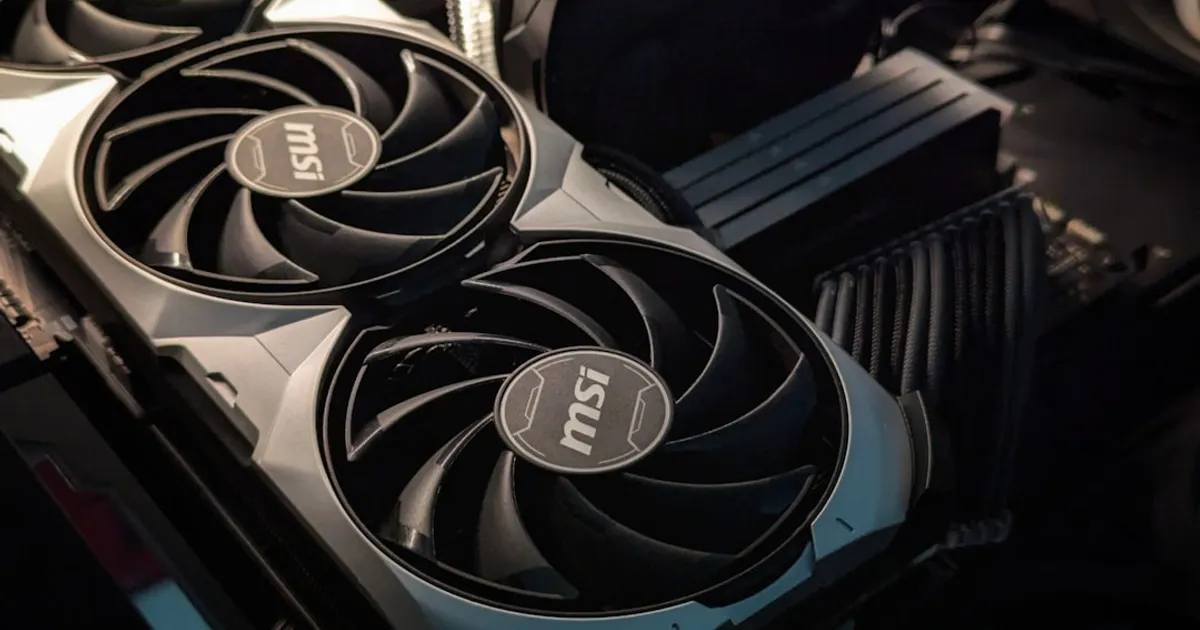
Intel just shipped the Arc Pro B70, a $950 professional GPU with 32GB of VRAM aimed directly at AI workloads. Unlike AMD and NVIDIA, who bolted extra memory onto existing consumer chips for their AI pro cards, Intel built this one from scratch.
The B70 doubles the Xe cores and VRAM of the cheaper B50, hitting 22.94 TFLOPS of FP32 performance and 367 TOPS peak INT8. It undercuts AMD's Radeon AI PRO R9700 by about 30% while matching its 32GB memory buffer. Puget Systems ran the card through Adobe Creative Suite, DaVinci Resolve, Blender, Unreal Engine, and MLPerf AI tests. Intel's drivers have gotten steadily better over the past few years. Some older cards picked up double-digit performance gains from driver updates alone, and the Xe2 architecture's SIMD16 execution and next-gen XMX engines push both speed and efficiency past the older Alchemist generation.
But hardware is only half the equation. Intel's real bet is OneAPI, an open programming model built on SYCL and Data Parallel C++ that aims to break NVIDIA's CUDA lock-in. The pitch is straightforward: write once, run on any accelerator. Intel even ships compatibility toolkits to automatically migrate existing CUDA code to SYCL.
Whether developers actually make that jump determines whether the B70 matters beyond its price tag. The Hacker News crowd isn't sold yet. Commenters flagged real concerns: 230W TDP with 32GB of VRAM creates heat problems for multi-GPU setups, driver maturity remains a question mark for LLM workloads, and availability could dry up fast if RAM prices keep climbing. Intel's hardware is getting competitive. The software ecosystem and supply chain aren't there yet.