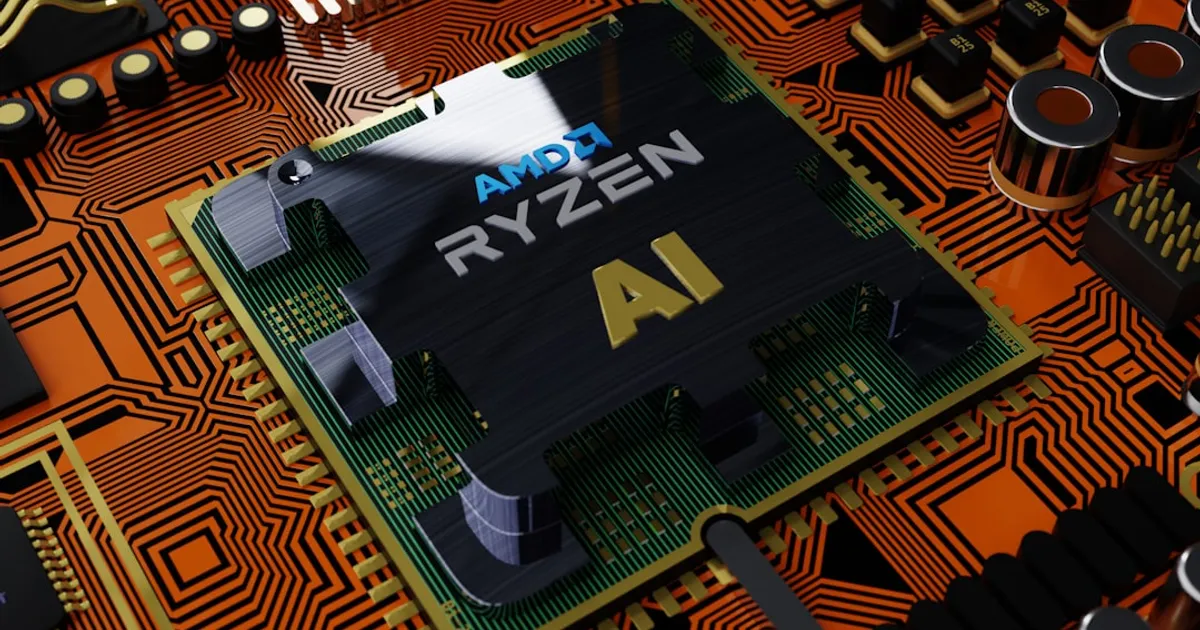
AMD just released GAIA, an open-source framework for building AI agents that run entirely on your local machine. No cloud services or API keys. No data leaving your device. The SDK supports Python and C++ and targets AMD's Ryzen AI 300-series processors, using their built-in NPUs and GPUs for acceleration.
What can you actually build with it? Document Q&A through RAG pipelines. DocMason keeps your files local while making them AI-readable. Speech-to-speech conversations using Whisper for recognition and Kokoro for synthesis. Code and image generation. MCP integration for hooking agents into external tools. There's also a desktop Agent UI you can install via npm with two commands, and the whole thing packages agents as standalone applications across operating systems.
This is AMD playing a different game than Intel's OpenVINO. OpenVINO is a low-level inference engine that optimizes models for Intel hardware. GAIA sits higher up the stack. It handles orchestration, UI, packaging. You're building complete agent apps, not just running models. The trade-off is portability. GAIA is tightly coupled to AMD's Ryzen AI 300-series chips, so if you want to run on Intel or NVIDIA hardware, you're out of luck.
AMD is giving developers a free, open-source tool that shows off what their AI-capable hardware can do. While AMD's Lemonade focuses on running models, GAIA handles orchestration. Community members have already spotted the standalone packaging enabling an "app that creates apps" workflow. That's the angle worth watching: GAIA lets you ship self-contained AI applications that never need to phone home. For teams in air-gapped environments, that's not a nice-to-have. It's the whole point.