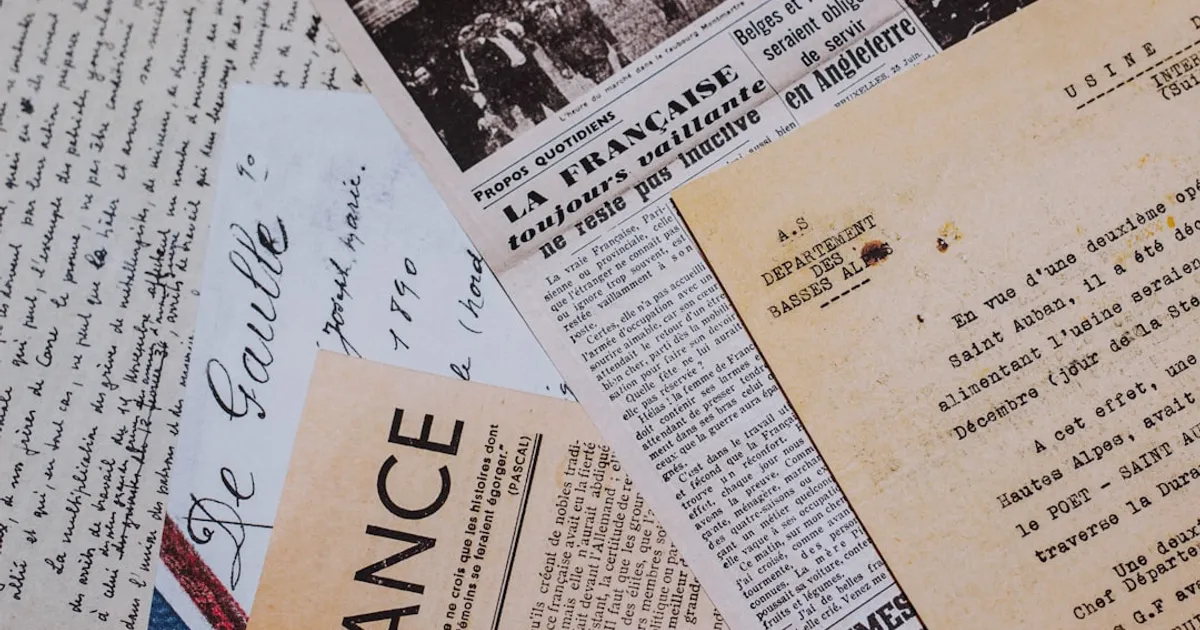
Independent developer Brett Butter has built something useful: a searchable archive of 6 million newspaper stories spanning 1730 to 1960. The platform, called SNEWPapers, takes digitized newspaper pages from the Library of Congress and makes them actually findable.
The problem is real. Historical newspapers exist as scanned PDFs, but the OCR quality is often so bad that Google and other search engines can't index them properly. Old typefaces are inconsistent. Ink bleeds across columns. Standard OCR tools turn "Congress" into "C0ngre55." Butter's system uses AI to interpret this messy text, similar to the dramatic improvements seen with modern AI tools like gpt-4o-mini enabling semantic search that finds articles by concept rather than exact keyword match.
"The Sleuth" is where things get interesting. It's an AI research assistant that answers questions with citations pulled directly from the archive. Ask about witchcraft trials in the 1800s and it surfaces relevant articles with links to the source material. For historians, this matters because you can verify where the answer came from rather than trusting a black box.
The platform also organizes content across 24 categories and over 1,000 sub-categories, with state and date filters for narrowing results. Butter shared the project on Hacker News under the handle brettnbutter, where it gained traction among developers who appreciated the technical challenge of parsing messy historical text at scale. The archive covers more than 3,000 newspaper titles, and Butter says new stories are being added daily. A free trial is available, though full search requires signing up.
For decades, OCR has been the bottleneck keeping historical archives locked away. Libraries have digitized millions of pages, but if you can't search them, they might as well be on microfilm. What SNEWPapers gets right is combining readable text with a citation-backed AI assistant. That's the difference between "here's what AI thinks" and "here's what the newspaper said, on this date, in this city."