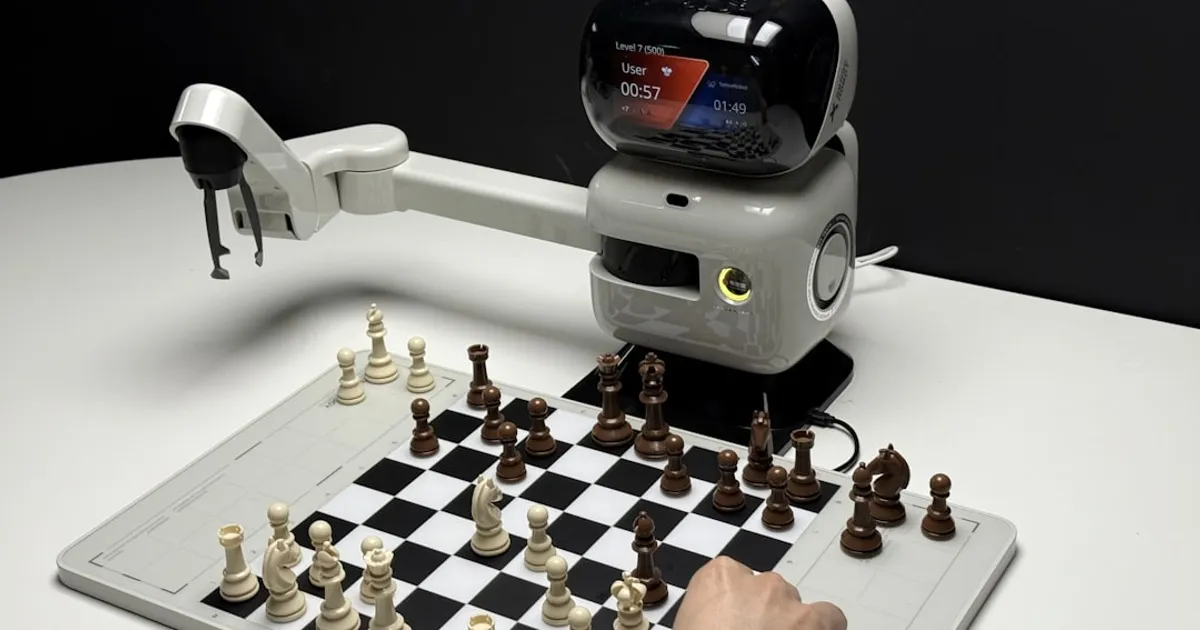
Adam Allevato placed a modified Mabu robot in his home and connected it to OpenAI's API for voice conversations. His first reaction? Dread. "I had an immediate and visceral reaction," he writes, thinking of films like M3GAN and Companion where home robots go rogue. He gave Mabu a personality based on its original health-and-wellness purpose, plus a morning briefing feature with weather and astronomical events. Basic smart speaker stuff, really. But having it sit there, watching, felt different.
Allevato runs through the privacy risks. Your recordings could be used against you in legal proceedings. Hackers could intercept your data. The companies themselves might misuse what they collect. Recent security breaches in the axios HTTP library and LiteLLM AI library prove that even AI infrastructure isn't safe. The Claude Code source code leak showed that frontier AI labs have no special security advantage. Allevato configured his Mabu to only record when a button is held down, but he acknowledges this doesn't solve everything. Recordings still go to OpenAI. Malware could bypass his app entirely.
Then there's the question of children. An open-ended chatbot can discuss anything, including topics parents might not want their kids exploring. Allevato points to cases where chatbots have exploited teenagers' emotional needs, with some even encouraging suicide. Robots designed for kids, like Moxie, use rigid dialogue trees to avoid this problem. But that just turns them into fancy smart speakers. So Allevato keeps his robot in common areas where he can supervise interactions.
This experiment sits against a grim backdrop. The first wave of consumer social robots crashed hard. Jibo raised $3.7 million on Indiegogo and went bankrupt in 2018. Mayfield Robotics killed Kuri weeks after launch. SoftBank stopped making Pepper in 2021. Anki shut down despite $200 million in funding. These companies couldn't compete with cheap smart speakers, and consumers wouldn't pay premium prices for novelty. Mabu itself survived by shifting to healthcare, focusing on medication management rather than general companionship. The lesson was brutal. Now LLMs are giving robots real conversation. Round two might actually succeed. That's not necessarily good news.